Quick answer: what replaced DIN 6914?
DIN 6914:1989 is withdrawn, but the designation remains common on structural drawings, bills of material, supplier catalogues and RFQs. Its verified current German/European successor route is DIN EN 14399-4 for preloaded System HV hexagon bolt and nut assemblies.
ISO 7412:1984 is the close historical ISO counterpart to DIN 6914, not a current replacement: ISO 7412 is also withdrawn. Keep DIN 6914 as the commercial search and legacy purchasing term, but use the exact edition and the complete assembly specification when approving a replacement.
| Reference | Status and purchasing relationship |
|---|---|
| DIN 6914:1989 | Withdrawn German legacy bolt standard; still widely specified in industry |
| ISO 7412:1984 | Withdrawn historical counterpart for large-width, short-thread structural bolts |
| DIN EN 14399-4 | Current German/European System HV route for preloaded hexagon bolt and nut assemblies |
| ASME B18.2.6 | Related US inch-series dimensional standard; not a direct metric substitute |
| UNI 5712 | Historical Italian purchasing cross-reference for the same broad structural-bolt family |
| JIS B 1186 | Related Japanese high-strength friction-grip bolting system; not dimensionally identical |
See the current DIN EN 14399-4 cross-reference or browse heavy structural hex-head bolts.
Why DIN 6914 and ISO 7412 can be cross-referenced
They describe the same basic historical product concept:
- high-strength structural steel bolting;
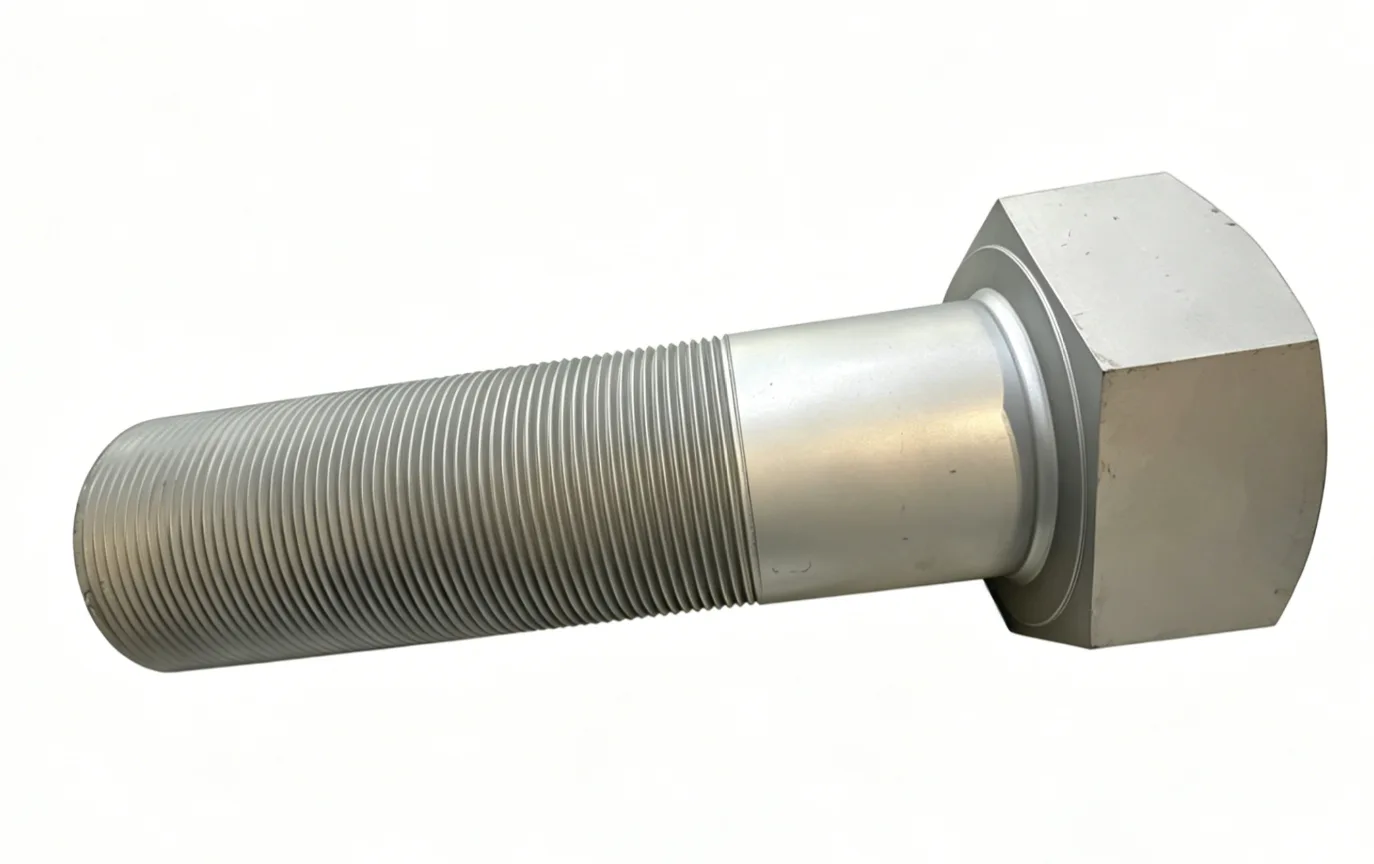
- an external hexagon head with a large width across flats;
- ISO metric coarse threads;
- a deliberately short threaded portion and a long full-diameter shank;
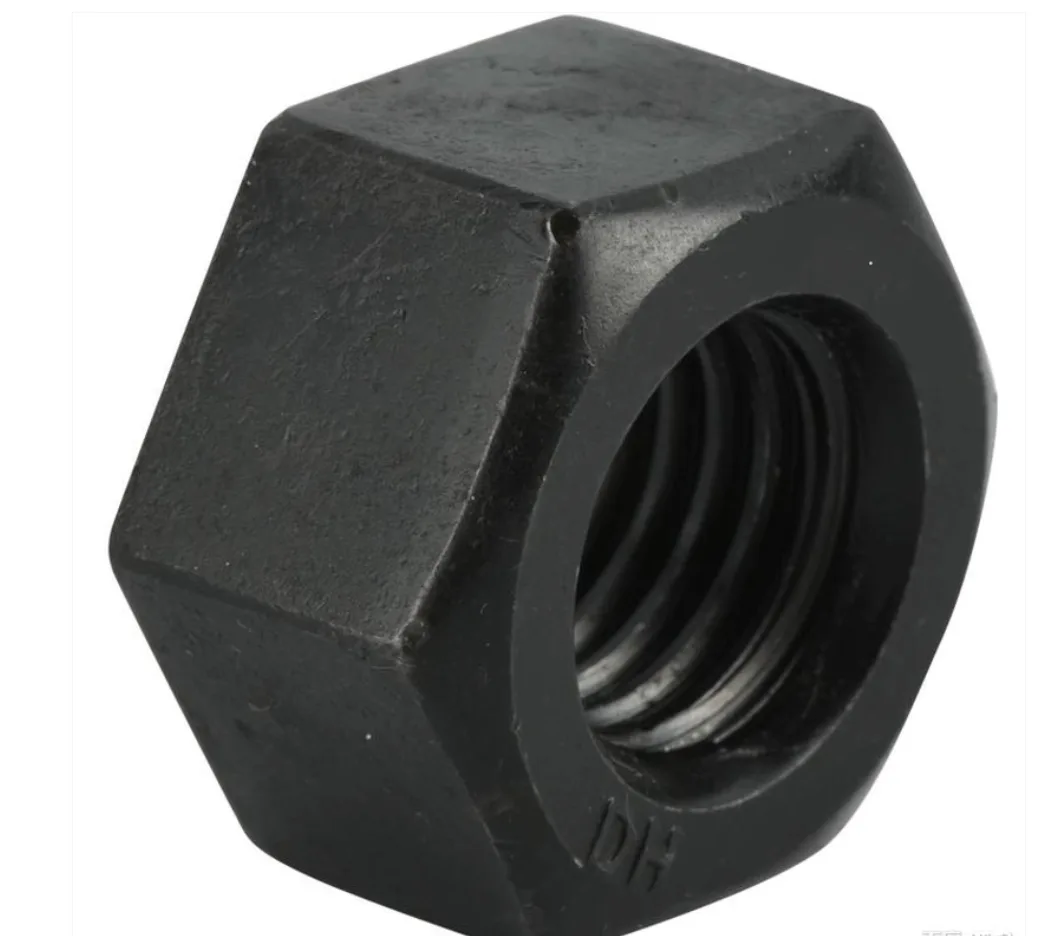
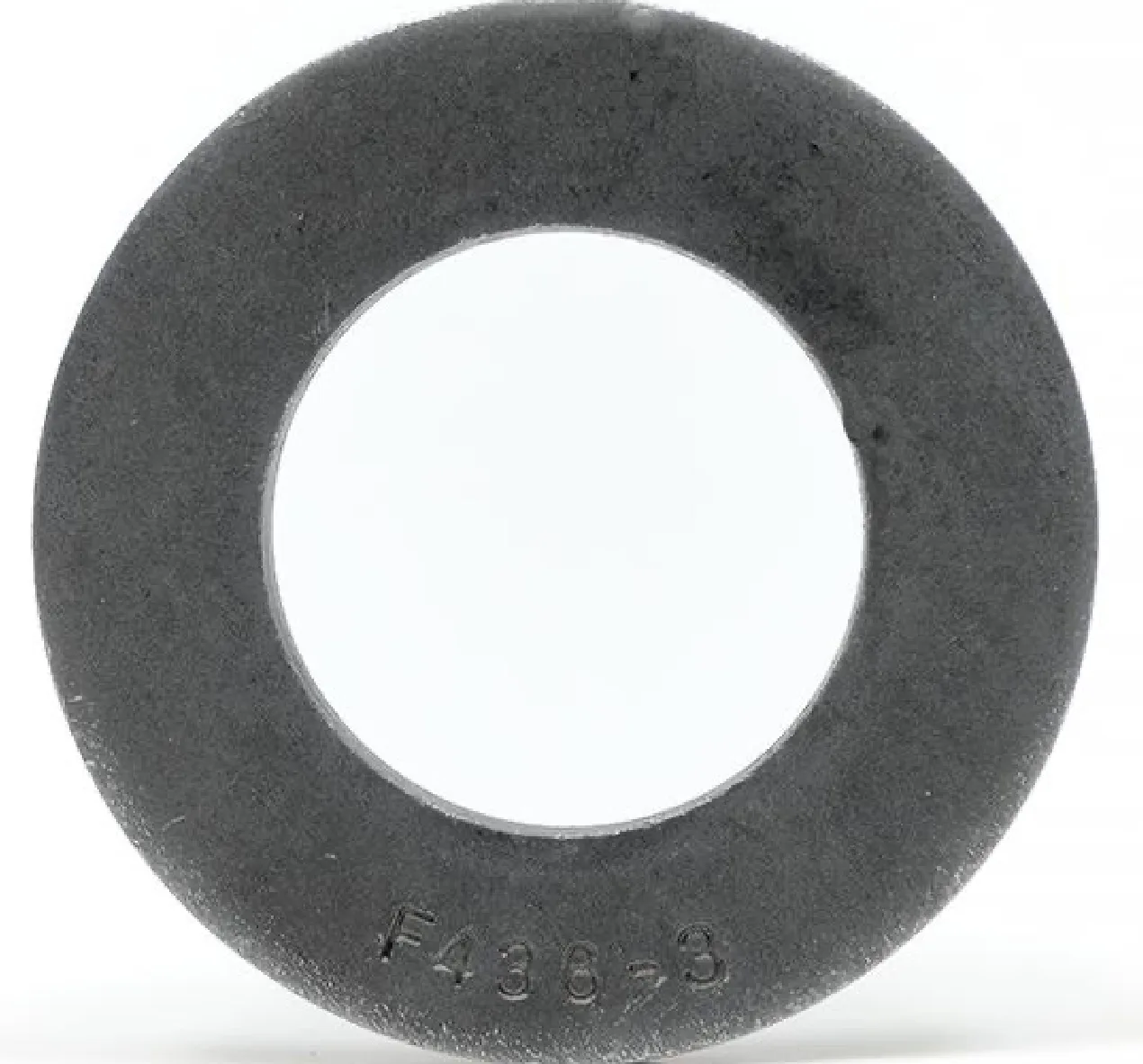
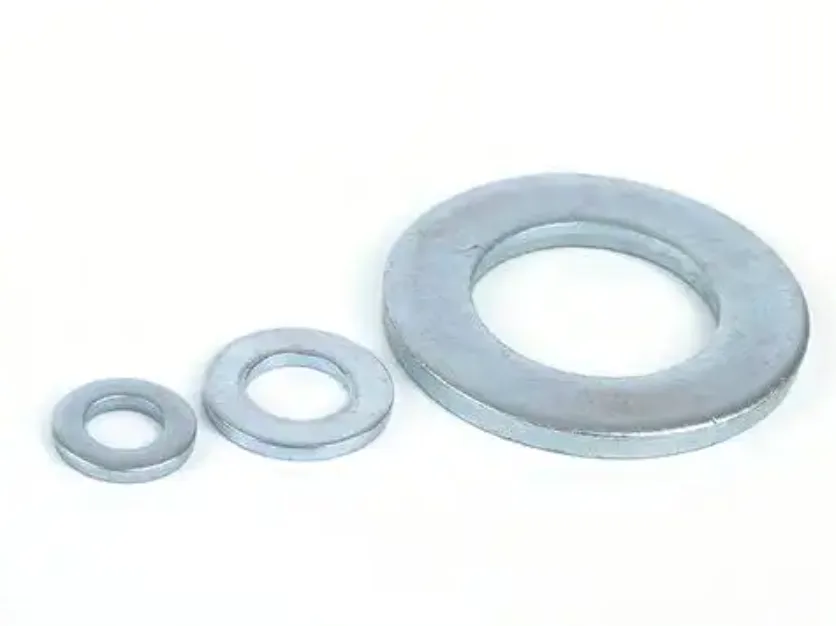
- use with a compatible structural nut and hardened washer;
- controlled preload rather than a built-in locking feature.
ISO 7412 covers M12 through M36, product grade C and property classes 8.8 and 10.9. Legacy DIN 6914 HV supply is most commonly associated with property class 10.9. That class difference must remain visible on an RFQ: a shared shape and size do not authorize changing the required mechanical class.
Where the standards differ
| Selection point | DIN 6914 / ISO 7412 historical route | DIN EN 14399-4 current route | ASME / JIS regional route |
|---|---|---|---|
| Status | Both withdrawn; retained for legacy procurement | Current System HV assembly standard | Separate regional standards and editions |
| Product scope | Historical bolt geometry; matching components cited separately | Preloaded bolt-and-nut assembly with system compatibility requirements | ASME dimensions pair with ASTM properties; JIS defines its own friction-grip set |
| Thread system | ISO metric coarse | ISO metric System HV | ASME uses Unified inch threads; JIS uses its own metric series |
| Thread length | DIN 6914 and ISO 7412 use the short-thread structural pattern | Use the EN 14399-4 assembly table and ordered grip | Different tables; no conversion by nominal diameter alone |
| Strength designation | ISO 7412 permits 8.8 and 10.9; DIN 6914 HV orders are commonly 10.9 | Specify the complete System HV assembly and required class | ASTM F3125 grades or JIS designations such as F10T are different systems |
| Nut and washer | Legacy DIN 6915 nut and DIN 6916/6917/6918 washer family | Compatible EN 14399 nut/washer components and suitability for preloading | Matching ASME/ASTM or JIS nut and washer set |
| Installation | Legacy project tightening rules | Declared preload, tightening procedure and assembly suitability govern | Regional installation and inspection rules govern |
The most important difference is therefore not a Phillips-versus-Torx-style detail. It is the change from a legacy bolt callout to a controlled structural bolting assembly.
Identifying DIN 6914 geometry
The enlarged head is a real dimensional feature. Common DIN 6914:1989 identification values include:
| Thread | Coarse pitch P | Width across flats s | Head height k |
|---|---|---|---|
| M12 | 1.75 mm | 22 mm | 8 mm |
| M16 | 2.00 mm | 27 mm | 10 mm |
| M20 | 2.50 mm | 32 mm | 13 mm |
| M22 | 2.50 mm | 36 mm | 14 mm |
| M24 | 3.00 mm | 41 mm | 15 mm |
| M27 | 3.00 mm | 46 mm | 17 mm |
| M30 | 3.50 mm | 50 mm | 18.7 mm |
| M36 | 4.00 mm | 60 mm | 22.5 mm |
These values are useful for identifying a legacy part, not for approving a replacement by themselves. Also compare width across corners, bearing face, shank diameter, under-head transition, tolerance and the actual thread length b for the ordered length.
For example, the 41 mm wrench size on an M24 DIN 6914 bolt is part of its large-width structural geometry. A general-purpose M24 partially threaded bolt with a smaller head is not equivalent merely because its diameter, pitch and property-class marking look familiar.
Short thread length is a functional requirement
The long unthreaded shank is intended to pass through the joint grip while the short threaded end accepts the structural nut. This keeps full-diameter shank material in critical bearing and shear planes where the design requires it.
Do not confuse ISO 7412 with ISO 7411:
| Historical ISO standard | Thread-length rule |
|---|---|
| ISO 7412 | Short thread length |
| ISO 7411 | Thread lengths according to ISO 888 |
A fully threaded bolt, or a bolt whose threads enter a controlled shear plane, is not an automatic replacement even when nominal diameter and length match.
DIN EN 14399-4 is not just a new number
DIN 6914 historically identifies the bolt, with DIN 6915 nuts and structural washers specified through related DIN standards. DIN EN 14399-4 defines System HV preloaded hexagon bolt and nut assemblies within the EN 14399 family.
Consequently, conversion requires checking the complete set:
- bolt and nut from a compatible declared assembly;
- required structural washer type and orientation;
- property class and component markings;
- grip, thread length and whether threads enter a shear plane;
- coating and its effect on fit and tightening behaviour;
- declared tightening characteristic or coefficient class where specified;
- project preload, tightening method and inspection procedure;
- manufacturer documentation and assembly lot traceability.
Changing only DIN 6914 to DIN EN 14399-4 on a purchase order does not prove assembly compatibility.
ASME B18.2.6, ASTM F3125, UNI 5712 and JIS B 1186
These entries remain useful in a purchasing cross-reference, but they are approximate regional relationships:
- ASME B18.2.6 defines US heavy structural fastener dimensions in the inch/Unified-thread system. Mechanical requirements are normally completed by an ASTM specification such as ASTM F3125. It is not a dimension-for-dimension metric replacement.
- UNI 5712 is a historical Italian structural-bolt counterpart. Confirm its edition, available diameter, head table, class and matching components before using it for a DIN order.
- JIS B 1186 covers Japanese high-strength hexagon bolting sets for friction-grip joints. Designations such as F10T and the matching nut/washer requirements belong to the JIS system; they must not be relabelled as DIN 6914 class 10.9 without comparison.
This is why the standards belong in the same sourcing row while still requiring a differences article.
RFQ and replacement checklist
For a legacy callout such as DIN 6914 M24 × 80 – 10.9, request or confirm:
- Original standard edition and whether the project accepts DIN EN 14399-4.
- Nominal diameter, coarse pitch, overall length and grip length.
- Short thread length
b, thread runout and shear-plane position. - Head dimensions
s,e,kand bearing-face geometry. - Shank diameter, under-head transition and dimensional tolerances.
- Required property class or complete EN/ASTM/JIS strength designation.
- Matching nut, washer type, hardness, dimensions and component markings.
- Coating, lubrication, corrosion category and hydrogen-embrittlement controls.
- Required preload, tightening method, coefficient class and inspection method.
- Assembly manufacturer, lot traceability and inspection documents.
Purchasing conclusion
DIN 6914 remains a valuable industry keyword and legacy purchasing designation, but it is no longer the official current German standard. Use ISO 7412 only as a withdrawn historical counterpart. For a new German or European preloaded structural joint, follow DIN EN 14399-4 and approve the complete System HV bolt–nut–washer assembly rather than substituting a bolt number in isolation.