DIN 7985 vs ISO 7045: dimensions, equivalents and replacement
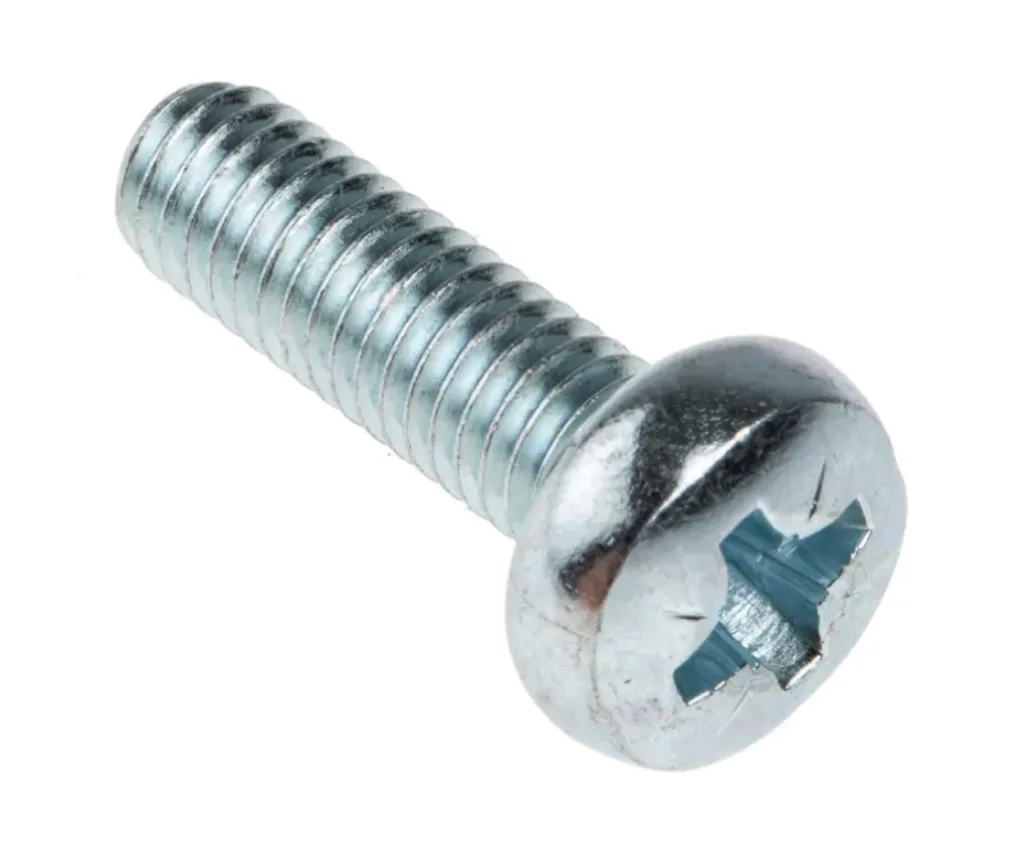
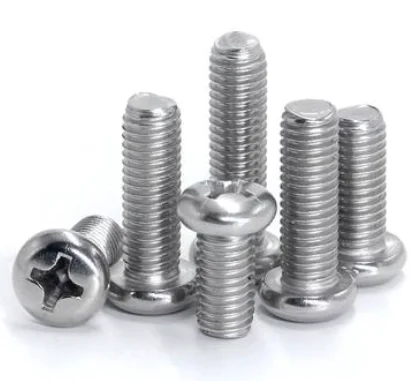
DIN 7985 and ISO 7045 belong to the same basic product family: metric machine screws with a cross-recessed pan or raised-cheese-type head. That shared function explains why the standards can be cross-referenced. It does not make every head dimension, recess or national edition identical.
The formal modern German route is:
DIN 7985 → DIN EN ISO 7045
DIN 7985:1990 is withdrawn but remains common on legacy drawings and supplier catalogues. ISO 7045:2011 is active and specifies product-grade-A pan head screws with type H or type Z cross recess from M1.6 through M10.
Cross-reference status
| Reference | Why it belongs in the comparison | Required qualification |
|---|---|---|
| DIN EN ISO 7045 / ISO 7045 | Current German/international product route for the same metric cross-recessed pan-head family | Selected DIN head dimensions can differ from ISO |
| UNI 7687 | Strong historical Italian reference for the corresponding screw family | Confirm edition, head table, recess, material and finish |
| JIS B 1111 | Active Japanese cross-recessed-head screw family, modified from ISO 7045 and four other ISO head standards | DIN 7985 maps only to the ISO 7045-related pan-head portion; JIS is MOD, not IDT |
| ASME B18.6.7M | Historical US metric machine-screw standard with a relevant cross-recessed pan-head configuration | The standard is withdrawn; identify the exact table and compare its dimensions |
Why DIN 7985 and ISO 7045 can be compared
Both use ISO metric machine threads and a non-countersunk cross-recessed head for clamping parts against a bearing surface. Their common sizes, basic function and modern DIN replacement history make ISO 7045 the correct first choice for a DIN 7985 conversion.
The older DIN description is often translated as “cross-recessed raised cheese head screw,” while ISO uses “pan head screw.” These terms refer to the corresponding product route, but the profile was not retained at every size without dimensional changes.
Concrete head-diameter differences
The following representative maximum/minimum head diameters compare commonly published DIN 7985:1990 and ISO 7045:2011 tables. The controlled edition stated on the drawing remains the acceptance source.
| Thread | DIN 7985 dk max/min |
ISO 7045 dk max/min |
Difference |
|---|---|---|---|
| M1.6 | 3.20 / 2.90 mm | 3.20 / 2.90 mm | Representative limits coincide |
| M2 | 4.00 / 3.70 mm | 4.00 / 3.70 mm | Representative limits coincide |
| M2.5 | 5.00 / 4.70 mm | 5.00 / 4.70 mm | Representative limits coincide |
| M3 | 6.00 / 5.70 mm | 5.60 / 5.30 mm | ISO head is 0.40 mm smaller at both limits |
| M3.5 | 7.00 / 6.64 mm | 7.00 / 6.64 mm | Representative limits coincide |
| M4 | 8.00 / 7.64 mm | 8.00 / 7.64 mm | Representative limits coincide |
| M5 | 10.00 / 9.64 mm | 9.50 / 9.14 mm | ISO head is 0.50 mm smaller at both limits |
| M6 | 12.00 / 11.57 mm | 12.00 / 11.57 mm | Representative limits coincide |
| M8 | 16.00 / 15.57 mm | 16.00 / 15.57 mm | Representative limits coincide |
| M10 | 20.00 / 19.48 mm | 20.00 / 19.48 mm | Representative limits coincide |
M3 and M5 are the principal head-diameter warnings. A smaller ISO head can reduce coverage over a clearance hole or washer, alter the visible appearance or change an automated feeder's envelope.
Head height does not move in one direction
The common claim that ISO 7045 is always lower than DIN 7985 is incorrect. Representative maximum head heights include:
| Thread | DIN 7985 k max |
ISO 7045 k max |
Result |
|---|---|---|---|
| M2.5 | 2.0 mm | 2.1 mm | ISO is 0.1 mm higher |
| M3 | 2.4 mm | 2.4 mm | Same representative maximum |
| M4 | 3.1 mm | 3.1 mm | Same representative maximum |
| M5 | 3.7 mm | 3.7 mm | Same representative maximum |
| M6 | 4.6 mm | 4.6 mm | Same representative maximum |
Head height, crown profile and under-head radius can affect counterbores, guards, adjacent components and appearance. Compare the complete head envelope rather than assuming one universal profile change.
H and Z cross recesses are not one undefined “Phillips” drive
ISO 7045 covers type H and type Z cross recesses. Market language often associates them with Phillips-type and Pozidriv-type drives, but a purchasing callout should retain the standardized recess type and number.
Representative ISO recess numbers are 0 for M1.6/M2, 1 for M2.5/M3, 2 for M3.5/M4/M5, 3 for M6 and 4 for M8/M10. Correct identification matters for torque transmission, driver wear and automatic assembly.
Hexalobular/Torx drive is not another DIN 7985 or ISO 7045 recess option. A related pan-head machine-screw product belongs to ISO 14583 and is a functional alternative requiring approval.
Thread and length checks
DIN 7985 and ISO 7045 use the corresponding ISO metric coarse-thread series from M1.6 to M10. Typical pitches are M3 × 0.5, M4 × 0.7, M5 × 0.8, M6 × 1.0, M8 × 1.25 and M10 × 1.5.
This makes thread-level conversion relatively direct when the complete designation and tolerances agree, but “100% compatible across every listed national standard” is too broad. Verify pitch, tolerance class, mating internal thread and the controlled edition.
Longer screws may have an unthreaded shank because thread length depends on nominal length and the applicable table. Specify and compare M × length, thread length and shank clearance—not nominal diameter alone.
JIS B 1111 is valid, but only as a qualified family relation
JIS B 1111:2017 is active and was confirmed in 2026. It covers cross-recessed head screws and is a modified adoption related to ISO 7045, ISO 7046-1, ISO 7046-2, ISO 7047 and ISO 7048.
DIN 7985 therefore corresponds only to the ISO 7045-related pan-head portion of JIS B 1111. The JIS standard also contains other head forms and Japanese provisions. Because its relationship is MOD, retain the JIS designation when required and compare head form, dimensions, recess, thread and edition.
Do not state that every JIS B 1111 screw necessarily uses one special “JIS driver bit.” The actual recess specified on the controlled part determines the correct tool.
UNI 7687 is a strong historical relation
UNI 7687 is a useful historical Italian cross-reference for the same cross-recessed raised-head/pan-head machine-screw family. Keep it in the procurement table, while using the current ISO adoption route for new Italian specifications where applicable.
For legacy conversion, compare the cited UNI edition, M size and pitch, head diameter/height, recess, thread length, material, property class and coating. “Corresponding standard” should not erase edition-specific requirements.
ASME B18.6.7M is historical and withdrawn
ASME B18.6.7M covered metric machine screws and included a relevant metric cross-recessed pan-head configuration. This makes it a legitimate historical US purchasing association, not a current direct equivalent.
ASME B18.6.7M-1999 (R2010) is withdrawn and no current B18.6.7M appears in ASME's active catalogue. Keep the number for legacy searches and drawings, but identify the cited edition and exact table. Compare head diameter/height, under-head radius, recess system and size, metric thread tolerance, thread length, material and finish before approving an ISO or DIN replacement.
Material, property class, coating and service limits
DIN 7985 and ISO 7045 are product-geometry standards, not a single strength grade. Do not assume the number itself means 4.8, 8.8, A2-70 or A4-80. State the material and applicable mechanical-property specification separately, and confirm that the selected property class is permitted for the size and product execution.
The finish is also separate: plain, electroplated zinc, zinc flake, black oxide or stainless passivation are not interchangeable procurement descriptions. For high-strength electroplated steel, include the applicable hydrogen-embrittlement controls.
No integral washer, locking patch or prevailing-torque feature is inherent in DIN 7985 / ISO 7045. A captive-washer SEMS assembly, such as a product sourced under a relevant assembly standard, is a different configuration. Likewise, no universal temperature range can be assigned: service capability depends on material, property class, coating, lubricant, mating components, load and environment.
Replacement decision table
| Proposed replacement | Decision | Required check |
|---|---|---|
| DIN 7985 → DIN EN ISO 7045 | Correct formal German route | M3/M5 head diameter, M2.5 head height, recess, thread length, material and finish |
| DIN 7985 → ISO 7045 | Same product family; generally practical after verification | Complete head envelope and controlled edition |
| DIN 7985 → UNI 7687 | Strong historical Italian relation | Edition and execution details |
| DIN 7985 → JIS B 1111 | Qualified Japanese product-family relation | Select only the ISO 7045 pan-head portion and compare MOD provisions |
| DIN 7985 → ASME B18.6.7M | Historical metric relation only | Withdrawn status, edition, exact table, head/recess/thread details |
| DIN 7985 → ISO 14583 | Functional drive change | Hexalobular tooling and engineering approval |
RFQ checklist
- State the controlled standard and edition.
- Specify complete M size, pitch when non-default, nominal length and thread tolerance.
- Confirm
dk,k, crown profile, under-head radius and available clearance. - State H or Z recess and recess number; do not use “cross head” alone.
- Check full or partial thread and required thread length.
- Specify material, property class and mechanical-property standard.
- Specify coating/passivation, corrosion requirement and hydrogen controls where relevant.
- State any captive washer, locking patch, installation torque or automated-feeding requirement separately.
Browse pan head screws or send the legacy drawing through the contact page for a controlled comparison.
Procurement conclusion
DIN EN ISO 7045 is the modern German replacement route for DIN 7985, and ISO 7045 is the strongest international cross-reference. The shared metric thread, cross recess and pan-head function explain why replacement is usually practical; the M3/M5 head-diameter changes, M2.5 head-height change and recess/thread-length details explain why it is not unconditional identity. Keep UNI 7687 and JIS B 1111 as qualified regional relations, and keep withdrawn ASME B18.6.7M only as a clearly labelled historical purchasing reference.