DIN 938 Studs Equivalent: UNI 5909, JIS B 1173, ASME B18.31.1M and ISO References
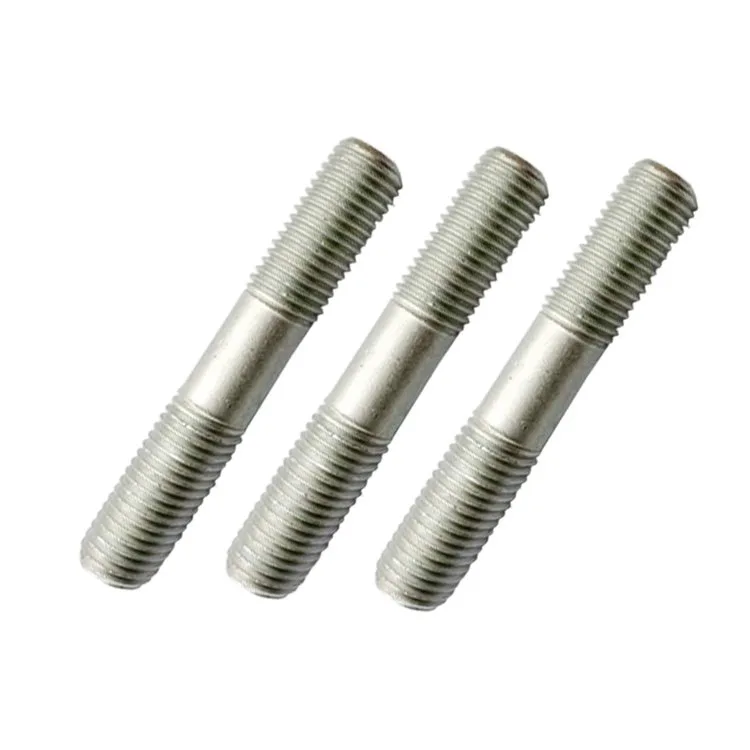
DIN 938 is a German product standard for double-end studs with a threaded stud end of approximately 1d, where d is the nominal thread diameter. For an M20 stud, the stud-end engagement is approximately 20 mm.
The 1d stud-end length is the key point when comparing DIN 938 with other standards. There is no single universal ISO, ASME or JIS equivalent: some references describe a complete stud product, while others cover only thread tolerances, end forms or mechanical properties.
DIN 938 compared with related DIN standards
| Standard | Typical stud-end length | Difference |
|---|---|---|
| DIN 938 | approximately 1d | Short engagement |
| DIN 939 | approximately 1.25d | Longer engagement |
| DIN 835 | approximately 1.5d | Longer engagement |
| DIN 940 | approximately 2d | Long engagement |
Matching the same diameter and overall length does not make these studs interchangeable. Engagement length affects tapped-hole depth, exposed length and assembly clearance.
DIN 938 vs UNI 5909
UNI 5909 is the closest national-standard counterpart in this comparison. It is commonly associated with the same basic metal-end stud concept and approximately 1d stud-end length. Before substitution, confirm diameter, pitch, stud-end and nut-end lengths, product grade, material, property class, tolerances and finish.
DIN 938 vs JIS B 1173
JIS B 1173 is a related metric stud standard, not a direct dimensional equivalent. Its stud-end classes are approximately 1.25d, 1.5d and 2d. For an M20 stud, those nominal lengths are approximately 25, 30 and 40 mm, rather than DIN 938's approximately 20 mm. The exact thread arrangement and engagement class must be stated on the JIS designation or drawing.
DIN 938 vs ASME B18.31.1M
ASME B18.31.1M is the relevant American metric reference for continuous-thread and double-end studs. It is a useful functional comparison, but not an automatic dimensional replacement. For a drawing such as DIN 938 M16 × 100, verify stud-end length, nut-end length, thread arrangement, end form and tolerances before quoting an ASME part.
ISO references that support DIN 938
There is no single ISO product standard equivalent to DIN 938. The main supporting references are:
| Standard | Function |
|---|---|
| ISO 898-1 | Mechanical properties for applicable carbon/alloy steel fasteners |
| ISO 4753 | Recommended end forms for externally threaded parts |
| ISO 965 series | Metric thread tolerances and limits |
| ISO 261 / ISO 262 | Metric thread diameter and pitch selection |
These standards complement DIN 938; they do not replace its stud configuration.
Material, property class and thread ends
DIN 938 is not a material grade. A specification such as DIN 938 M16 × 80, property class 8.8 combines product geometry, nominal size and mechanical property class. Stainless-steel material and its applicable property requirements should be specified separately.
The stud end and nut end have different functions. Confirm their thread lengths, tolerances, chamfers and end geometry on the approved drawing. ISO 4753 and ISO 965 may support those details, but neither defines the complete DIN 938 product.
Selecting a DIN 938 replacement
Before accepting another standard, compare nominal diameter and pitch, approximately 1d stud-end engagement, nut-end thread length, overall length, end geometry, material, property class, thread tolerance, surface treatment and inspection requirements. Matching only an M-size and overall length is not proof of interchangeability.
Final recommendation
UNI 5909 is the closest counterpart listed here. JIS B 1173 and ASME B18.31.1M are related standards that require dimensional verification. For new engineering work, identify the DIN 938 edition, complete size, thread, material, property class, finish and all critical dimensions. Use ISO 898-1, ISO 4753 and ISO 965 only for the characteristics they actually cover.