Quick answer: what replaced DIN 7981?
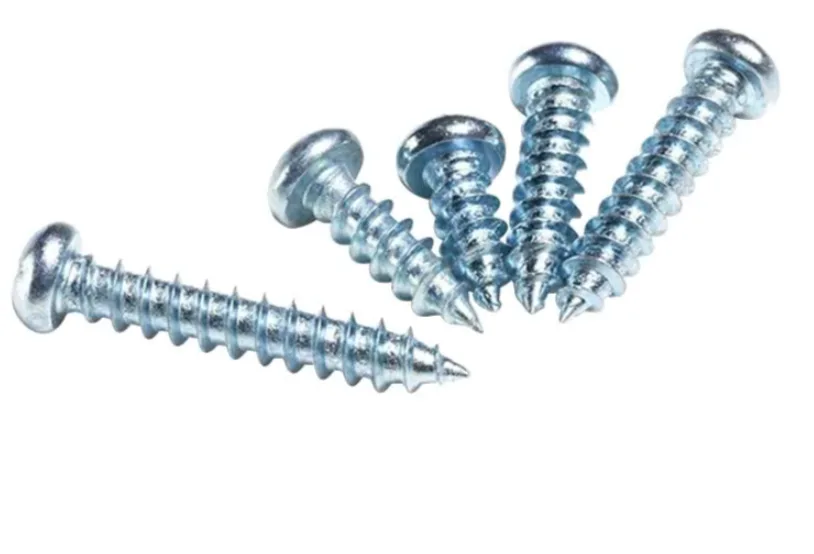
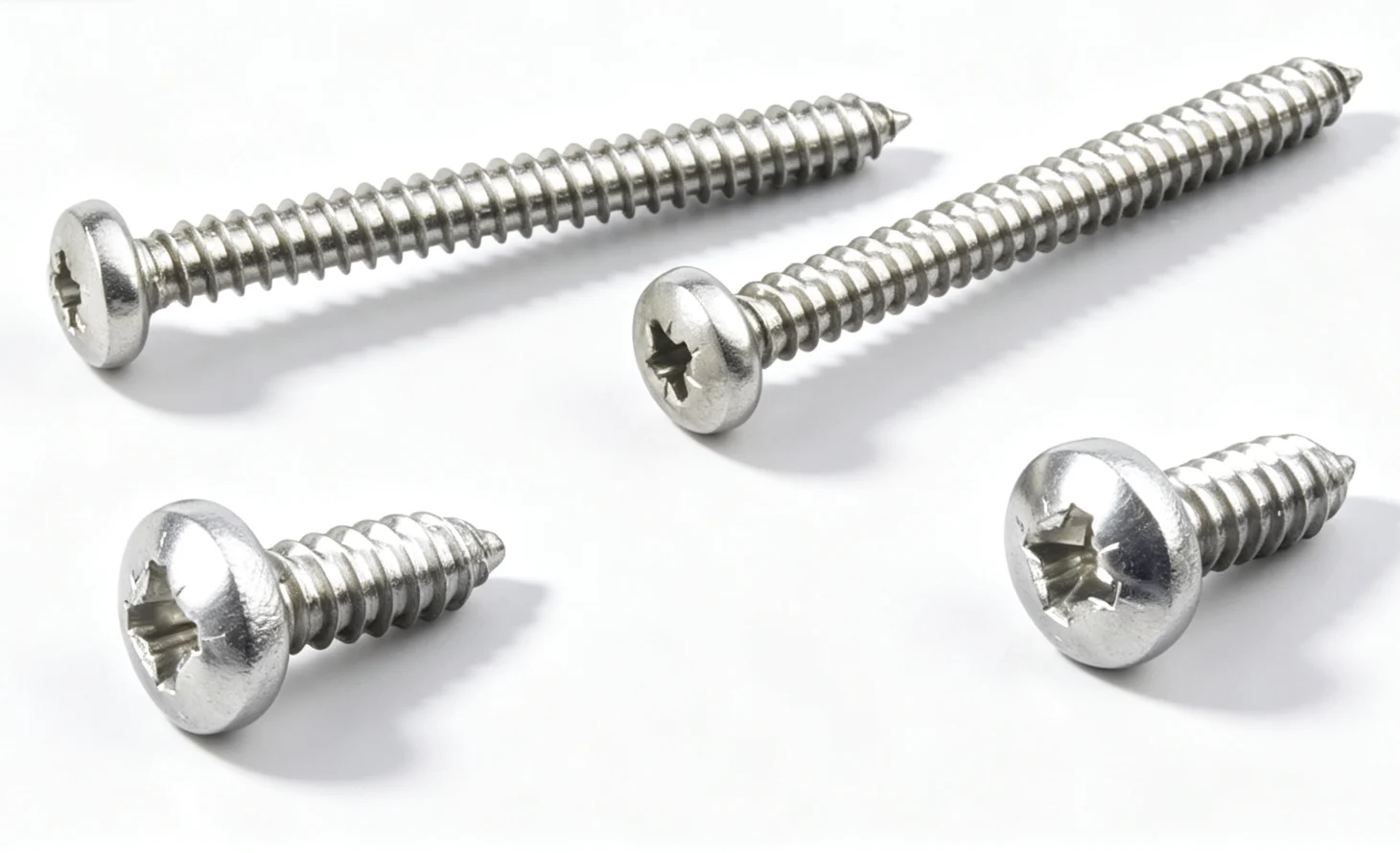
DIN 7981 is a withdrawn German standard for cross-recessed pan head tapping screws. The formal German successor route is DIN 7981 → DIN ISO 7049 → DIN EN ISO 7049, while ISO 7049 is the current international product standard. DIN 7981 remains a strong legacy drawing, catalogue and RFQ term, but replacement must preserve head geometry, ST thread, recess and point form.
| Reference | Status and purchasing relationship |
|---|---|
| DIN 7981 | Withdrawn legacy German standard; still widely manufactured and ordered |
| ISO 7049 | Current international standard for cross-recessed pan head tapping screws |
| DIN EN ISO 7049 | Current German adoption and formal successor route |
| ASME B18.6.3 | Related US inch-series tapping-screw family; not a direct metric equivalent |
| UNI 6954 | Historical Italian comparable standard; edition and dimensions must be checked |
| JIS B 1122 | Current Japanese cross-recessed tapping-screw standard; modified adoption covering ISO 7049/7050/7051 families |
Why DIN 7981 and ISO 7049 can be cross-referenced
They describe the same principal product concept:
- pan head;
- cross recess;
- ST tapping-screw thread rather than an ordinary metric machine-screw thread;
- thread-forming/tapping installation in a prepared pilot hole or suitable material;
- pointed or other specified thread-end form.
This is a strong successor relationship, not proof that every old DIN and current ISO part is dimensionally identical. The cited editions, nominal ST size, head envelope, recess and point must still be compared.
Concrete DIN 7981 and ISO 7049 head-diameter differences
Representative legacy/current comparison data shows small but real differences in pan-head diameter dₖ:
| ST size | DIN 7981 head diameter | ISO 7049 head diameter | Difference |
|---|---|---|---|
| ST 2.2 | 4.2 mm | 4.0 mm | ISO 0.2 mm smaller |
| ST 3.5 | 6.9 mm | 7.0 mm | ISO 0.1 mm larger |
| ST 4.2 | 8.2 mm | 8.0 mm | ISO 0.2 mm smaller |
| ST 5.5 | 10.8 mm | 11.0 mm | ISO 0.2 mm larger |
| ST 6.3 | 12.5 mm | 12.0 mm | ISO 0.5 mm smaller |
For DIN 7981 ST 6.3, the half-millimetre reduction in nominal head diameter can affect hole coverage and sheet pull-through margin. At smaller sizes, even a 0.1–0.2 mm change can matter in a close counterbore, washer or surrounding boss.
Head height k is also an acceptance dimension, but it should be taken from the controlled DIN and ISO edition rather than described with an unsupported universal change. Check dₖ, k, head radius, bearing face and available vertical clearance together.
ST 3.5 is not M3.5
The ST designation identifies a tapping-screw thread. It is not an ISO metric machine thread intended for a standard nut or tapped M hole.
For replacement, verify:
- nominal ST size and actual major-diameter limits;
- pitch/thread spacing and thread profile;
- pilot-hole diameter and sheet/material thickness;
- engagement length and installation torque;
- material hardness and risk of stripping or screw fracture.
An ASME #8 or an M4 machine screw may look close to ST 4.2, but neither is an automatic thread substitute.
Point form C and F must remain explicit
Legacy DIN 7981 callouts may distinguish thread-end forms such as:
- C — pointed/tapered end for easier entry;
- F — flatter end where end clearance or application geometry requires it.
The end form affects starting, pilot-hole engagement, blind-space clearance and installation behaviour. Do not replace DIN 7981 C with an unspecified or F-point screw solely because diameter and length match. Current DIN EN ISO 7049 procurement should retain the required end form or the drawing geometry.
Cross recess H and Z are not the same drive interface
DIN/ISO purchasing commonly distinguishes cross-recess types H and Z, often described commercially as Phillips-type and Pozidriv-type. Use the standard recess type and recess number on the RFQ because driver engagement, depth and cam-out behaviour differ.
Do not infer bit compatibility from the words “cross recessed” alone. Also, a hexalobular/Torx-drive pan-head tapping screw is a functional alternative, not DIN 7981 or ISO 7049. ISO 14585 is the relevant ISO product family for hexalobular socket pan head tapping screws; changing to it also changes assembly tooling.
Why JIS B 1115 was the wrong mapping
JIS B 1115:2015 specifies slotted head tapping screws. DIN 7981 specifies a cross recess, so JIS B 1115 is not the correct Japanese cross-reference.
The relevant Japanese standard is JIS B 1122:2015, titled Cross recessed head tapping screws. It covers ST 2.2–ST 9.5 and is a modified (MOD) adoption relating to:
- ISO 7049 — pan head;
- ISO 7050 — countersunk head;
- ISO 7051 — raised countersunk head.
DIN 7981 corresponds to the pan-head portion related to ISO 7049, not every product inside JIS B 1122. Because the adoption is MOD rather than IDT, confirm the JIS screw type, head table, recess, point, material and cited edition before substitution. Do not make a universal claim that every JIS product needs a special driver; specify and verify the actual recess geometry and bit.
ASME B18.6.3 is a regional functional relation
ASME B18.6.3 covers an American family of machine screws, tapping screws and related products with inch-series numbered or fractional sizes and multiple tapping-screw types, such as A, AB and B forms.
It is useful for US sourcing searches, but it is not the American number for DIN 7981. A nominally close screw can differ in:
- major diameter and diameter tolerances;
- threads per inch versus the ST pitch;
- point/thread-forming type;
- pan-head diameter and height;
- recess geometry and material requirements.
Treat ASME B18.6.3 as a possible engineering-approved functional alternative after the pilot hole, thread engagement, head clearance, torque and performance are revalidated—not as a direct replacement.
UNI 6954 is a historical purchasing link
UNI 6954 can remain in the cross-reference as a historical Italian standard for the comparable cross-recessed pan-head tapping-screw family. Do not state that every UNI 6954 part is dimensionally identical to DIN 7981 without an edition-specific comparison.
Confirm ST size, head diameter/height, cross-recess type and number, point form, length range, material and coating. For modern Italian/European procurement, the applicable EN ISO adoption should be preferred where the drawing and customer approval permit conversion.
Material, heat treatment and coating are part of performance
Steel tapping screws often require a hard surface to form or cut the mating thread while retaining adequate core toughness. Mechanical acceptance must follow the applicable product/material requirements; it should not be inferred from structural-bolt property classes such as 8.8 or 10.9.
Stainless products also require their applicable tapping-screw material/mechanical specification. Do not transfer an ordinary bolt marking such as A2-70 or A4-80 onto the product without confirming the governing standard and manufacturer qualification.
Electroplated zinc, zinc-flake, passivation and other finishes affect corrosion protection, friction, installation torque and hydrogen-embrittlement controls. Specify the coating separately from the dimensional standard.
A pan head is not a built-in washer or a locking feature
DIN 7981 / ISO 7049 define a pan head, not a washer head, flange head or captive washer assembly. If greater bearing area is required, select the approved washer or a separately specified head form after checking stack height and installation.
Self-tapping thread friction is not a standardized secondary locking system. Nylon patches, serrations, thread-locking compounds and other locking features must be specified and validated separately.
There is no universal DIN 7981 temperature limit. Temperature capability depends on screw material, heat treatment, coating, mating material, load, corrosion environment and retained clamp performance.
RFQ and replacement checklist
For a legacy callout such as DIN 7981 C – ST 4.2 × 16 – H2 – zinc plated, confirm:
- DIN edition and whether DIN EN ISO 7049 conversion is approved.
- ST size, nominal length and full thread geometry.
- Point/end form C, F or another specified form.
- Head diameter
dₖ, head heightk, radius and surrounding clearance. - Cross-recess type H/Z and recess number; required production bit.
- Pilot-hole diameter, sheet/material thickness and substrate hardness.
- Steel/stainless material, heat treatment and mechanical requirements.
- Coating, lubrication, corrosion class and hydrogen-embrittlement controls.
- Installation torque window, stripping torque and required joint tests.
- Whether ASME, UNI or JIS is only a sourcing comparison or an approved alternative.
- Inspection documents, lot traceability and customer drawing dimensions.
Purchasing conclusion
DIN EN ISO 7049 is the formal modern German route for legacy DIN 7981 cross-recessed pan-head tapping screws, and ISO 7049 is the strongest international product cross-reference. Small head-diameter differences are concrete and should be checked. ASME B18.6.3 and UNI 6954 remain useful regional purchasing relations with qualifications. The correct Japanese reference is JIS B 1122—not slotted-head JIS B 1115—and DIN 7981 maps only to its ISO 7049-related pan-head portion. Approve substitution by ST thread, head envelope, recess, point, material, coating and installation performance.