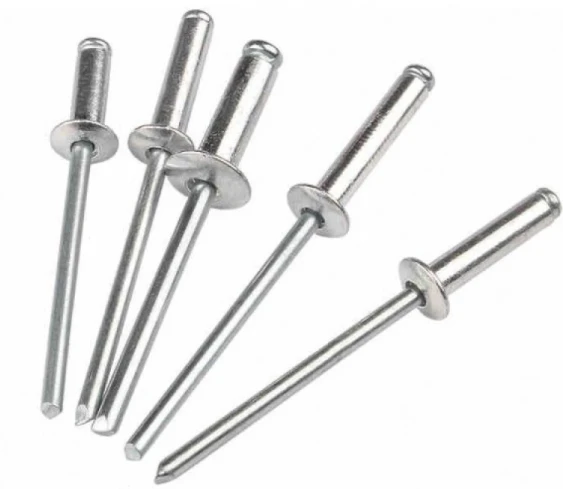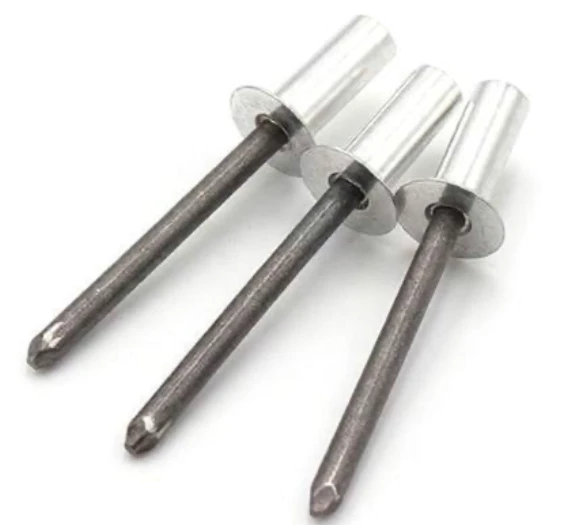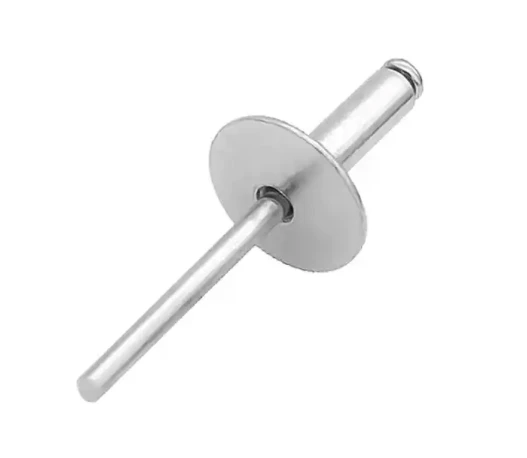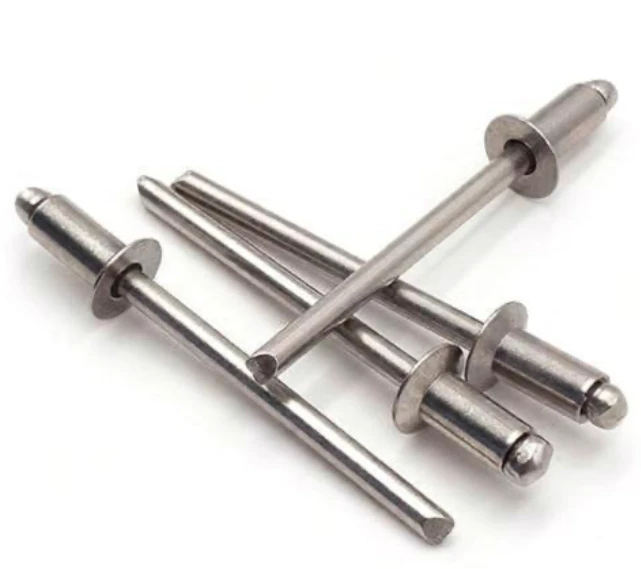
Quick answer: what is the DIN 7337 equivalent?
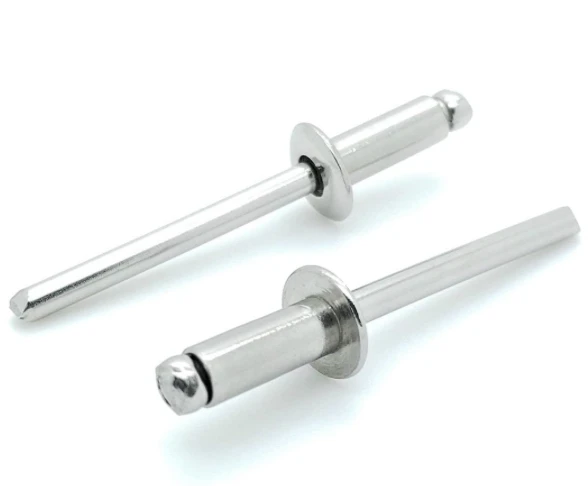
DIN 7337 is a withdrawn German blind-rivet family that remains common on legacy drawings and RFQs. For the open-end, protruding-head rivet with an aluminium-alloy body and steel break-pull mandrel, ISO 15977 and its German adoption DIN EN ISO 15977 are the correct modern product references. This relationship applies to that configuration; it does not convert every former DIN 7337 rivet into ISO 15977.
| Reference | Status and purchasing relationship |
|---|---|
| DIN 7337 | Withdrawn historical German blind-rivet family; exact type or form must be identified |
| ISO 15977 | Matching product standard for open-end, protruding-head, Al-alloy body/steel-mandrel blind rivets |
| DIN EN ISO 15977 | German adoption of ISO 15977; a direct adoption relationship |
| UNI 9200 | Withdrawn historical Italian blind-rivet reference; compare the exact form and dimensions |
| JIS product equivalent | None identified for direct entry in this product cross-reference |
DIN 7337 is broader than one ISO product standard
The old DIN designation was used for a blind-rivet family. The modern DIN EN ISO system separates products by:
- protruding or countersunk head;
- open or closed end;
- rivet-body material;
- mandrel material;
- standard or structural construction.
This page therefore addresses only the configuration represented by the public row: open end + protruding head + aluminium-alloy body + steel mandrel. For example, the related countersunk Al/St configuration is handled separately by DIN 7337B / ISO 15978. Closed-end, stainless and other combinations require their own applicable product standards.
Calling ISO 15977 “the DIN 7337 equivalent” is useful only when this scope limitation appears beside the answer.
Why DIN 7337 and ISO 15977 can be cross-referenced
For the matching configuration, they share the essential product and installation concept:
- open-end blind-rivet body;
- protruding visible head;
- aluminium-alloy rivet body;
- steel break-pull mandrel;
- one-sided installation using a blind-rivet setting tool;
- formation of the blind-side head as the mandrel is pulled and broken.
That is a strong product relationship. A purchasing conversion must still preserve the original edition or drawing requirements for diameter, length, head geometry, grip range, materials, finish and mechanical performance.
ISO 15977 controls more than nominal diameter
ISO 15977 covers nominal diameters 2.4, 3.0, 3.2, 4.0, 4.8, 5.0, 6.0 and 6.4 mm. Its protruding-head diameter ranges include the following representative values:
| Nominal body diameter | Head diameter range |
|---|---|
| 2.4 mm | 4.2–5.0 mm |
| 3.0 mm | 5.4–6.3 mm |
| 3.2 mm | 5.8–6.7 mm |
| 4.0 mm | 6.9–8.4 mm |
| 4.8 mm | 8.3–10.1 mm |
| 5.0 mm | 8.7–10.5 mm |
| 6.0 mm | 10.8–12.6 mm |
| 6.4 mm | 11.6–13.4 mm |
These ISO values identify the current product envelope; they do not by themselves prove that every historical DIN 7337 dimension changed. Where a legacy DIN dimension is critical, compare the cited DIN edition or the original drawing instead of inventing a DIN/ISO difference from an ISO table alone.
Head diameter and height affect visible-side bearing area, sheet pull-through resistance and surrounding clearance. A countersunk or large-flange rivet with the same body diameter is a different product, not a cosmetic alternative.
Diameter × length is not the grip range
A callout such as 4.8 × 12 normally states rivet-body diameter and nominal body length. It does not mean that the rivet can clamp 12 mm of material.
The grip range is the permitted total thickness of the assembled sheets or components. Correct setting requires enough body length to form the blind-side head without leaving an under-set or over-set joint. When converting an old DIN 7337 callout, provide the actual stack thickness and check the applicable ISO table or the approved manufacturer's grip chart.
Also verify the recommended hole diameter. Excessive clearance can reduce setting quality and load transfer; an undersized hole can prevent insertion or damage the body.
Material combination is part of the standard identity
ISO 15977 is not a generic standard for every “aluminium blind rivet.” It specifically identifies an aluminium-alloy body with a steel mandrel. Other combinations—aluminium/aluminium, steel/steel, stainless/stainless or mixed corrosion-resistant systems—belong to different product standards or approved manufacturer specifications.
Blind-rivet acceptance is based on requirements such as shear strength, tensile strength, mandrel-head retention, mandrel break behaviour and installation performance. Bolt property classes such as 8.8 or 10.9 must not be assigned to these rivets.
Open-end is not closed-end, sealed or structural
An ISO 15977 rivet is open-end. Do not advertise or approve it as automatically watertight, gas-tight or pressure-tight. Where sealing is required, select the specified closed-end or sealing product and validate the actual joint.
A standard open-end rivet is also not automatically equivalent to a structural blind rivet. Structural products may use retained mandrels and controlled high-load features. Substitution requires engineering approval based on joint performance, not visual similarity.
Why the JIS field is intentionally blank
JIS B 1213 must not be shown as the Japanese equivalent of DIN 7337. JIS B 1213 covers cold-headed rivets, including ordinary solid-rivet forms. Those products have no break-pull mandrel and normally require the rivet tail to be upset during installation. That differs fundamentally from a one-sided blind rivet.
Japan does have relevant blind-rivet standards:
| JIS reference | Scope | Why it is not the product equivalent |
|---|---|---|
| JIS B 0147:2004 | Blind-rivet terminology and definitions; identical adoption of ISO 14588:2000 | Terminology standard, not product dimensions/materials |
| JIS B 1087:2004 | Mechanical testing of blind rivets; identical adoption of ISO 14589:2000 | Test-method standard, not a specific rivet product |
Neither specifies the complete ISO 15977 product configuration. Japanese procurement can therefore cite ISO 15977 plus the drawing or manufacturer specification; the JIS product-equivalent cell remains blank rather than displaying a misleading number.
UNI 9200 is a useful historical relation
UNI 9200 can remain as a withdrawn Italian blind-rivet cross-reference because it addresses the same general rivet-and-break-mandrel purchasing family. It should not be assigned one unconditional modern ISO successor without identifying head form, open/closed construction and body/mandrel materials.
Legacy UNI tables include overlapping nominal diameters but may use different head ranges or product forms. Confirm the UNI edition and full product designation before approving ISO 15977.
RFQ and replacement checklist
For a legacy request such as DIN 7337 – 4.8 × 12 – Al/St, confirm:
- DIN edition and the exact former type or form.
- Open or closed end.
- Protruding, countersunk or large-flange head.
- Rivet-body diameter, body length and recommended hole diameter.
- Actual joint stack thickness and required grip range.
- Body material and mandrel material separately.
- Head diameter, head height and surrounding clearance.
- Required shear, tensile and mandrel-retention performance.
- Finish, galvanic compatibility, corrosion exposure and temperature conditions.
- Whether ISO 15977 is an approved conversion or only a sourcing reference.
- Inspection records, lot traceability and installation-tool requirements.
Purchasing conclusion
Use ISO 15977 / DIN EN ISO 15977 as the modern reference only for the matching DIN 7337 open-end, protruding-head, aluminium-body/steel-mandrel configuration. Keep withdrawn UNI 9200 as a qualified historical procurement relation. Leave the JIS product field blank: JIS B 1213 is a different cold-headed/solid-rivet product, while JIS B 0147 and JIS B 1087 cover terminology and testing rather than the complete rivet product. Approve replacement by configuration, grip range, head geometry, materials and mechanical performance—not by nominal diameter alone.