Property classes 8.8, 10.9 and 12.9 are among the most commonly specified strength classes for metric carbon-steel and alloy-steel bolts, screws and studs under ISO 898-1. The numbers look like a simple strength ladder, but choosing the highest one does not automatically make a joint safer. As property class increases, strength and hardness generally increase, while preload, coating and installation control become more important.
Select the class from the joint load, geometry, thread engagement, fatigue conditions, environment and tightening method—not from tensile strength alone.
What the numbers actually mean
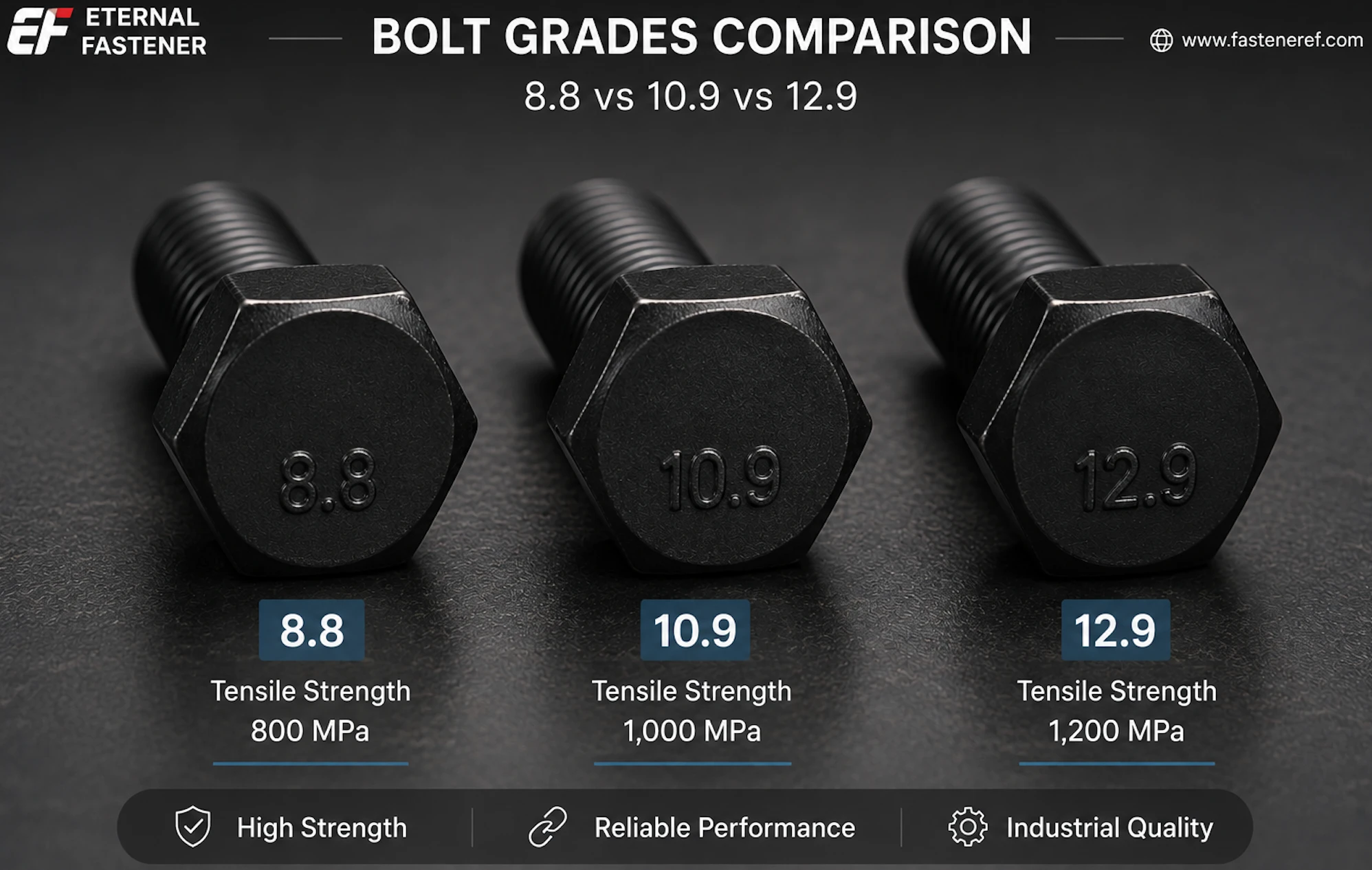
The first number multiplied by 100 gives the nominal tensile strength in MPa. The second number represents a nominal ratio between yield or non-proportional proof strength and nominal tensile strength. Class 10.9 therefore represents 1,000 MPa nominal tensile strength and a 0.9 nominal strength ratio. This calculation does not always equal the minimum value used for inspection or purchasing.
| Mechanical property | Class 8.8 | Class 10.9 | Class 12.9 |
|---|---|---|---|
| Nominal tensile strength | 800 MPa | 1,000 MPa | 1,200 MPa |
| Minimum tensile strength | 800 / 830 MPa | 1,040 MPa | 1,220 MPa |
| Minimum yield or 0.2% non-proportional strength | 640 / 660 MPa | 940 MPa | 1,100 MPa |
| Proof load stress | 580 / 600 MPa | 830 MPa | 970 MPa |
| Specified Vickers hardness range | 250–320 HV | 320–380 HV | 385–435 HV |
The paired Class 8.8 values depend on nominal-diameter range. Always check the applicable edition of ISO 898-1 and the product standard; this summary does not replace the complete test requirements.
Twenty-five percent stronger describes only one number
Class 10.9 has 25% more nominal tensile strength than Class 8.8, but the complete joint does not automatically gain 25% more capacity. Proof load, ductility, fatigue, shear, thread engagement, clamped-material strength and preload can control the design. Higher classes also generally have lower elongation, so they may be less tolerant of bending, misalignment or uncontrolled tightening.
This does not mean Class 12.9 is inherently poor under vibration. Fatigue performance depends on stress amplitude, preload, thread geometry, surface condition and joint stiffness. The accurate conclusion is that higher static tensile strength does not guarantee a proportional increase in fatigue life.
When to choose each property class
Class 8.8
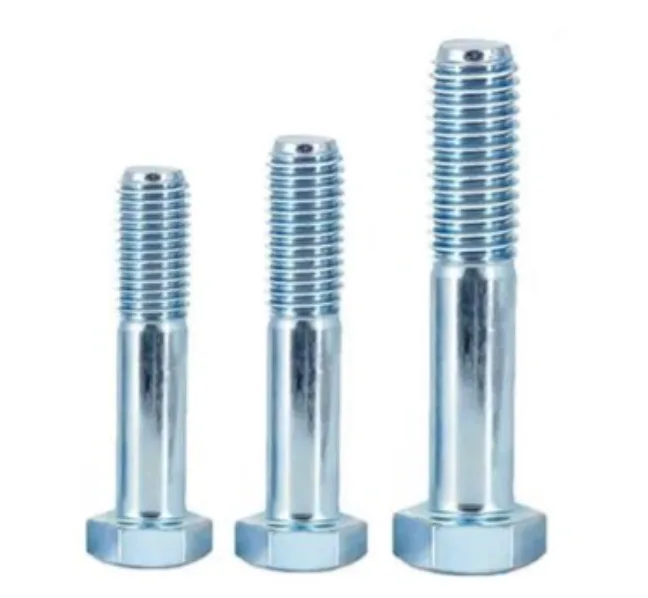
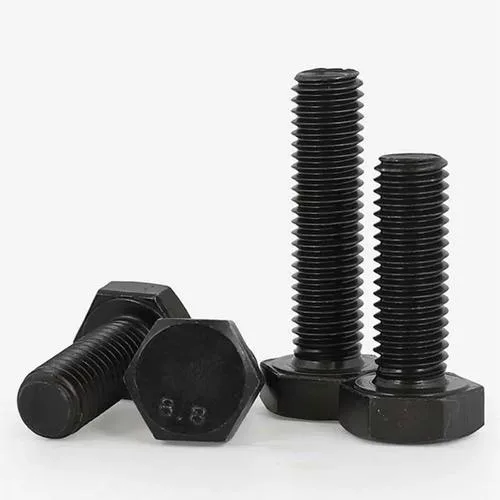
A practical starting point for general machinery, frames, agricultural equipment and many industrial joints. It offers a useful balance of strength, ductility, availability and cost. Partial-thread hex bolts and full-thread hex bolts are commonly supplied in 8.8 where the product standard permits it.
Class 10.9
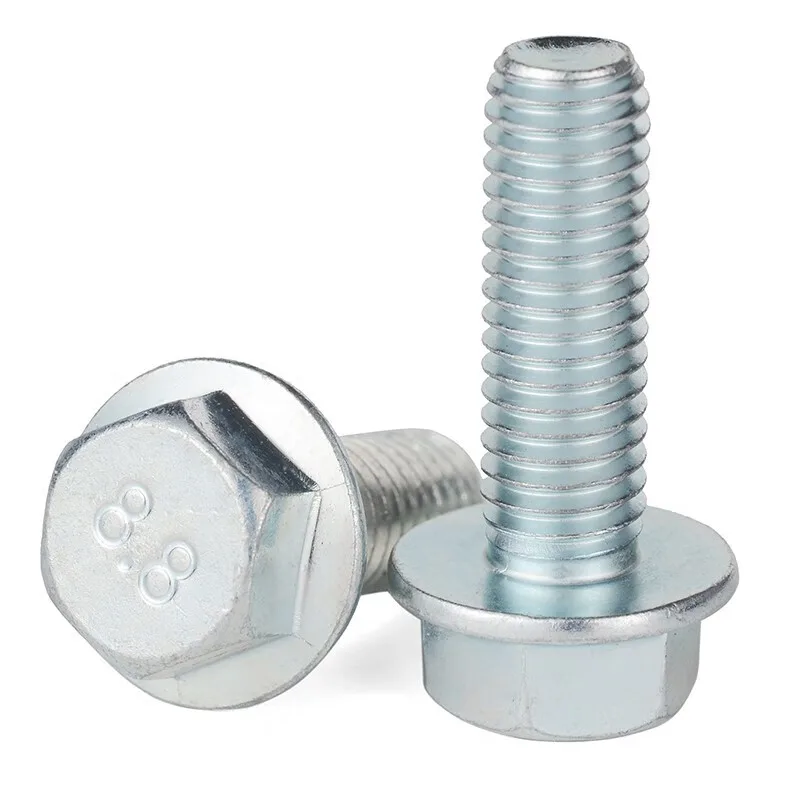
Use 10.9 when the calculation requires higher proof capacity or preload within limited space, as in heavy machinery and selected automotive, energy and equipment joints. It is also common in hex flange bolts and some structural-bolting systems. However, a 10.9 marking alone does not make a generic bolt approved for a specified preloaded structural assembly.
Class 12.9
Normally reserved for compact, highly loaded joints, precision machinery and selected socket-head or specially engineered products. It demands closer control of friction, tightening, coating and thread engagement. Do not use 12.9 as a precautionary upgrade unless the joint design and product standard allow it.
A stronger bolt does not always create a stronger joint
The assembly may reach a limit before the bolt reaches its tensile capacity. Possible controlling modes include nut or internal-thread stripping, bearing or indentation of the clamped material, washer deformation, joint slip, shear, fatigue and insufficient preload. Evaluate the bolt, nut, washer, clamped parts and installation method as one fastening system.
Where a preloaded structural system such as EN 14399 or a project-specific assembly is required, purchase the specified compatible bolt, nut and washer set. Do not assume that an independently sourced Class 10.9 bolt is a direct substitute.
Hydrogen embrittlement and coating selection
Susceptibility to hydrogen-assisted delayed failure generally becomes more important as hardness and applied stress increase. Hydrogen may be introduced during acid cleaning, electroplating or other manufacturing operations and can produce sudden cracking after installation.
Non-electrolytic coatings such as controlled zinc-flake systems can reduce the risk of hydrogen introduced during deposition when pretreatment is also controlled, but they do not create zero risk. Manufacturing, cleaning, actual hardness and applied stress still matter. Trade names such as Geomet or Dacromet are not complete specifications; formulation, chromium content and performance differ by system. State the coating standard, thickness, coefficient-of-friction range, corrosion requirement and hydrogen-control provisions.
If electroplating is proposed for 10.9 or 12.9 fasteners, review pretreatment, hydrogen-relief and testing requirements under the applicable coating standard and customer specification. Post-coating heat treatment can reduce risk but is not an absolute guarantee.
Can 8.8 be replaced with 10.9 or 12.9?
The bolts may be dimensionally interchangeable, but their mechanical and installation requirements are not identical. Before approving a change, check:
- diameter, thread pitch and thread engagement;
- nut class and nut standard;
- washer type, dimensions and hardness;
- required preload and tightening method;
- bearing strength of the clamped components;
- fatigue, vibration, impact and shear loading;
- coating, friction and hydrogen-embrittlement controls;
- operating temperature and corrosive environment;
- product standard, drawing and engineering approval.
The practical purchasing rule is to supply the property class stated on the drawing unless a documented engineering change authorizes the substitution.
Torque does not transfer automatically between grades
When target preload is set as a percentage of bolt capacity, a higher class normally permits a higher target preload. That does not mean torque should be increased simply because the head marking changed. Torque depends on required preload, thread pitch, coating, lubrication, thread friction, under-head friction and tightening method.
A dry torque table may overload a lubricated assembly, while a generic chart may not produce the clamp load required by the joint. For critical joints, use an approved tightening procedure or a preload-controlled method rather than estimating from property class alone.
Match the nut and washer to the system
Select the nut class under ISO 898-2 together with the product standard, size and coating. Common starting combinations are a Class 8 nut with an 8.8 bolt, Class 10 with 10.9, and Class 12 with 12.9 where specified and available. However, the shortcut that any higher-class nut is automatically acceptable is not a substitute for checking the applicable standard and joint design.
The washer must support the clamp load without excessive indentation or deformation. Preloaded structural assemblies normally require specified compatible components rather than independently selected stock parts.
Property class is not a steel grade or a temperature rating
Classes 8.8, 10.9 and 12.9 are not material names such as 40Cr, 35CrMo, 42CrMo or SCM435. A property class may be achieved with different compliant steels and heat-treatment routes. Control the permitted chemistry, manufacturing process and final mechanical properties instead of assuming one alloy from the class number.
Class 12.9 also does not mean better high-temperature capability than 8.8 or 10.9. ISO 898-1 defines properties under its specified test conditions, not a universal service-temperature rating. For elevated or low temperatures, check the material, strength retention, relaxation, coating and governing design specification separately.
ISO, SAE and ASTM are not exact substitutes
Buyers sometimes compare ISO 8.8 approximately with SAE Grade 5 and ISO 10.9 with SAE Grade 8. These are broad sourcing comparisons, not identical standard designations. Dimensions, size ranges, material rules, tests and markings differ. ASTM A193 B7, ASTM F3125 and other ASTM grades are also independent specifications—not American names for ISO property classes. Follow the standard on the drawing unless an alternative is formally approved.
Identification and a better purchase specification
Where marking is required, the bolt head normally carries the property class and manufacturer identification. Do not identify a class from color, coating or appearance. For critical joints, request inspection certification, mechanical-property results, coating records and lot traceability.
A useful purchase description is:
M16 × 100, ISO 4014 hex head bolt, property class 10.9, zinc-flake coating with controlled friction, matching Class 10 nut and compatible hardened washer, inspection certificate required.
That is much more reliable than ordering only a high-strength bolt.
Final selection
Choose 8.8 for general applications when it satisfies the calculation. Choose 10.9 when the joint genuinely needs more proof capacity or preload. Choose 12.9 when the design requires maximum capacity in limited space and manufacturing, coating and installation can be tightly controlled. The correct class is the one that satisfies the complete joint—not the one with the largest number.