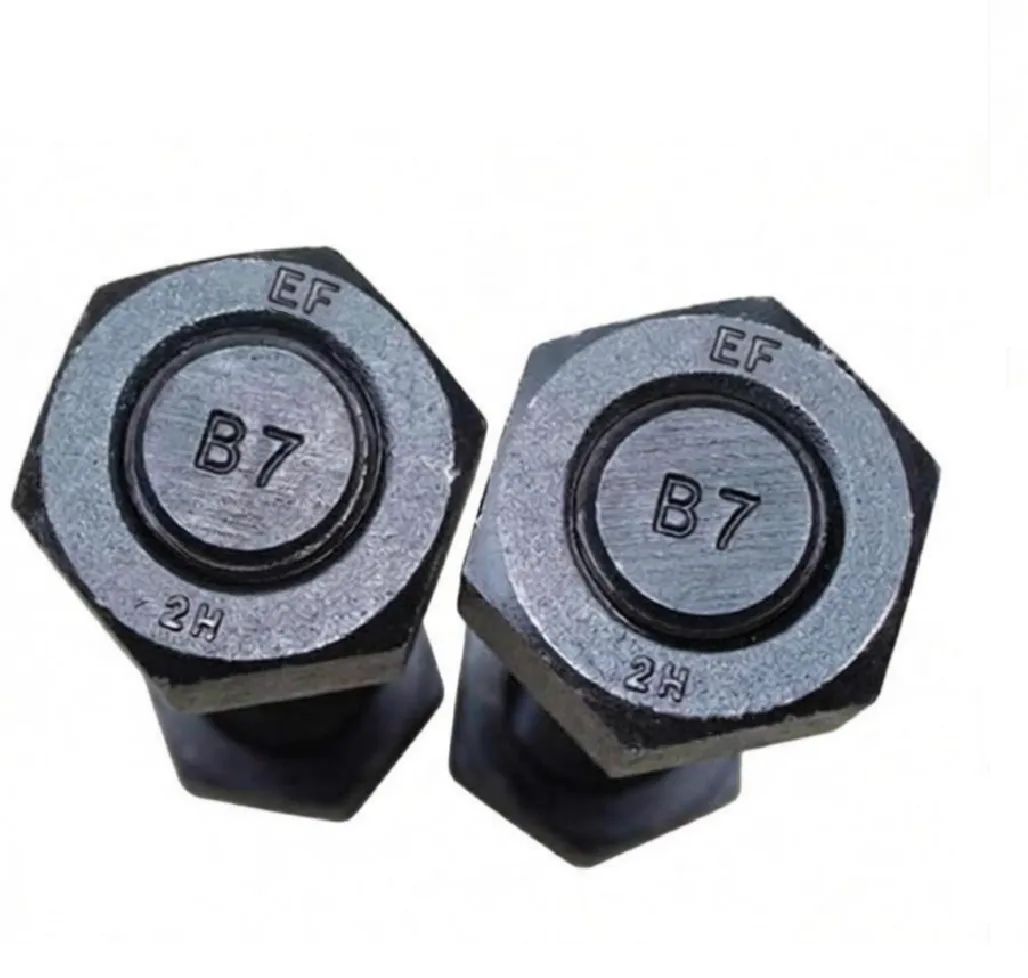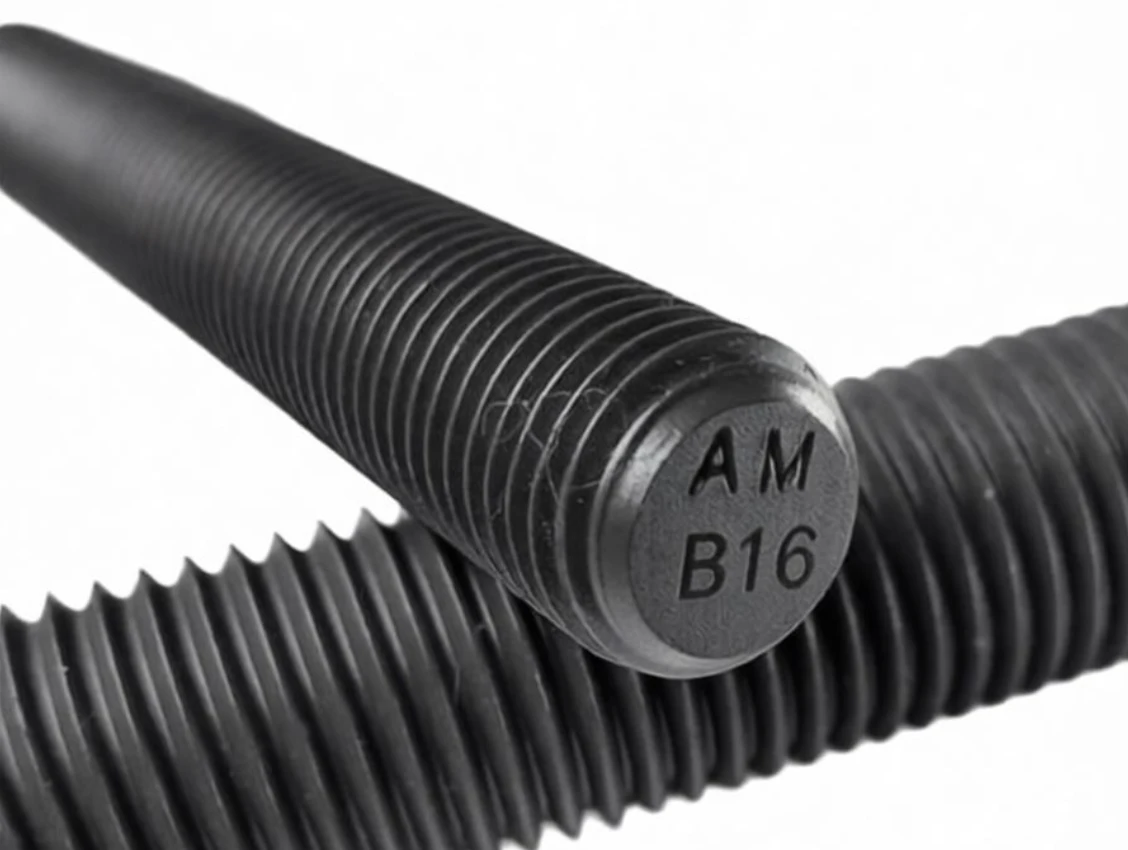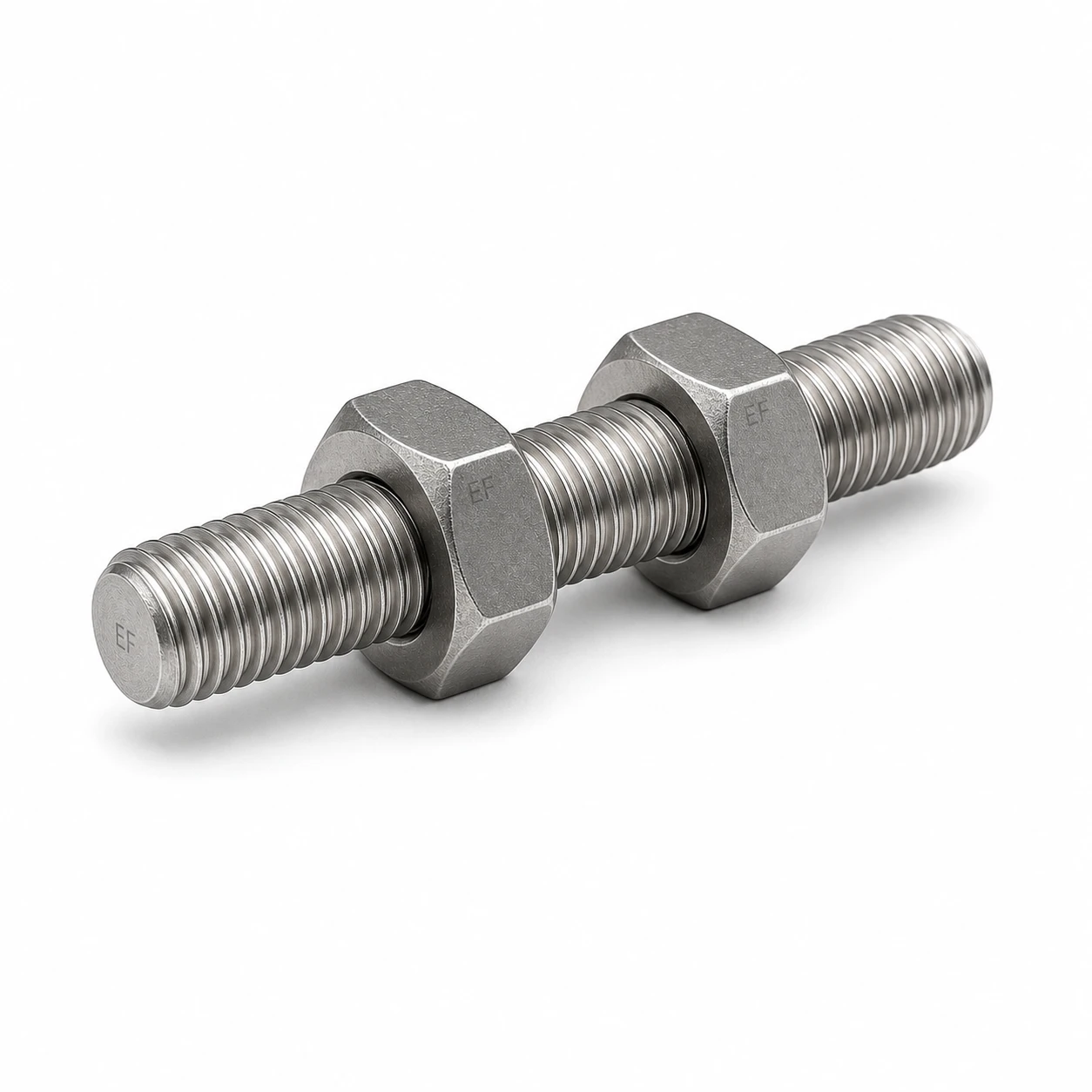
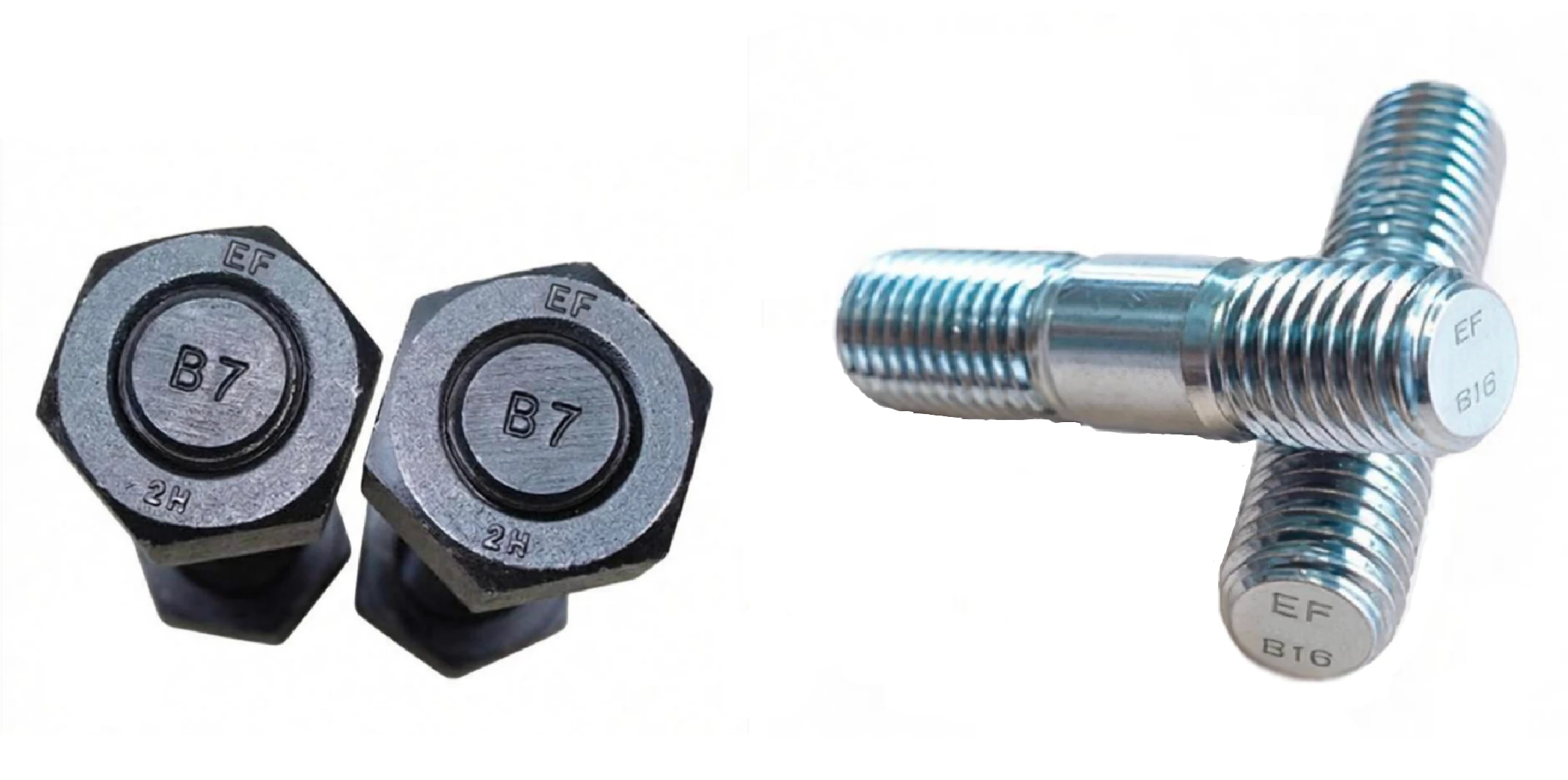
ASTM A193 Grade B7 and Grade B16 are quenched-and-tempered alloy-steel bolting grades used for pressure vessels, valves, flanges, fittings, process piping and other special-purpose joints. They can have the same minimum room-temperature tensile and yield strength in the smaller diameter range, but that does not make them universally interchangeable.
The practical distinction is that B7 is a chromium-molybdenum grade widely used for general pressure and elevated-temperature bolting, while B16 is a chromium-molybdenum-vanadium grade developed for more demanding sustained-temperature service. Grade selection must follow the governing design code, allowable-stress table, temperature history, joint design and project specification—not a universal website temperature limit.
Quick comparison
| Item | ASTM A193 B7 | ASTM A193 B16 | Procurement meaning |
|---|---|---|---|
| Alloy family | Cr-Mo | Cr-Mo-V | B16 is a different grade, not merely B7 with a higher strength label |
| Molybdenum requirement | About 0.15–0.25% | About 0.50–0.65% | B16 has substantially more molybdenum |
| Vanadium requirement | No specified vanadium alloy range | About 0.25–0.35% | Supports B16's elevated-temperature microstructural stability |
| Heat treatment | Quenched and tempered | Controlled high-temperature austenitizing, oil quenching and tempering | Heat-treatment records and grade identity matter |
| Strength at ≤2½ in. | 125 ksi tensile / 105 ksi yield minimum | 125 ksi tensile / 105 ksi yield minimum | Equal small-diameter room-temperature minima do not prove equal high-temperature performance |
| Main selection driver | General pressure/elevated-temperature service, availability and cost | Sustained elevated temperature, creep and stress-relaxation concerns | Use design allowables and project requirements |
| Common nut starting point | ASTM A194 Grade 2H | ASTM A194 Grade 7 for many high-temperature specifications | Final pairing must follow the code and project |
The chemistry values above summarize commonly specified ASTM ranges. The purchase order and MTC must comply with the edition of ASTM A193/A193M invoked by the project; do not use a web table as the acceptance document.
Chemical composition: B16 is not simply stronger B7
| Element | B7 commonly specified range | B16 commonly specified range | Why it matters |
|---|---|---|---|
| Carbon | 0.37–0.49% | 0.36–0.47% | Hardenability and strength after heat treatment |
| Chromium | 0.75–1.20% | 0.80–1.15% | Hardenability and elevated-temperature oxidation behavior |
| Molybdenum | 0.15–0.25% | 0.50–0.65% | Temper resistance and elevated-temperature strength |
| Vanadium | Not specified as an alloy range | 0.25–0.35% | Fine carbide precipitation and microstructural stability |
B7 is commonly produced from the 4140/4142 Cr-Mo family. B16 is a Cr-Mo-V composition with its own ASTM chemistry and heat-treatment requirements; it should not be described as modified 4140 without qualification, and it is not a 12% chromium stainless grade.
Mechanical properties depend on diameter
The room-temperature mechanical-property comparison must include diameter. The following minimum tensile and yield values are commonly listed for B7 and B16 bolting; verify the exact table in the ASTM edition named by the purchase specification.
| Nominal diameter | B7 minimum tensile / yield | B16 minimum tensile / yield |
|---|---|---|
| Up to 2½ in. | 125 / 105 ksi | 125 / 105 ksi |
| Over 2½ through 4 in. | 115 / 95 ksi | 110 / 95 ksi |
| Over 4 through 7 in. | 100 / 75 ksi | 100 / 85 ksi |
Both grades are commonly limited to 321 HBW or 35 HRC in their general condition, subject to the applicable standard requirements. Elongation, reduction of area, sampling and test orientation must also be checked rather than approving a lot from tensile strength alone.
Temperature: ASTM A193 does not give one universal service limit
Statements such as ‘B7 is safe to exactly 450°C’ or ‘B16 is always acceptable to 590°C’ are too absolute. ASTM A193 specifies bolting material, heat treatment, mechanical tests and product requirements; the allowable stress at temperature and suitability of a joint come from the governing equipment or piping code and the project design basis.
In industry, B7 is widely used in conventional refinery, petrochemical and pressure-flange service and is often evaluated through roughly the 400–450°C region. B16 is commonly considered as sustained temperature rises and creep or stress relaxation becomes more important. Those ranges are screening guidance only. The final selection must check the applicable ASME Section II-D allowable stresses, the relevant ASME B31 or BPVC construction code, exposure time, pressure, flange and gasket behavior, nut grade, coating, lubricant and required life.
A high operating temperature also does not automatically make B16 sufficient. Oxidation, process corrosion, thermal expansion mismatch, cyclic operation and temperatures beyond the code window may require another alloy, such as a qualified stainless, ASTM A453 or nickel-alloy bolting system.
Why creep and stress relaxation matter
Creep is time-dependent deformation under sustained stress at elevated temperature. Stress relaxation is the resulting reduction of stress or bolt load while total joint deformation is constrained. In a gasketed flange, excessive relaxation can reduce gasket compression and increase leakage risk even when the stud initially passed its room-temperature tensile test.
B16's higher molybdenum, controlled vanadium and heat treatment provide the metallurgical reason it is selected for more demanding elevated-temperature bolting. ASTM A193 does not, however, guarantee a universal number of service years or a fixed percentage advantage over B7. If long-term relaxation is a design concern, the purchaser should invoke the applicable supplementary requirement or project-specific test and acceptance criteria.
Heat treatment and traceability
B7 and B16 are quenched and tempered, but B16 has a distinct controlled route. ASTM requirements call for B16 to be heated in the approximate 1700–1750°F (927–954°C) range and oil quenched before tempering in accordance with the applicable table. The MTC should identify the heat, grade, heat-treatment condition, chemistry and mechanical results.
Traceability should connect the product marking to the heat number, raw material, heat-treatment batch, mechanical tests, hardness and inspection records. For critical pressure service, PMI can confirm alloy identity, but PMI does not replace tensile, heat-treatment or dimensional certification.
Nut pairing: specify the complete bolting assembly
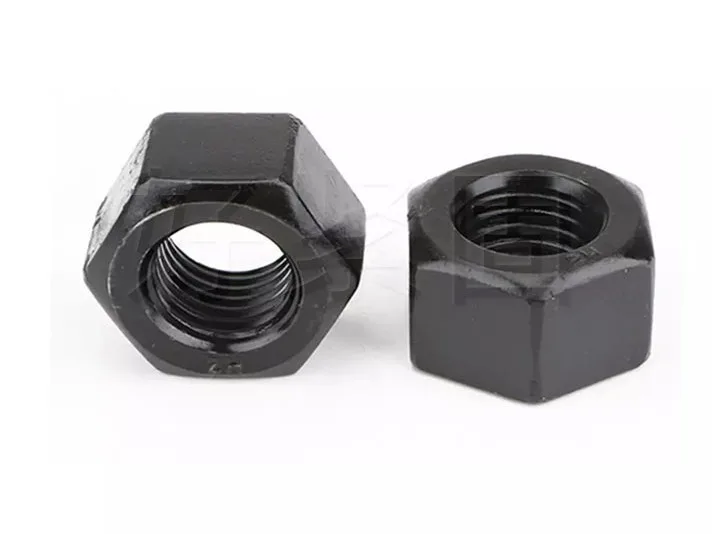
ASTM A194 Grade 2H heavy hex nuts are a common companion for B7. ASTM A194 Grade 7 is commonly specified with B16 in higher-temperature systems. These are useful starting points, not permission to ignore the piping class, design code or project bill of materials.
Do not confuse 2H with 2HM. Grade 2HM has restricted hardness and different mechanical requirements and is used when specifically required; it is not simply another name for 2H. Likewise, B7M and 2HM are often encountered in sour-service specifications, but the suffix M alone does not prove suitability for every H₂S environment. The complete NACE MR0175/ISO 15156 or project requirement must be checked.
The RFQ should state the stud, nut and washer system together, including material grade, thread series, dimensions, coating, lubricant, hardness restrictions and marking. A nut that is acceptable at room temperature may become the limiting part of a sustained high-temperature assembly.
Can B7 and B16 replace each other?
| Proposed change | Default answer | Required review |
|---|---|---|
| B7 replacing specified B16 | Do not substitute automatically | Design temperature, allowable stress, creep/relaxation, code, nut grade, joint preload and formal engineering approval |
| B16 replacing specified B7 | Do not call it a drop-in upgrade | Allowable-stress basis, companion nut, thermal behavior, availability, cost and purchaser approval |
| Same diameter and thread | Geometry may fit | Material compliance and joint performance still require review |
| Same 125 ksi room-temperature tensile minimum | Not proof of equivalence | Diameter range and elevated-temperature design properties remain different |
Any change from the material named on a drawing, piping class or equipment specification should be processed as a controlled material substitution. The responsible engineer or purchaser—not the fastener catalog alone—must approve it.
B7, B16, B7M, L7 and B8M solve different problems
| Grade | Main selection purpose | Important boundary |
|---|---|---|
| ASTM A193 B7 | General high-pressure and elevated-temperature alloy-steel bolting | Not a universal high-temperature limit or sour-service approval |
| ASTM A193 B16 | More demanding sustained elevated-temperature alloy-steel bolting | Not inherently corrosion resistant and not a universal upgrade |
| ASTM A193 B7M | Lower-strength/restricted-hardness B7 condition where specified | Must still satisfy the actual sour-service standard and environment |
| ASTM A320 L7/L7M | Low-temperature pressure-service bolting | Low-temperature toughness requirements differ from A193 selection |
| ASTM A193 B8/B8M | Austenitic stainless bolting selected in part for corrosion resistance | Strength class, strain hardening and code allowables must be checked |
If severe corrosion is the primary problem, changing B7 to B16 may not solve it because both are alloy steels rather than stainless steels. Review A193 B8M stainless stud bolts, duplex, ASTM A453 or nickel-alloy stud bolts as required by the process medium, temperature and code.
Coating, lubrication and tightening
Plain/oiled, zinc-based, zinc-flake and fluoropolymer systems may be specified for different environments, but a coating that performs well in salt spray may be unsuitable at the operating temperature. Check coating temperature capability, chemical compatibility, thickness, thread allowance, hydrogen-embrittlement process risk and friction range.
B7 and B16 do not automatically use the same installation torque. Torque depends on target bolt load, thread geometry, nut and bearing surfaces, coating, lubricant and the qualified nut factor or friction range. Do not copy a generic torque table or perform hot re-tightening on an operating pressure joint unless an approved engineering and safety procedure explicitly requires it. See the torque and preload guide.
Application-based selection
| Situation | Typical engineering direction |
|---|---|
| Conventional refinery or process flange within B7 design allowables | B7 is widely available and often economical |
| Sustained higher-temperature steam or process joint where relaxation governs | Evaluate B16 against the code and project specification |
| Low-temperature pressure equipment | Evaluate ASTM A320 grades rather than assuming B7/B16 |
| Wet H₂S or sour service | Check NACE/ISO and project hardness/material requirements; do not select by grade nickname alone |
| Severe chloride or process corrosion | Evaluate stainless, duplex or nickel alloy; B16 is not a corrosion upgrade |
| Existing drawing specifies one grade | Obtain formal approval before any substitution |
For application context, see the power-generation fastener guide, the oil, gas and petrochemical fastener guide and the broader fastener material selection guide.
What to include in a B7/B16 RFQ
- ASTM A193/A193M grade and edition.
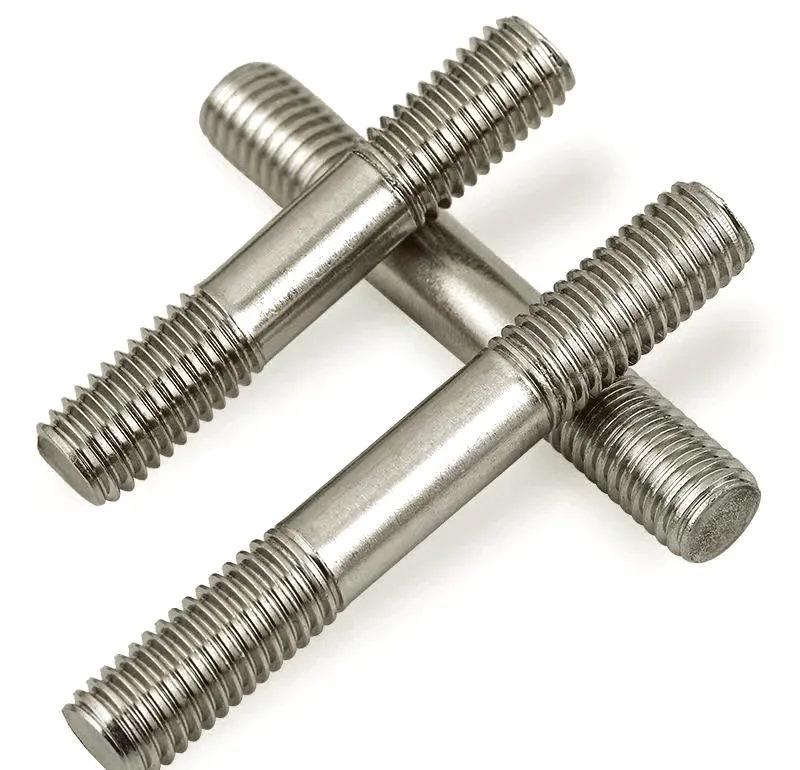
- Product form: stud bolt, continuous-thread stud, double-end stud or bolt.
- Diameter, length, thread series, pitch, class and end configuration.
- Matching ASTM A194 nut grade, quantity and dimensions.
- Plain finish, coating and lubricant, including required friction range.
- Design temperature, service medium and applicable code or piping class.
- MTC/EN 10204 certificate type, heat and lot traceability.
- Chemistry, tensile, yield, elongation, reduction of area and hardness records.
- PMI, coating, dimensional, thread-gauge, NDT or third-party inspection when required.
- Marking, packing, quantity and delivery destination.
Final recommendation
Use B7 when it satisfies the project code, temperature allowables and joint requirements and its availability and cost are advantageous. Evaluate B16 where sustained elevated-temperature stability, creep or stress relaxation makes it the specified grade. Do not buy B16 merely because it sounds stronger, and never downgrade B16 to B7 from matching room-temperature tensile values alone. Purchase the stud, nut, coating, lubricant, documentation and installation basis as one engineered bolting system.
Eternal Fastener supplies ASTM A193 B7 stud bolts, dedicated ASTM A193 B16 stud bolts and matching ASTM A194 heavy hex nuts. For a B16 enquiry, submit the ASTM edition, diameter, length, thread, companion nut, coating, quantity, service temperature and inspection requirements for a manufacturing review.