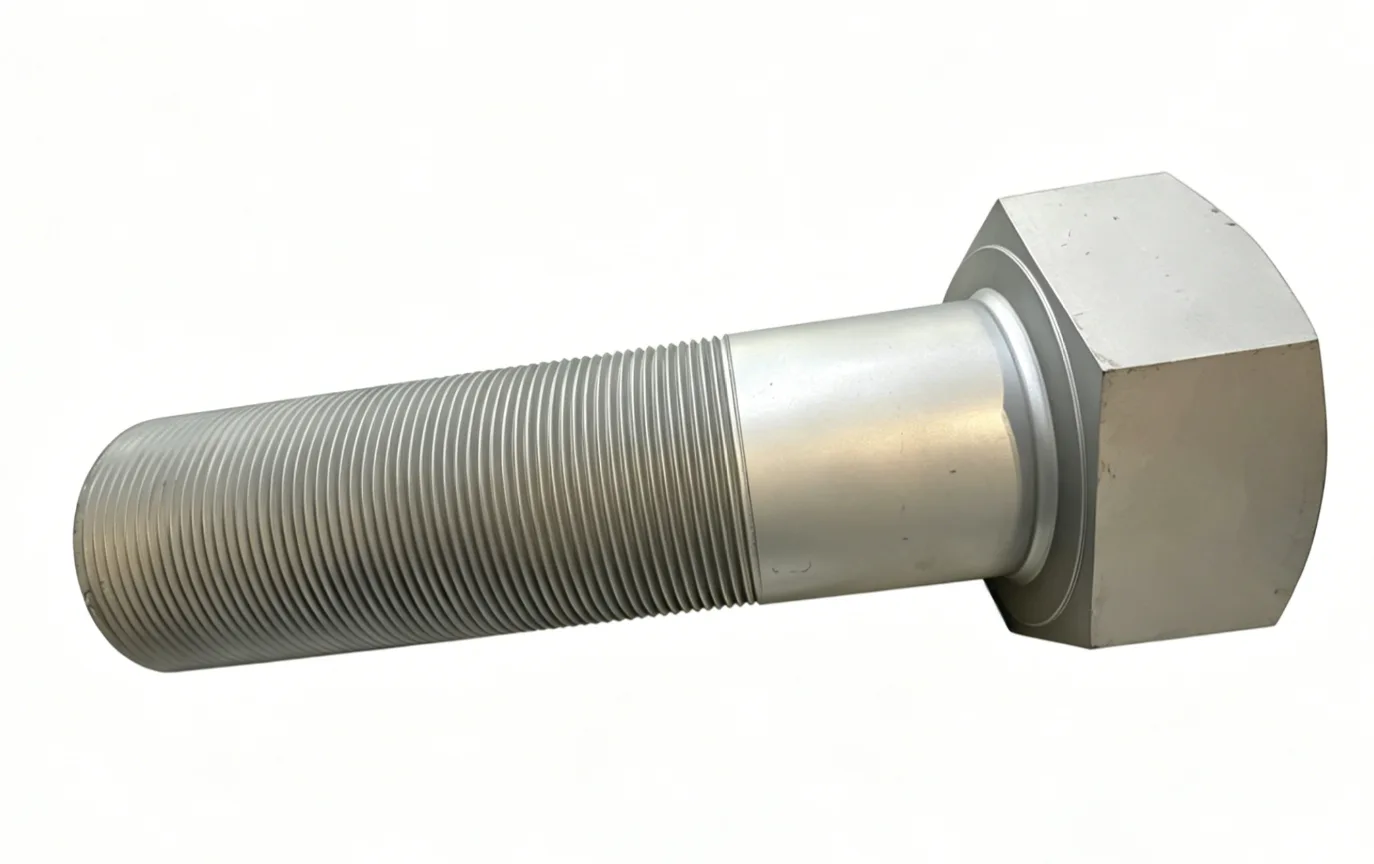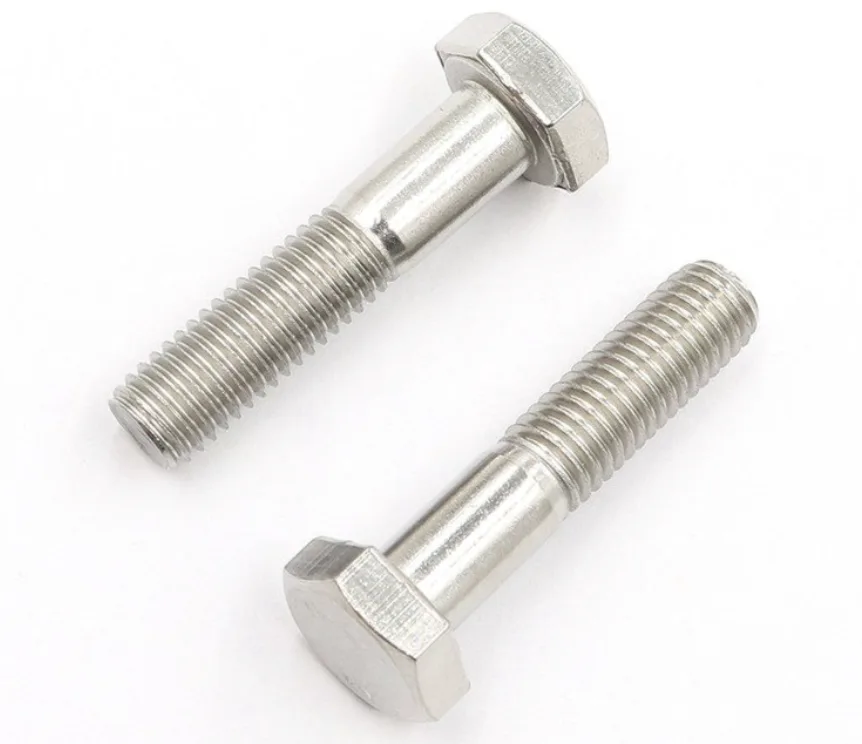
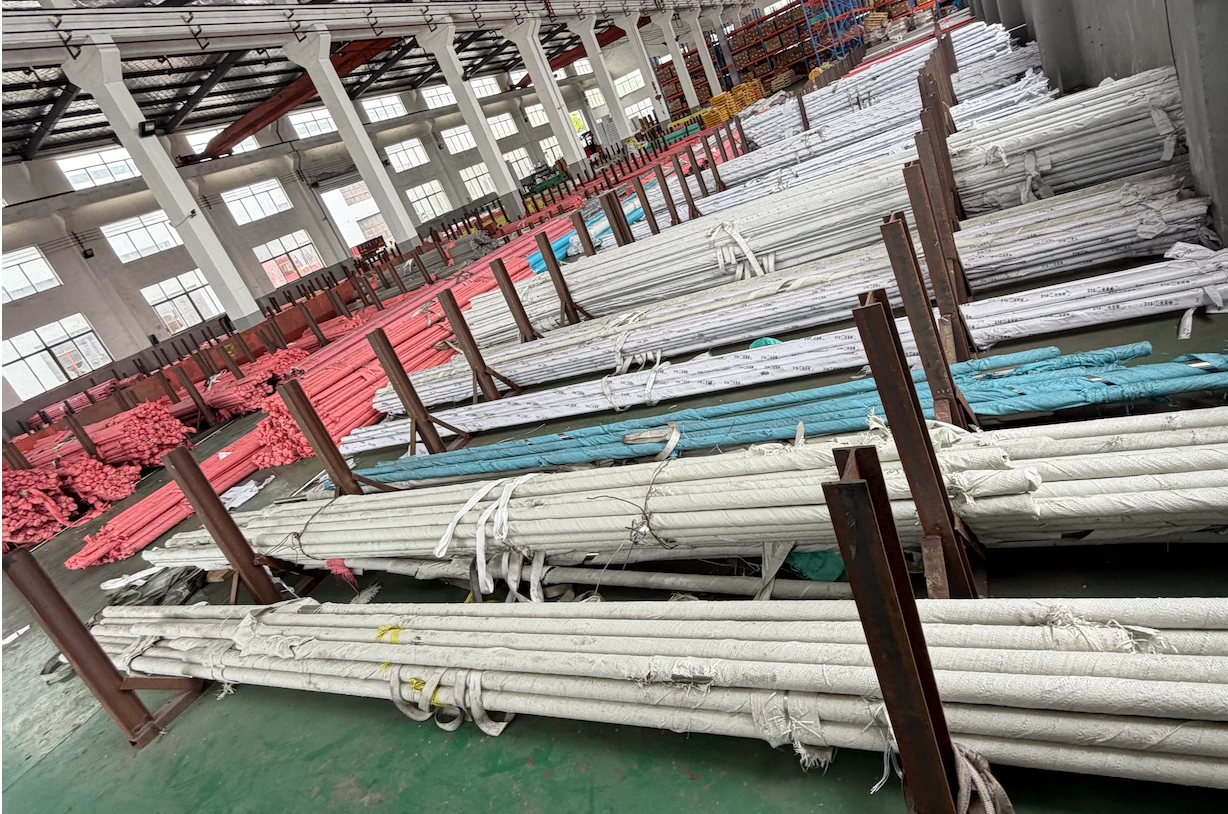
Choosing a fastener material by habit—such as assuming stainless is always safer or that the highest strength class is always better—can create corrosion, preload, galling, fatigue or certification problems. The correct choice depends on the complete joint: load, temperature, environment, connected materials, installation method, product standard and consequences of failure.
This guide compares carbon and alloy steel, A2/A4 stainless steel, Duplex 2205 and Super Duplex 2507, titanium, nickel alloys, aluminum, copper alloys and engineered polymers. It is a screening and purchasing guide, not a replacement for the project drawing, governing design code or a corrosion review.
Quick material selection chart
| Service requirement | Typical starting options | Main checks before approval |
|---|---|---|
| Dry indoor machinery | Carbon or alloy steel, commonly property class 8.8 | Load, humidity, finish and tightening method |
| High mechanical load | 10.9, 12.9 or an application-specific alloy-steel grade | Proof capacity, fatigue, nut and washer compatibility, hydrogen risk |
| General outdoor exposure | Coated carbon/alloy steel, A2 or A4 stainless | Atmospheric category, coating life, maintenance and galvanic contact |
| Coastal atmosphere | A4 stainless, Duplex 2205 or a qualified coated-steel system | Salt deposition, crevices, washdown, strength and service life |
| Seawater splash or immersion | Duplex, Super Duplex, titanium or selected nickel alloys | Chlorides, temperature, oxygen, crevices, area ratio and cathodic protection |
| High-temperature pressure bolting | Applicable ASTM A193 grade, qualified stainless or nickel alloy | Design temperature, allowable stress, relaxation, oxidation and matching nut |
| Low-temperature pressure service | Applicable ASTM A320 grade or qualified stainless/nickel system | Minimum design metal temperature, impact testing and governing code |
| Electrical or chemically specialized service | PEEK, PVDF, nylon, titanium or selected copper alloy | Creep, temperature, conductivity, fire performance and chemical compatibility |
The table provides starting points only. Terms such as marine, chemical and high temperature are not complete specifications: exposure mode, concentration, temperature, stress and inspection requirements must still be defined.
Four questions to answer before choosing a material
- What is the corrosion environment? Distinguish dry indoor service, humidity, coastal atmosphere, salt spray, splash zone, full immersion and the exact chemical medium.
- What is the real temperature range? Record minimum, normal and maximum metal temperature, exposure duration and thermal cycling.
- What load and joint behavior are required? Check tension, shear, preload, fatigue, impact, vibration, joint stiffness and the consequences of leakage or loosening.
- What materials contact the fastener? The fastener, nut, washer, flange, coating and electrolyte form one corrosion and friction system.
Carbon and alloy steel: strength and value
Carbon and alloy-steel fasteners provide the broadest availability and the best strength-to-cost ratio for machinery, construction, transportation and industrial equipment. ISO property classes such as 8.8, 10.9 and 12.9 describe mechanical and related requirements; they are not unique steel grades.
| ISO property class | Nominal tensile strength | Nominal yield relationship | Typical selection context |
|---|---|---|---|
| 8.8 | 800 MPa | 640 MPa | General machinery and many engineered joints |
| 10.9 | 1,000 MPa | 900 MPa | Higher proof capacity and preload where the joint is designed for it |
| 12.9 | 1,200 MPa | 1,080 MPa | Compact, highly loaded and closely controlled assemblies |
These nominal values explain the designation but do not replace the minimum values, size ranges, tests and product requirements in the applicable edition of ISO 898-1. A higher class also increases the importance of thread engagement, bearing strength, friction control, coating process and hydrogen-assisted cracking. See the detailed 8.8 vs 10.9 vs 12.9 selection guide.
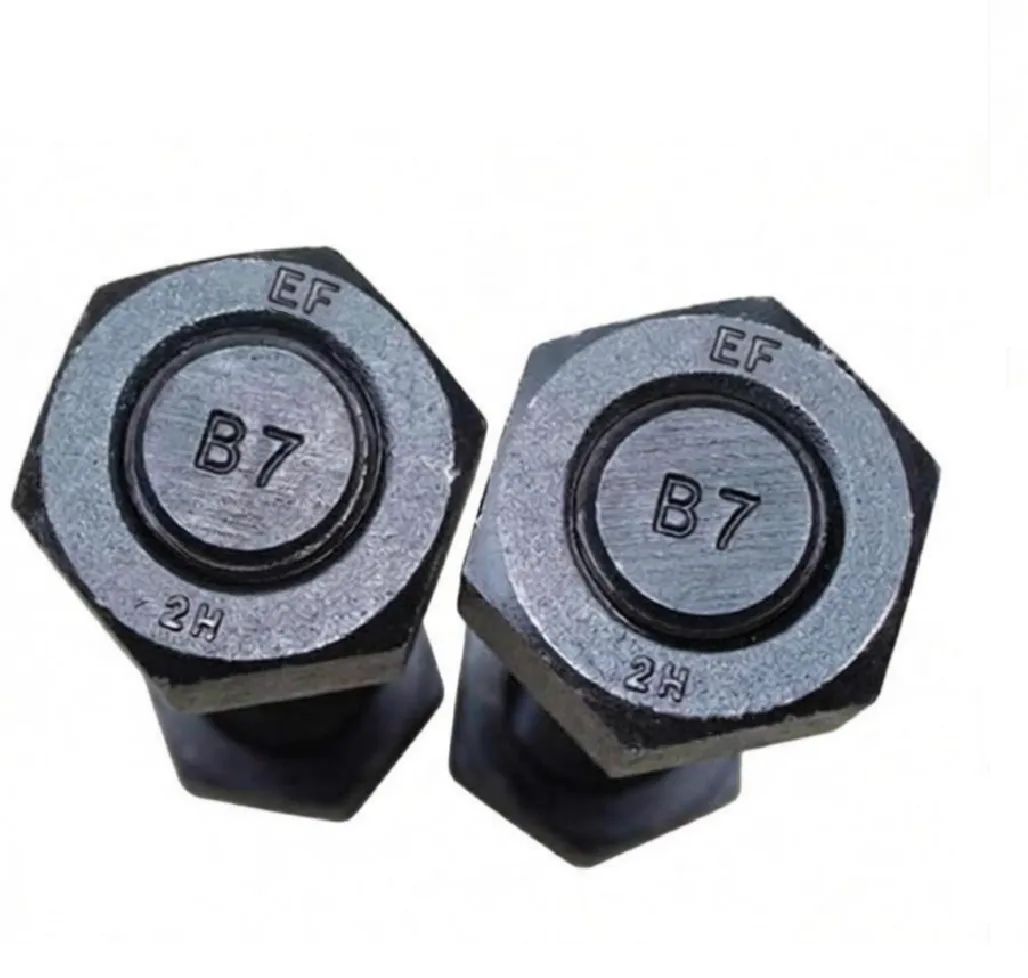
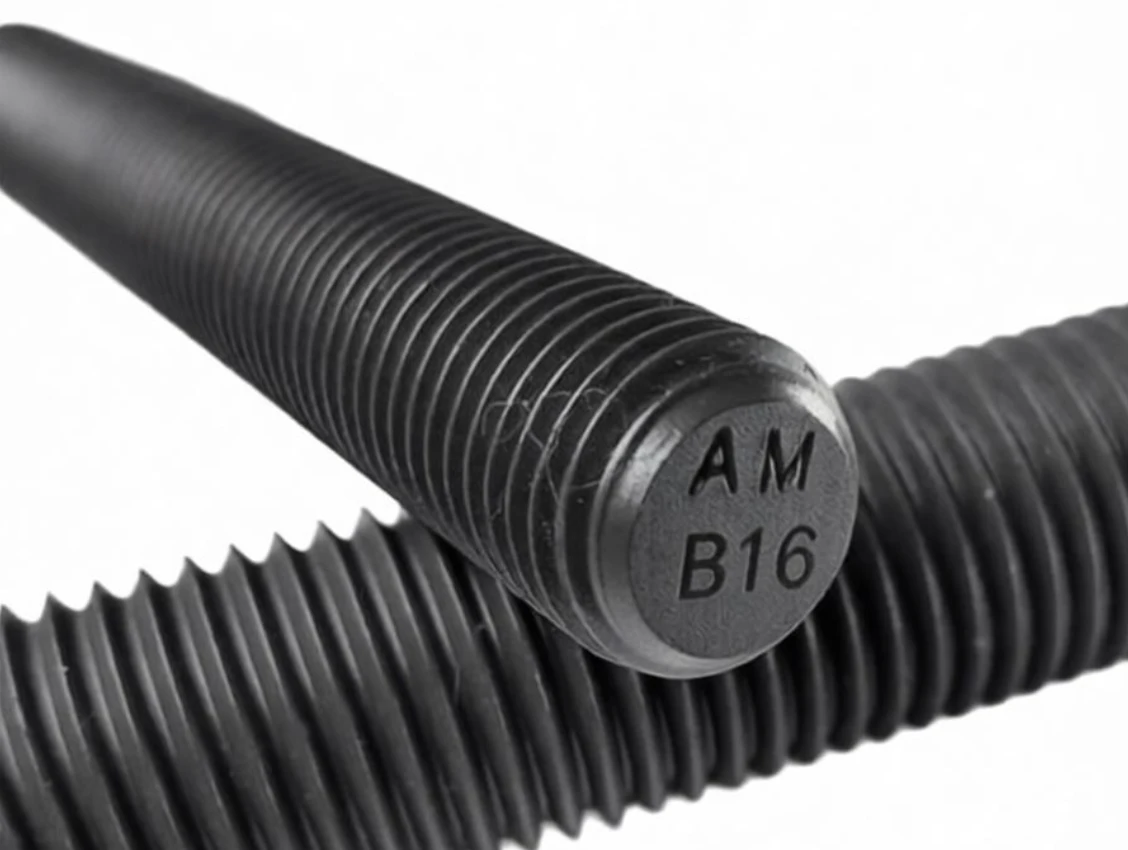
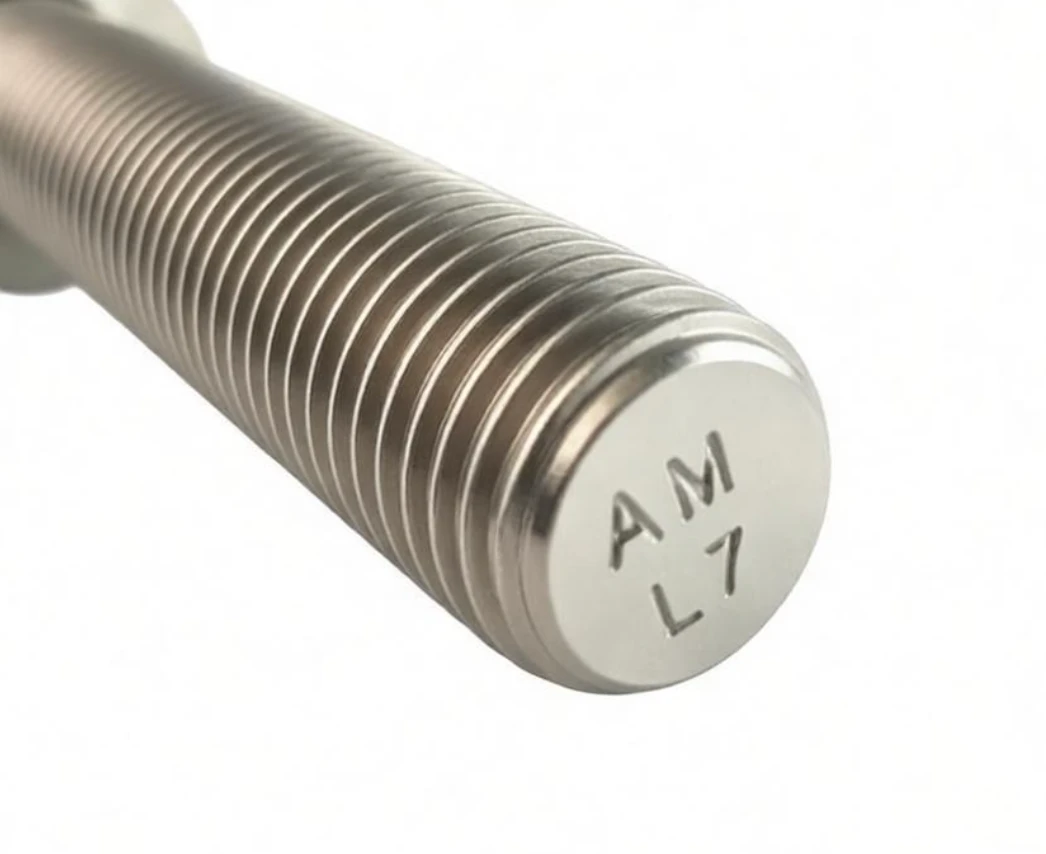
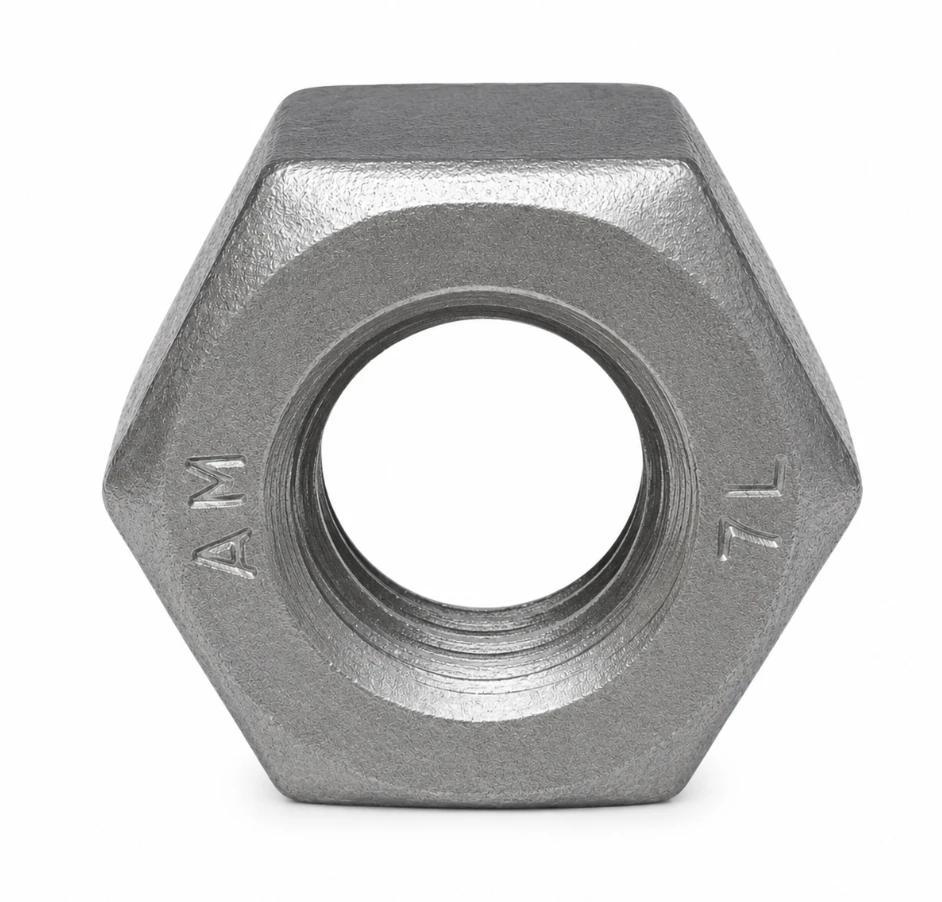
ASTM pressure and temperature grades must not be presented as American names for ISO property classes. ASTM A193 Grade B7 stud bolts, ASTM A193 Grade B16 stud bolts and stainless A193 grades follow their own material, heat-treatment and test requirements for pressure, high-temperature or special-purpose bolting. ASTM A320 L7/L7M stud bolts address low-temperature pressure-service requirements: L7 pairs with impact-tested ASTM A194 Grade 7L nuts, while L7M pairs with controlled-hardness Grade 7M nuts on the same product page. The final choice follows the governing equipment code and design conditions, not a simple MPa comparison.
Austenitic stainless steel: A2, A4, 304 and 316
Stainless-steel fasteners are commonly selected where corrosion resistance is more important than maximum strength. Under ISO 3506, the material group and property class are separate: A2-70 and A4-80 communicate more than the commercial descriptions 304 bolt or 316 bolt.
| Selection factor | A2 / 304-type starting point | A4 / 316-type starting point |
|---|---|---|
| General atmospheric corrosion | Good | Good |
| Chloride pitting resistance | Limited compared with A4 | Better than A2, but not immune |
| Typical service | Indoor, sheltered outdoor and mild process exposure | Coastal atmosphere, washdown and selected chemical service |
| Common fastener property classes | A2-50, A2-70, A2-80 | A4-50, A4-70, A4-80 |
A2 and A4 are ISO stainless groups, not permanent one-to-one equivalents for every AISI or EN grade. Likewise, 316/A4 should not be approved for every seawater application. Crevices, stagnant seawater, elevated chloride temperature and deposits can defeat the passive film. Use the detailed A2 vs A4 guide and 304 vs 316 vs 2205 comparison for narrower decisions.
Austenitic fasteners are generally low-magnetic in the solution-annealed condition, but cold heading and thread rolling can introduce measurable magnetic response. If magnetic permeability is a functional requirement, specify and test it instead of relying only on the word stainless.
Duplex and Super Duplex stainless steel
Duplex 2205 fasteners combine austenitic and ferritic phases, normally providing higher strength and better resistance to chloride stress-corrosion cracking and pitting than common A2/A4 fasteners. Super Duplex 2507 extends this capability for more severe chloride service, but manufacturing route, heat treatment, phase balance, surface condition and documentation require tighter control.
PREN can help compare nominal pitting resistance from chromium, molybdenum and nitrogen content, but it is a screening number—not proof that a fastener is qualified for a specific seawater temperature, crevice geometry or chemical process. Use the actual alloy specification, product form, test requirements and service conditions.
Titanium: Grade 2 and Grade 5
Titanium fasteners are chosen for corrosion resistance, low density and high specific strength. Grade 2 commercially pure titanium prioritizes corrosion resistance and formability; Grade 5 Ti-6Al-4V provides much higher strength where weight reduction is a design objective.
Titanium is not a universal premium replacement. It can gall severely, particularly in titanium-to-titanium threads, and it can accelerate galvanic attack of a less noble connected material such as aluminum when moisture is present. Confirm lubricant or coating, friction range, mating material, electrical isolation and the approved tightening procedure.
Nickel alloys: select by medium and temperature
Nickel-alloy fasteners are used when ordinary stainless or duplex cannot satisfy the combined corrosion, temperature and mechanical requirements. The combined Alloy 625 and Alloy 718 stud bolt page covers two distinct routes: Alloy 625 is often selected for corrosion resistance and elevated-temperature exposure, while Alloy 718 is selected for high strength and temperature capability. Monel 400/K-500 serves selected seawater and reducing-media conditions, and C-276-type alloys serve aggressive chemical processing.
These names are not interchangeable. Chemical species, concentration, contamination, aeration, temperature, stress, heat treatment and product specification determine suitability. A high-alloy material should be selected from documented process conditions, not simply as the most expensive option.
Aluminum, copper alloys and engineered polymers
Aluminum fasteners offer low density but generally lower strength, greater thread-wear and creep concerns, and serious galvanic risk when connected to more noble metals in wet service. Brass and bronze can provide conductivity, appearance and selected non-sparking or marine properties, but alloy certification and load capacity still need review.
Engineered-polymer fasteners solve different problems. PA66 nylon is economical for light-duty electrical and general applications but absorbs moisture and has limited temperature capability. PVDF provides strong resistance to selected acids and halogens. PEEK offers higher temperature and mechanical capability than common polymers. For all polymers, check creep, relaxation, thermal expansion, fire behavior, chemical compatibility and installation torque.
Temperature must be treated separately from room-temperature strength
Property class 12.9 does not mean high-temperature capability, and stainless does not automatically mean heat resistant. Elevated-temperature selection must address allowable stress, strength retention, creep or relaxation, oxidation, coating and lubricant stability, thermal expansion and the governing design code. Low-temperature selection must address minimum design metal temperature, toughness, impact-test requirements and the complete bolting system.
For pressure equipment, use the grade and allowable-stress framework required by the governing code. ASTM A193 B7, B16, stainless and nickel grades, or ASTM A320 L7/L7M and B8/B8M may appear in different service windows, but no single temperature boundary applies to every diameter, load, nut, environment and code.
Strength and corrosion resistance are different axes
| Requirement | What the designation tells you | What it does not tell you |
|---|---|---|
| ISO 8.8 / 10.9 / 12.9 | Mechanical property class for applicable steel fasteners | Corrosion resistance or universal temperature rating |
| A2-70 / A4-80 | Stainless material group plus property class | Exact alloy chemistry for every procurement system |
| ASTM A193 B7 / B16 | Grade-specific pressure or special-service bolting requirements | Direct equivalence to an ISO property class |
| Duplex 2205 / Titanium Grade 5 / Alloy 625 | Material or alloy family | Finished-fastener dimensions, tests and acceptance by itself |
The joint may be limited by internal-thread stripping, washer deformation, bearing of the clamped material, slip, fatigue, coating friction or installation accuracy before the fastener reaches its tensile capacity. Compare the complete system rather than choosing from tensile strength alone. The stainless versus high-tensile comparison addresses this trade-off directly.
Galling and galvanic corrosion are different problems
Galling is rapid adhesive wear during tightening. It is especially associated with stainless, titanium and aluminum threads, although steel assemblies can also seize under unfavorable finish, pressure and lubrication. Controls include suitable material pairing, approved lubricant or anti-seize, controlled installation speed, thread finish, tolerances and verified torque/preload data. Read the stainless galling guide.
Galvanic corrosion is electrochemical. It requires dissimilar electrical potentials, metallic contact and an electrolyte. The less noble material corrodes preferentially, and a small anodic area connected to a large cathodic area is particularly unfavorable. Actual behavior depends on passive state, area ratio, electrolyte, temperature, crevices, coatings and cathodic protection; a universal voltage cutoff or material-name rule is not reliable.
Lubricants and anti-seize compounds can materially change thread and bearing friction. Do not apply a fixed percentage torque reduction from a generic product category. Establish tightening parameters from target preload and the qualified friction range for the actual fastener, coating, nut, bearing surface and lubricant.
Coating is part of the material system
| Finish | Common purpose | Critical checks |
|---|---|---|
| Zinc electroplating | Economical protection for controlled environments | Thickness, passivation/sealer, corrosion target and hydrogen controls |
| Hot-dip galvanizing | Thick sacrificial coating for many outdoor applications | Thread allowance, compatible nut, coating thickness and structural specification |
| Zinc flake | Thin non-electrolytic corrosion system often used on higher-strength fasteners | Pretreatment, friction range, topcoat, corrosion target and process qualification |
| PTFE or fluoropolymer system | Corrosion and friction control in selected industrial bolting | Exact system, temperature, chemical compatibility, thickness and nut fit |
| Passivation | Restore or improve stainless surface condition | Cleaning, alloy, process standard and contamination control |
Do not assign universal salt-spray hours, coefficient of friction or zero hydrogen risk from a coating name alone. Performance belongs to a specified and qualified coating system. Non-electrolytic zinc-flake deposition can reduce hydrogen introduced during coating, but acid pretreatment, material hardness and service-generated hydrogen still require control.
Material grade, property class and product standard
| Specification element | Purpose | Examples |
|---|---|---|
| Product or dimensional standard | Product form, dimensions and tolerances | ISO 4014, ISO 4017, DIN 931 legacy drawings, ASME dimensional standards |
| Material grade or group | Alloy and material requirements | A4, Duplex 2205, ASTM A193 B7, Titanium Grade 5, Alloy 625 |
| Property class | Specified mechanical performance | 8.8, 10.9, 12.9, A2-70, A4-80 |
| Finish or coating specification | Corrosion, friction and surface requirements | HDG, specified zinc-flake system, passivation, qualified fluoropolymer system |
A useful order description is more complete than M12 stainless bolt. For example: ISO 4014 hexagon head bolt with partial thread, M12 × 80, A4-80, passivated, matching nut and washer, inspection certificate and lot traceability required. For pressure bolting, state the ASTM grade, dimensions, thread series, matching ASTM A194 nut grade, coating, service condition and certificate scope.
Practical eight-step selection method
- Calculate tensile, shear, preload, fatigue, impact and vibration requirements.
- Record minimum, normal and maximum service temperature.
- Define humidity, chlorides, immersion, chemicals and cleaning media.
- Select a candidate material family without assuming the final grade.
- Check galvanic compatibility with every connected material and coating.
- Review galling, lubrication, friction and tightening control.
- Select the product, material, mechanical and coating standards required by the project.
- Confirm dimensions, quantity, MTC, PMI, impact tests, coating reports, inspection and traceability in the RFQ.
Common selection mistakes
- Choosing 12.9 because it has the largest number.
- Treating A2 as exactly 304 or A4 as exactly 316 in every specification.
- Assuming 316 is suitable for every seawater or chloride condition.
- Treating ASTM A193 B7 as an ISO 10.9 equivalent.
- Ignoring the connected material and cathode-to-anode area ratio.
- Reusing dry torque after adding lubricant or changing coating.
- Calling zinc flake zero-risk for hydrogen embrittlement.
- Ordering only by material name without product standard, dimensions, property requirements and inspection documents.
Final recommendation
There is no universally best fastener material. Carbon and alloy steel remain the economical choice for many controlled environments and high-load joints; stainless provides broad corrosion resistance; duplex combines higher strength with improved chloride performance; titanium adds low density and specialized corrosion resistance; nickel alloys address severe temperature/chemical combinations; and polymers provide electrical and chemical functions metals cannot.
Select the material that satisfies the complete joint and governing specification. For an RFQ, provide the standard or drawing, dimensions, load or property requirement, temperature, environment, connected materials, coating, lubricant, quantity and documentation scope.