The practical answer is straightforward: A2 is normally the cost-effective choice for indoor and mildly corrosive service, while A4 is generally preferred when chloride exposure, salt spray or aggressive washdown is expected. A correct purchase specification still needs more than the labels “304” and “316.” Buyers should also confirm the fastener standard, property class, real service environment, surface condition, inspection documents and assembly method.
A2 vs A4: quick comparison
| Selection factor | A2 stainless fasteners | A4 stainless fasteners |
|---|---|---|
| Common material comparison | Broadly comparable to 304-type stainless | Broadly comparable to molybdenum-bearing 316-type stainless |
| Main advantage | Good general atmospheric corrosion resistance | Better resistance to chloride-induced pitting and crevice corrosion |
| Typical service | Indoor machinery, general assembly, sheltered construction and mild outdoor exposure | Coastal atmosphere, marine equipment, aggressive washdown and selected chemical service |
| Common property classes | A2-50, A2-70 and A2-80 | A4-50, A4-70 and A4-80 |
| Cost and availability | Usually lower cost and widely stocked | Usually higher cost; stock depends more on size and property class |
This is a selection aid, not a substitute for the project specification or a corrosion review.
What A2 and A4 mean under ISO 3506
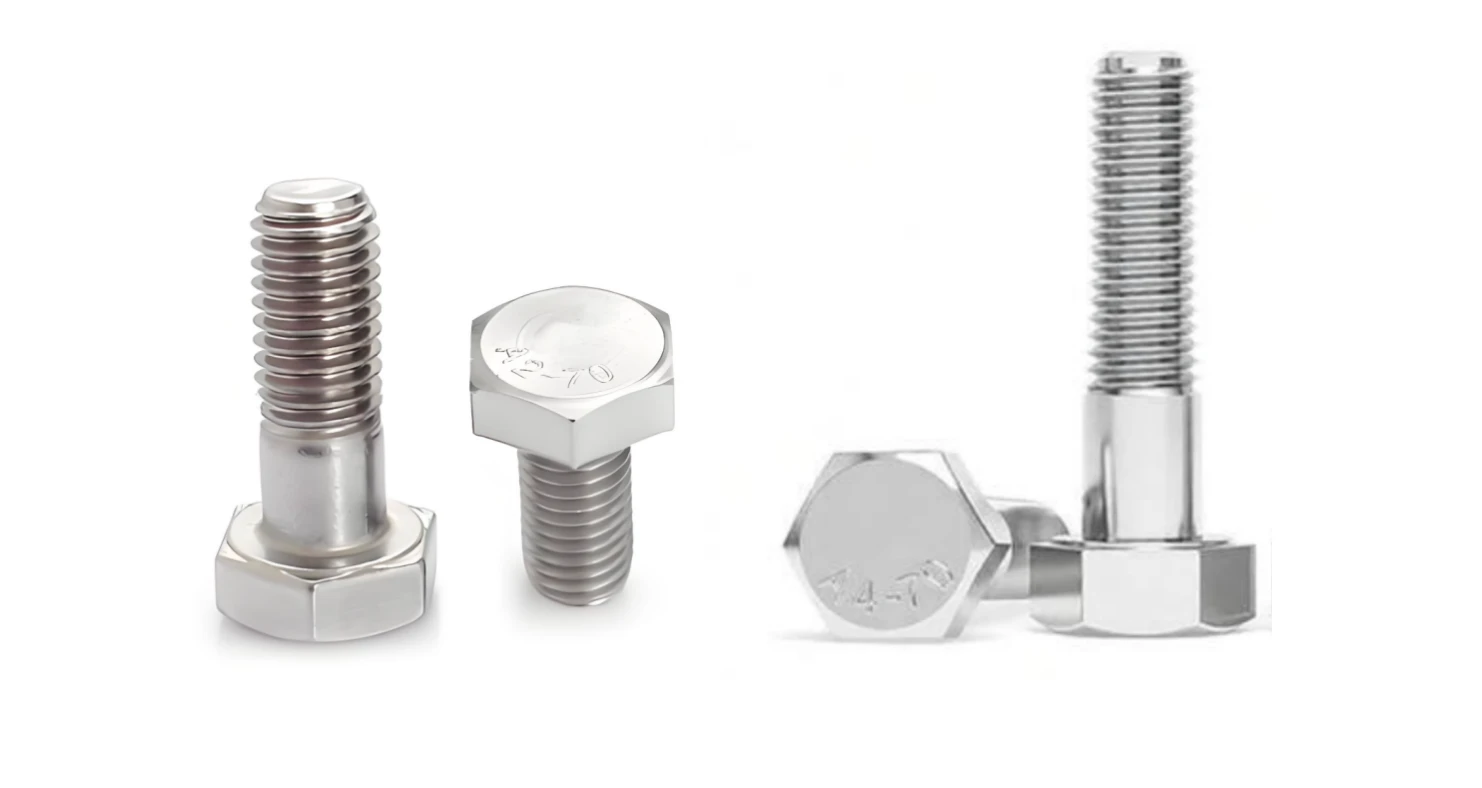
A2 and A4 are austenitic stainless-steel material groups used in the ISO 3506 series for corrosion-resistant fasteners. The material group is normally followed by a property class, such as A2-70 or A4-80.
- A2 or A4 identifies the material group. It mainly affects alloy chemistry and corrosion behavior.
- 50, 70 or 80 identifies the property class. For many bolts, screws and studs, it corresponds to a specified minimum tensile-strength level of approximately 500, 700 or 800 MPa, subject to the applicable ISO 3506 part, product type and dimensional range.
A4 is therefore not automatically stronger than A2. A2-70 and A4-70 belong to the same nominal tensile-strength class but offer different corrosion performance. If a drawing calls for A4-80, supplying A4-70 does not satisfy the mechanical requirement.
Is A2 exactly 304 and A4 exactly 316?
Not exactly. In commercial fastener terminology, A2 is commonly associated with AISI 304-type stainless steel, while A4 is commonly associated with molybdenum-bearing AISI 316-type stainless steel. A2 and A4 are material groups, however, rather than permanent one-to-one names for a single AISI or EN grade.
For critical orders, confirm the exact grade, applicable standard and heat or lot traceability on the material test certificate. If the project requires a specific EN material number, low-carbon grade or defined chemical limits, state that requirement separately on the purchase order.
Typical 304- and 316-type compositions illustrate the main difference:
| Typical alloy feature | 304-type / commonly associated with A2 | 316-type / commonly associated with A4 |
|---|---|---|
| Chromium | Commonly around 18% | Commonly around 16–18% |
| Nickel | Commonly around 8–10% | Commonly around 10–14% |
| Molybdenum | Normally absent or residual | Commonly around 2–3% |
These figures are typical comparisons, not acceptance limits for every A2 or A4 fastener. The governing material and product standards remain the purchase criteria.
Why A4 performs better in chloride environments
Molybdenum improves resistance to localized corrosion, especially pitting and crevice corrosion caused by chlorides. Relevant exposures include sea spray, de-icing salt, chlorinated water and some industrial cleaning chemicals.
A2 performs reliably in many indoor, freshwater and general atmospheric environments. A4 adds corrosion margin where salt or chloride contamination is credible, which is why it is often marketed as “marine-grade” stainless steel.
A4 is nevertheless not immune to corrosion. Warm stagnant seawater, continuous immersion, tight crevices, deposits, poor drainage, high chloride concentration and aggressive cleaning chemistry can still attack A4/316. Some offshore, desalination, process and pool applications require a higher-alloy stainless steel, duplex grade or project-specific corrosion assessment.
Indoor swimming-pool structures deserve particular caution. Load-bearing fasteners above chlorinated pools can face severe stress-corrosion conditions and should not be selected solely because a supplier calls A4 marine grade.
Where to specify A2 and where to specify A4
| Environment or application | Practical starting point | What the buyer should verify |
|---|---|---|
| Indoor machinery and general assembly | A2 | Humidity, cleaning agents and required property class |
| Sheltered or mild outdoor construction | Often A2 | Drainage, pollution, de-icing salt and design life |
| Food and beverage equipment | A2 or A4 | Product chemistry, chloride content, washdown and hygiene requirements |
| Coastal atmosphere and sea spray | Usually A4 | Salt deposition, crevices, distance from shore and maintenance interval |
| Marine hardware and shipbuilding | Usually A4 as a starting point | Splash, immersion, temperature and approval requirements |
| Chemical processing | Application-specific; often A4 or higher alloy | Chemical species, concentration, temperature and exposure time |
| Swimming pools and chlorinated facilities | Specialist review | Chlorine/chloramine, condensation, stress and safety classification |
| Offshore wind and coastal renewable energy | Often A4, duplex or project grade | Exposure zone, design life, material interfaces and certification |
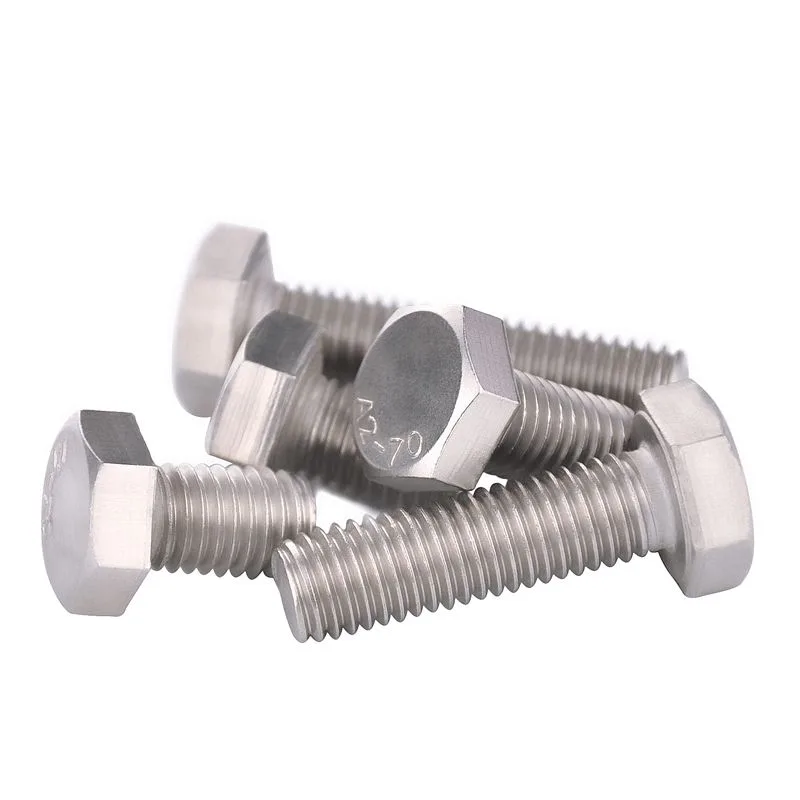
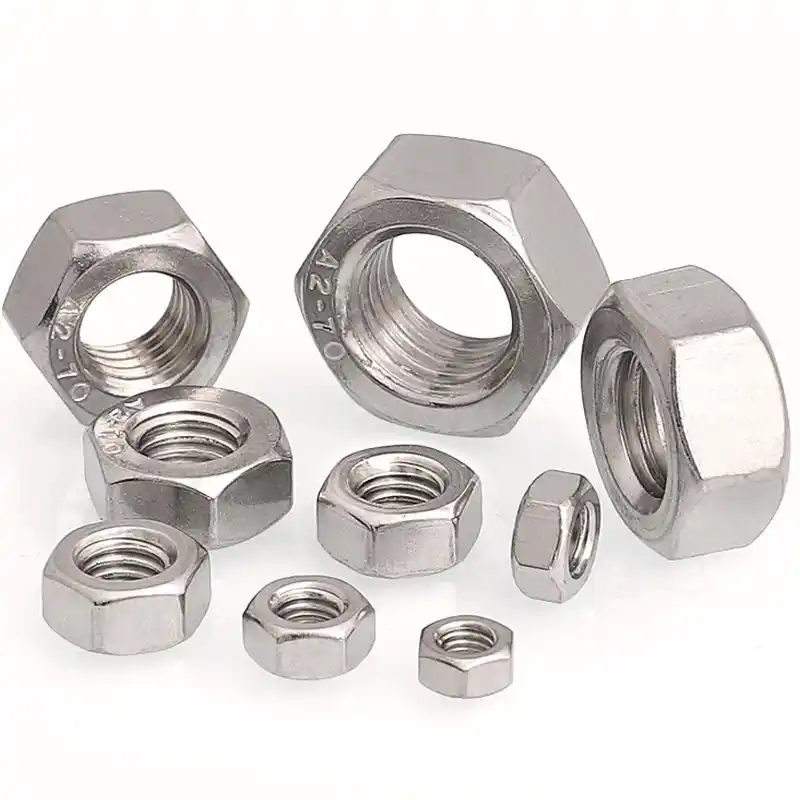
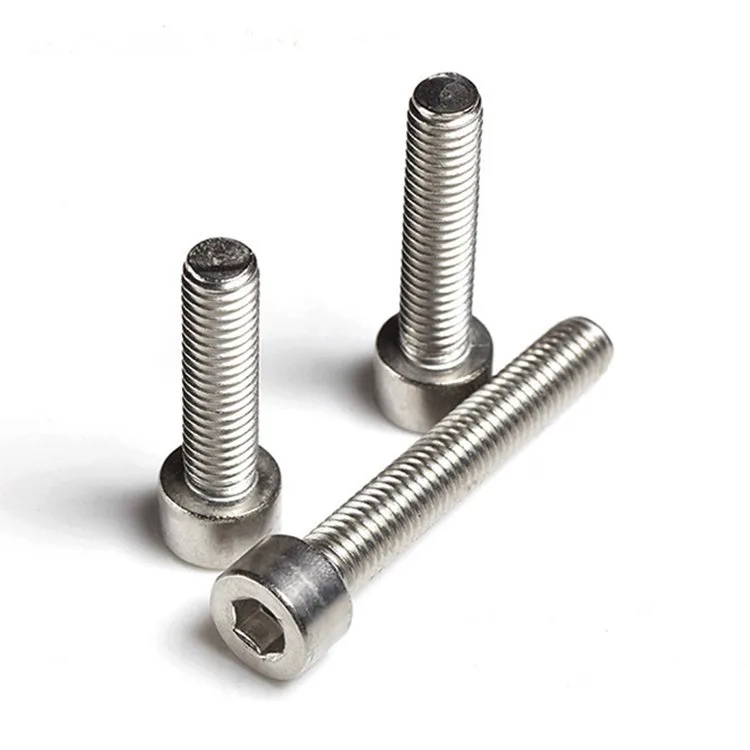
Full-thread stainless hex bolts, stainless hex nuts and stainless socket head cap screws are available in different material and property-class combinations. The product name alone does not confirm A2-70, A4-70 or A4-80.
Strength: A2-70, A4-70 and A4-80
| Example designation | Material group | Nominal minimum tensile-strength class |
|---|---|---|
| A2-70 | A2 | 700 MPa class |
| A4-70 | A4 | 700 MPa class |
| A4-80 | A4 | 800 MPa class |
A4-80 has a higher specified tensile-strength class than A4-70, but it should not automatically be treated as a direct replacement for a quenched-and-tempered high-strength carbon- or alloy-steel structural bolt. Joint design must also consider proof or yield behavior, fatigue, temperature, preload, thread engagement and the governing product standard.
A safe RFQ states both material and class—for example, ISO 4017, M12 × 50, A4-80—rather than simply requesting a “316 stainless bolt.”
Magnetism and material verification
A2 and A4 austenitic stainless steels are normally low-magnetic in the annealed condition, but cold heading, thread rolling and other cold work can produce a measurable magnetic response. A small stainless fastener attracting a magnet is not, by itself, proof that it is counterfeit or non-stainless.
A magnet test also cannot reliably distinguish A2 from A4. For critical orders, use the material test certificate and, when required, positive material identification such as XRF to confirm molybdenum-bearing A4-type material.
Galling and assembly considerations
Both A2 and A4 threaded assemblies can gall or seize during tightening. Risk increases with dry threads, high installation speed, rough surfaces, contamination, excessive preload and similar stainless mating materials.
Material selection should therefore be accompanied by an assembly plan covering compatible lubrication, surface condition, tightening speed and torque or tension control. See our guide on reducing galling in stainless fastener assemblies.
Lubrication changes the torque-to-tension relationship. Do not apply a generic lubricated torque value without checking the joint design and lubricant coefficient.
Can A2 and A4 fasteners be mixed?
An A2 bolt and A4 nut can have compatible dimensions when they follow matching product and thread standards. Dimensional compatibility does not, however, make the mixed assembly suitable for every environment.
In corrosive service, the least-resistant exposed component can limit the assembly. An A4 bolt used with an A2 nut and washer may reduce the corrosion margin expected from an all-A4 assembly. Consistent bolt, nut and washer specifications also simplify traceability and inspection in marine projects.
Assess galvanic corrosion for the complete joint, especially where stainless steel contacts aluminum, carbon steel, galvanized steel or copper alloys in the presence of an electrolyte. Electrical isolation, drainage, coatings and the relative exposed areas may matter more than the difference between A2 and A4 themselves.
Cost and availability
A2 is normally less expensive and available in a wider range of standard sizes. A4 usually carries a material and manufacturing premium because of alloy content and, in some dimensions, lower stock availability. There is no reliable universal percentage: the difference changes with nickel and molybdenum surcharges, size, head style, property class, quantity, certification and delivery time.
Compare total installed cost rather than unit price alone. A cheaper A2 fastener becomes expensive if chloride corrosion causes staining, seizure, inspection failure or early replacement. Conversely, specifying A4 for a dry indoor assembly may add cost without a meaningful service-life benefit.
What to put on the RFQ
Before requesting a quotation, confirm:
- Product standard and dimensions — for example ISO 4017 or DIN 933, diameter, pitch and length.
- Material group and property class — A2-70, A4-70, A4-80 or another specified grade.
- Service environment — indoor, outdoor, coastal, splash zone, immersion, chemical washdown or elevated temperature.
- Surface condition — as manufactured, cleaned, passivated, electropolished or project-specific treatment.
- Assembly requirements — mating nut and washer grade, lubricant, anti-galling measures and tightening procedure.
- Inspection documents — certificate of conformity, EN 10204 3.1 material certificate, dimensional report, mechanical test results or PMI where required.
- Traceability and packaging — heat or lot identification, segregation, labeling and protection against contamination.
- Quantity and delivery — stock, special production and minimum order constraints can differ significantly between A2 and A4.
Final recommendation
Choose A2 when the environment is genuinely mild and the required property class is available. Choose A4 when chloride exposure, coastal atmosphere or aggressive cleaning justifies the additional corrosion margin. For severe immersion, hot chloride, critical pool, offshore or chemical service, do not stop at the label A4—confirm whether the project needs a higher-alloy material.
Send Eternal Fastener the product standard, dimensions, property class, exposure conditions, quantity and certificate requirements. We can review the specification and quote the appropriate A2, A4 or higher-corrosion-resistant option.