Quick answer: what replaces DIN 982?
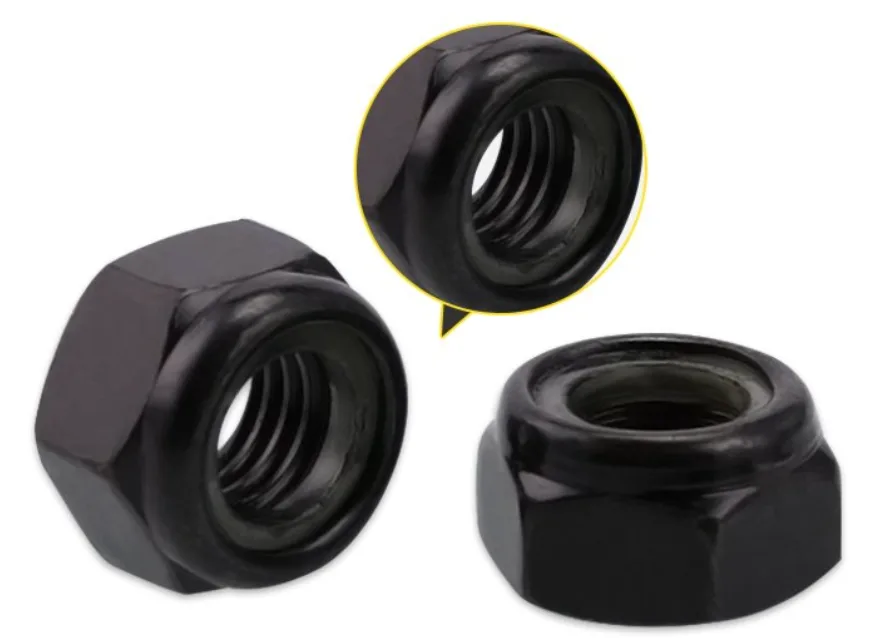
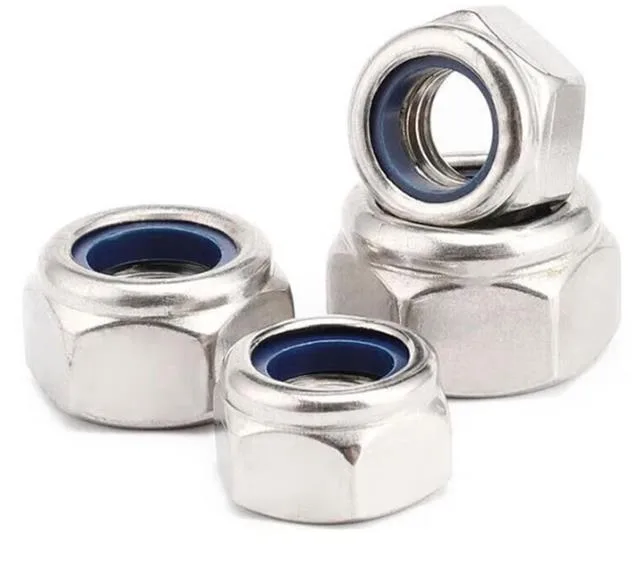
DIN 982 coarse-pitch nuts were formally replaced by DIN EN ISO 7040; DIN 982 fine-pitch nuts were replaced by DIN EN ISO 10512. The purchasing relationship is therefore:
- DIN 982 coarse pitch → ISO 7040: regular/Style 1 prevailing-torque hexagon nut with non-metallic insert
- DIN 982 fine pitch → ISO 10512: regular/Style 1 prevailing-torque hexagon nut with non-metallic insert, metric fine pitch
- ISO 7041: high/Style 2 coarse-pitch family; related product, but not the formal DIN 982 replacement
DIN 982:1987 is withdrawn. A legacy order must retain the complete diameter and pitch, because DIN 982 M20 × 1.5 follows the fine-pitch branch and must not be converted to coarse-pitch ISO 7040.
View the coarse-pitch DIN 982 / ISO 7040 drawing and dimensions, or compare the lower DIN 985 / ISO 10511 family.
Why “DIN high form” still maps to ISO 7040 regular nuts
The wording looks contradictory but uses two different classification systems:
- DIN 982 was called
hohe Form— high form relative to the lower DIN 985 pattern. - ISO 7040 classifies the successor geometry as a regular/Style 1 nut.
- ISO 7041 defines a separate ISO high/Style 2 family.
The words “high” in the old DIN title and “high” in ISO 7041 do not create a one-to-one standards relationship. The DIN withdrawal record and the applicable dimensional/thread series govern the mapping, not the English adjective alone.
Correct relationship and status table
| Standard | Product configuration | Relationship to DIN 982 | Procurement use |
|---|---|---|---|
| DIN 982:1987 | Legacy non-metallic-insert lock nut, DIN high form | Withdrawn source standard | Preserve the complete old callout and drawing |
| ISO 7040 / DIN EN ISO 7040 | Regular/Style 1, non-metallic insert, coarse pitch | Formal coarse-pitch replacement path | Primary ISO comparison for ordinary coarse-thread DIN 982 orders |
| ISO 10512 / DIN EN ISO 10512 | Regular/Style 1, non-metallic insert, fine pitch | Formal fine-pitch replacement path | Use when the legacy designation states a fine pitch |
| ISO 7041 | High/Style 2, non-metallic insert, coarse pitch | Related higher ISO family, not the formal replacement | Consider only when the required Style 2 geometry and performance are specified |
| ISO 10511 | Thin/low, non-metallic insert | DIN 985-related lower family | Not a DIN 982 replacement |
| ASME B18.16.6 | US prevailing-torque locknut family with multiple styles | Approximate regional reference | Confirm inch/metric system, exact style, dimensions and performance |
| JIS B 1181 | Broad Japanese hexagon-nut reference | Incomplete as a direct locking-nut equivalent | Require an exact JIS product type and locking specification |
Height and coarse/fine-pitch matrix
| Requirement | Correct reference | Height classification | Thread branch |
|---|---|---|---|
| Legacy DIN 985 | ISO 10511 | Low/thin | Confirm the complete legacy thread |
| Legacy DIN 982, coarse | ISO 7040 | ISO regular/Style 1 | Metric coarse pitch |
| Legacy DIN 982, fine | ISO 10512 | ISO regular/Style 1 | Metric fine pitch |
| ISO high nut requirement | ISO 7041 | ISO high/Style 2 | Metric coarse pitch |
This matrix keeps height and pitch as separate selection axes. ISO 10512 is regular height and fine pitch, not a high nut. ISO 7041 is high and coarse pitch, but that does not make it the formal DIN 982 successor.
DIN 982 vs ISO 7040 / ISO 10512: explicit differences
| Difference point | DIN 982 | ISO successor family | Purchasing impact |
|---|---|---|---|
| Standard status | Withdrawn 1987 DIN edition | Current ISO/DIN EN ISO edition must be stated | Do not order by number alone |
| Height terminology | DIN high form | ISO regular/Style 1 | Similar words cannot be used to select the standard |
| Thread routing | Legacy order may be coarse or fine | ISO 7040 coarse; ISO 10512 fine | Preserve a pitch such as M20 × 1.5 |
Width across flats s |
Legacy DIN wrench series | ISO wrench series | Socket size and surrounding tool clearance can change |
Width across corners e |
DIN limits | ISO limits | Radial assembly clearance can change |
Nut/body height m |
DIN geometry | ISO 7040/10512 geometry | Changes thread engagement, stack height and bolt projection |
Bearing-face diameter dw |
DIN bearing limits | ISO bearing limits | Changes contact area on a washer or joint surface |
| Chamfers and insert zone | DIN form and tolerances | ISO form and tolerances | Affects axial clearance and inspection |
| Size range | Controlled by the DIN edition | Controlled by the selected ISO edition | Not every nominal diameter has the same coverage |
| Product grade/tolerances | Legacy DIN references | Current ISO product grades and limits | Equal nominal size does not prove equal limit dimensions |
| Nut class and proof load | Legacy property requirements | Current referenced mechanical-property system | Reconfirm the nut class and mating bolt |
| Prevailing torque | Legacy test/acceptance requirements | Current performance and reuse requirements | Dimensional fit does not prove locking performance |
| Marking and documentation | Legacy DIN rules | Current ISO labelling and traceability | Update the inspection and certificate requirements |
Concrete dimensional examples
Common DIN 982-to-ISO 7040 conversion tables show measurable changes at several shared sizes. These examples are useful for screening, but the controlled editions and supplier drawing govern the purchase:
| Thread | DIN 982 s |
ISO 7040 s |
DIN 982 height | ISO 7040 height |
|---|---|---|---|---|
| M10 | 17 mm | 16 mm | 11.5 mm | 11.9 mm |
| M12 | 19 mm | 18 mm | 14.0 mm | 14.9 mm |
| M14 | 22 mm | 21 mm | 16.0 mm | 17.0 mm |
Published conversion data also show bearing-face differences, for example dw min values of 15.6 mm versus 14.63 mm at M10, 17.4 mm versus 16.63 mm at M12, and 20.5 mm versus 19.64 mm at M14. These differences affect wrenching, counterbore clearance and seating area even when the thread assembles correctly.
Do not use these ISO 7040 figures as ISO 7041 dimensions. If Style 2 ISO 7041 is proposed, compare its own controlled size row separately.
Why ISO 7041 must stay in the article
ISO 7041 is worth mentioning because buyers frequently search DIN 982 ISO 7041 and both products use a non-metallic insert. The article should answer that search without turning it into a false equivalence.
ISO 7041:2025 covers ISO high nuts with a non-metallic insert, metric coarse-pitch threads M5–M39, and product grades A and B. It is a related Style 2 option with its own height, dimensions and mechanical requirements. Use it only when the drawing or approved replacement specification calls for that high ISO family.
Locking mechanism, washer and related DIN families
DIN 982, ISO 7040, ISO 10512 and ISO 7041 all create prevailing torque through a non-metallic insert. “Nylon insert” is a common commercial description, but the actual polymer must be confirmed when temperature, chemicals or ageing matter.
DIN 982 does not include an integral washer or flange. Its bearing face must not be advertised as a built-in washer.
| Standard | Main distinction |
|---|---|
| DIN 985 / ISO 10511 | Lower/thinner non-metallic-insert family |
| DIN 982 / ISO 7040 or ISO 10512 | Legacy DIN high form routed by coarse/fine pitch |
| ISO 7041 | Separate ISO high/Style 2 coarse-pitch family |
| DIN 980 | All-metal prevailing-torque locking; no polymer insert |
The taller DIN body does not by itself prove better vibration resistance. Locking performance depends on the insert, mating thread, coating, lubrication and prevailing-torque test.
Material, temperature and reuse
Specify the nut property class or exact stainless-steel designation separately. Do not say the nut class simply “equals or exceeds” a bolt class such as 8.8 or 10.9; compatibility is determined by the applicable mechanical-property requirements and proof load.
There is no universal 120°C rating for all DIN 982, ISO 7040 or ISO 10512 nuts. Temperature capability belongs to the actual insert material and product specification. Confirm continuous and peak temperature plus exposure to oils, fuels, solvents and cleaners.
Reuse is permitted only when the governing requirement allows it and the nut still meets the minimum prevailing torque after the stated cycles. A visual inspection alone is insufficient for a critical joint.
DIN 982 RFQ and replacement checklist
Include:
- Legacy DIN 982 edition and controlled drawing
- Complete diameter and pitch
- ISO 7040 for coarse pitch or ISO 10512 for fine pitch
- Width across flats
sand cornerse - Nut/body height
m, overall envelope and bolt projection - Bearing-face diameter
dw, chamfers and insert-zone clearance - Product grade and dimensional tolerances
- Nut class, proof load and mating-bolt specification
- Body material, coating, lubrication and corrosion requirement
- Insert material, temperature and chemical environment
- Initial and reuse prevailing-torque limits
- Marking, inspection documents, traceability and conversion approval
Examples:
Legacy DIN 982, M12 coarse pitch, Class 8, zinc plated; evaluate ISO 7040 using controlled
s,e,manddwdimensions and provide prevailing-torque results.
Legacy DIN 982, M20 × 1.5 fine pitch; evaluate ISO 10512, preserve the stated pitch and confirm dimensions, proof load, insert material and reuse torque.
Related resources
- DIN / ISO / ASME / JIS cross-reference chart
- Coarse-pitch DIN 982 / ISO 7040 drawing and dimensions
- DIN 985 vs ISO 10511 low insert lock nuts
- DIN 980 all-metal prevailing-torque nuts
- Nylon insert lock-nut products
Bottom line: use ISO 7040 for the DIN 982 coarse-pitch replacement path and ISO 10512 for fine pitch. Keep ISO 7041 as a related Style 2 comparison, not as the DIN 982 equivalent.