Quick answer: what is the ISO equivalent of DIN 985?
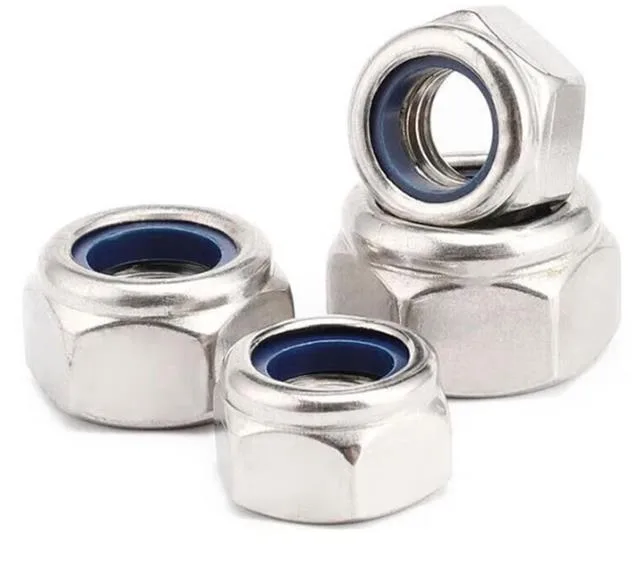
ISO 10511 is the principal international successor for the DIN 985 low/thin prevailing-torque hexagon nut with a non-metallic insert. DIN 985 remains common on legacy drawings and purchase orders.
Do not turn every nylon-insert lock nut into one “equivalent” family. Height and pitch change the product:
- DIN 985 / ISO 10511: low or thin pattern
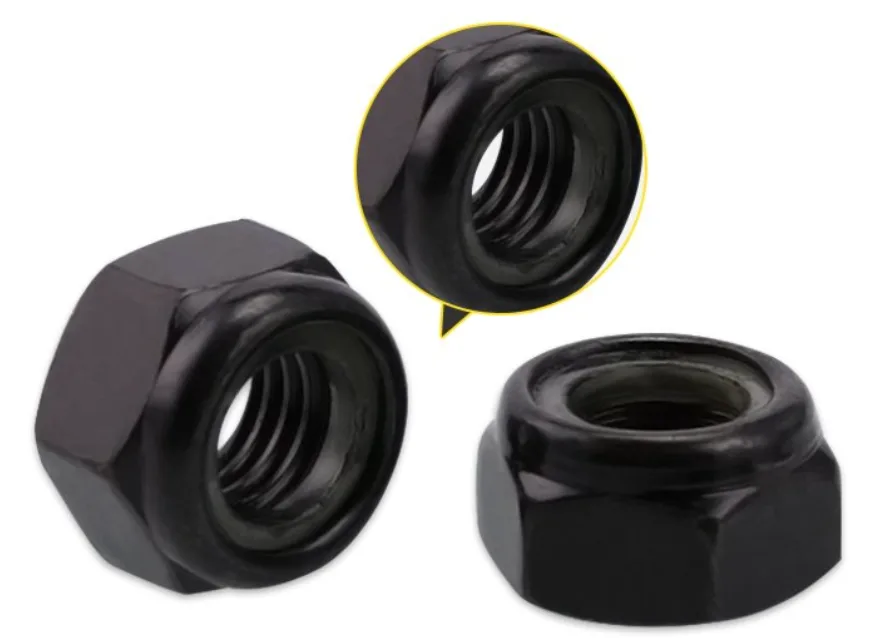
- DIN 982 coarse / ISO 7040: Style 1, regular height, coarse pitch
- DIN 982 fine / ISO 10512: Style 1, regular height, fine pitch
- ISO 7041: separate Style 2 high-nut family, coarse pitch; not the formal DIN 982 replacement
This distinction controls installation space, available thread engagement, proof-load capability and the part that a supplier will quote.
Browse stainless nylon insert lock nuts for A2 and A4 product options, or view the DIN 985 drawing and dimensions.
Why these standards are cross-referenced
They are cross-referenced because they describe hexagon prevailing-torque nuts used for the same purchasing purpose: resisting rotation through a non-metallic insert. That common function makes them useful search and sourcing references, but it does not erase differences in height series, thread pitch, dimensions or performance.
| Reference | Relationship to DIN 985 | Procurement classification |
|---|---|---|
| ISO 10511 / DIN EN ISO 10511 | Same low/thin non-metallic-insert product family and principal successor path | Primary DIN/ISO comparison |
| DIN 982 / ISO 7040 | DIN high form routed to the ISO regular-height Style 1 coarse-pitch family | Formal coarse-pitch DIN 982 replacement path; not a DIN 985 replacement |
| DIN 982 / ISO 10512 | DIN high form routed to the ISO regular-height Style 1 fine-pitch family | Formal fine-pitch DIN 982 replacement path; not a DIN 985 replacement |
| ISO 7041 | High Style 2, coarse-pitch non-metallic-insert family | Separate related ISO product, not the formal DIN 982 successor |
| ASME B18.16.6M | US metric prevailing-torque locknut family containing defined styles and performance requirements | Approximate regional purchasing reference; match the exact style |
| UNI 7473 | Legacy Italian purchasing cross-reference | Approximate; compare edition and dimensional table |
| JIS B 1181 | Broad Japanese hexagon-nut standard | A bare JIS B 1181 callout does not define a nylon insert; calling it a direct DIN 985 equivalent is an incorrect mapping |
Height and coarse/fine-pitch matrix
| Standard family | Height series | Thread series | What it means for replacement |
|---|---|---|---|
| DIN 985 / ISO 10511 | Low / thin | Preserve the complete pitch from the drawing and confirm the selected edition | Closest low-pattern pair; still compare dimensions and performance |
| DIN 982 / ISO 7040 | DIN high form; ISO Style 1 / regular height | Metric coarse pitch | Formal coarse-pitch replacement path with dimensions to compare |
| DIN 982 / ISO 10512 | DIN high form; ISO Style 1 / regular height | Metric fine pitch | Formal fine-pitch replacement path; ISO 10512 is not Style 2 high |
| ISO 7041 | ISO Style 2 / high | Metric coarse pitch | Separate higher ISO family, not a direct DIN 982 equivalence |
If a requirement combines high pattern and fine pitch, do not solve it by relabelling ISO 10512 as high. Keep the full diameter and pitch, identify the required height series, and select the applicable controlled product standard or legacy drawing.
DIN 985 vs ISO 10511: what still needs checking?
DIN 985 and ISO 10511 are the strongest cross-reference pair because both address the low/thin product concept. They may be accepted as equivalent for ordinary procurement only when the selected size and specification agree.
| Check point | Possible difference | Assembly or purchasing impact |
|---|---|---|
Width across flats s and corners e |
DIN and ISO editions may use different dimensional series at selected sizes | Socket fit, counterbore clearance and existing tooling can change |
| Metal-body and overall height | The metal portion and insert collar can be defined differently | Changes the joint envelope and usable thread engagement |
| Thread diameter, pitch and tolerance | A nominal M size does not preserve pitch or fit | Wrong pitch will not assemble; tolerance affects run-on and locking torque |
| Bearing face and chamfers | Form and limits may differ | Changes seating and local clearance |
| Nut property class and proof load | Strength designation must match the governing edition | A dimensionally fitting nut may still lack the required load capacity |
| Initial prevailing torque | Insert geometry and performance limits govern locking | External dimensions alone do not prove vibration-locking performance |
| Reuse prevailing torque | Torque falls as the insert and mating thread cycle | Reuse must meet the specified minimum, not a visual check |
| Insert material | Polyamide grade or another non-metallic material may vary | Temperature, chemical resistance and ageing can differ |
| Coating and lubrication | Surface finish changes friction and assembly torque | Affects preload, prevailing torque and thread gauging |
| Marking and standard edition | Old DIN stock and current ISO stock can be mixed | Traceability and inspection criteria must be stated on the RFQ |
An M10 description alone is insufficient. Retain a designation such as M10 × 1.5, the low-pattern requirement, property class, finish and required prevailing-torque performance.
Why ISO 10512 was previously classified incorrectly
ISO 10512 covers prevailing-torque hexagon regular nuts with a non-metallic insert, Style 1, with metric fine-pitch thread. Its defining difference from ISO 7040 is the fine-pitch thread branch, not a change to the high Style 2 height series.
The separate ISO high coarse-pitch branch is ISO 7041. DIN 982 itself formally routes to ISO 7040 for coarse pitch and ISO 10512 for fine pitch. Calling ISO 10512 “high” still mixes two separate selection axes:
- Height: low/thin, regular Style 1 or high Style 2
- Pitch: coarse or fine
For procurement, those axes must be specified separately.
ASME B18.16.6M and JIS B 1181
ASME B18.16.6M is useful when a buyer or supplier searches a US metric prevailing-torque locknut reference. It should be treated as an approximate regional cross-reference: confirm that the quoted ASME nut actually has a non-metallic insert, the required height/style, metric pitch, width across flats, proof load and prevailing-torque limits. The standard number alone is not approval to replace DIN 985.
JIS B 1181 is different. It is a broad hexagon-nut reference and a bare JIS B 1181 callout does not establish the DIN 985 nylon-insert locking construction. If a supplier table lists DIN 985 ↔ JIS B 1181, treat that row as incomplete or incorrectly mapped until an exact JIS product type, drawing and locking-performance specification are provided.
Prevailing torque, reuse and temperature
The bolt thread elastically interferes with the non-metallic insert and creates resistance to rotation before clamp load develops. This prevailing torque helps resist loosening, but it does not replace correct preload and joint design.
Every installation and removal cycle can reduce locking performance. Do not state a universal reuse count. Reuse is acceptable only when the governing requirement permits it and the nut still satisfies the specified reuse prevailing torque. For a safety-critical joint, specify a new nut unless reuse has been qualified.
Temperature and chemical limits depend on the actual insert material. Confirm continuous and peak temperature plus exposure to oils, fuels, solvents and cleaners. Where the insert is unsuitable, review an approved DIN 980 all-metal prevailing-torque nut; it is a different locking family, not an automatic substitute.
DIN 985 RFQ and replacement checklist
Include:
- DIN 985 or ISO 10511 and the required edition
- Low/thin height series
- Complete thread diameter and pitch
- Width across flats, overall height and clearance limits when drawing-critical
- Nut property class or stainless-steel designation
- Insert material and continuous/peak service temperature
- Finish, coating thickness and lubrication condition
- Initial and reuse prevailing-torque requirement
- Mating bolt class, coating and thread condition
- Inspection report, material certificate and lot traceability
Example:
DIN 985 / ISO 10511 low prevailing-torque nut with non-metallic insert, M10 × 1.5, Class 8, zinc plated; confirm dimensions to the controlled drawing and provide initial/reuse prevailing-torque results with lot traceability.
Related resources
- DIN / ISO / ASME / JIS cross-reference chart
- DIN 982 vs ISO 7040 / ISO 10512 insert lock nuts
- DIN 980 all-metal prevailing-torque nuts
- DIN 934 vs ISO 4032 plain hexagon nuts
- Stainless nylon insert lock nuts
Use the cross-reference to find candidates. Final acceptance is governed by the controlled drawing, exact standard edition, dimensional inspection, proof-load requirement and measured prevailing torque.