Quick answer: are these hex-nut standards interchangeable?
Not automatically. ISO 4032 and DIN EN ISO 4032 express the same adopted ISO dimensional standard. GB/T 6170 belongs to the corresponding Chinese Style 1 metric hex-nut family, but the relationship depends on the edition. Legacy DIN 934 is closely related yet differs at selected wrench sizes and in nut height. JIS B 1181 and UNI 5587 require an exact type and edition check. ASME B18.2.2 inch-thread nuts are not metric replacements.
| Standard | Main system | Product covered here | Relationship to ISO 4032 | Replacement decision |
|---|---|---|---|---|
| ISO 4032 | ISO metric | Hexagon regular nuts, Style 1 | Reference standard | Use when the drawing specifies ISO 4032 |
| DIN EN ISO 4032 | German/European adoption | ISO 4032 Style 1 nuts | Adoption of ISO 4032 | Normally the same requirement when the edition matches |
| GB/T 6170 | Chinese metric | Style 1 hexagon nuts | ISO-aligned corresponding standard | Confirm edition, dimensions and mechanical references |
| DIN 934 | Legacy German metric | Regular hexagon nuts | Predecessor/corresponding standard | Check WAF, height, thread series and edition |
| JIS B 1181 | Japanese metric | Multiple hex-nut types | Broader national standard | Confirm exact type, table and edition |
| UNI 5587 | Legacy Italian metric | UNI nut designation in cross-reference catalogs | Relationship depends on original title/edition | Verify before classifying or replacing it |
| ASME B18.2.2 | Unified inch | Hex and other inch-series nuts | Different thread and dimensional system | Not a direct metric substitute |
What is a Style 1 hex nut?
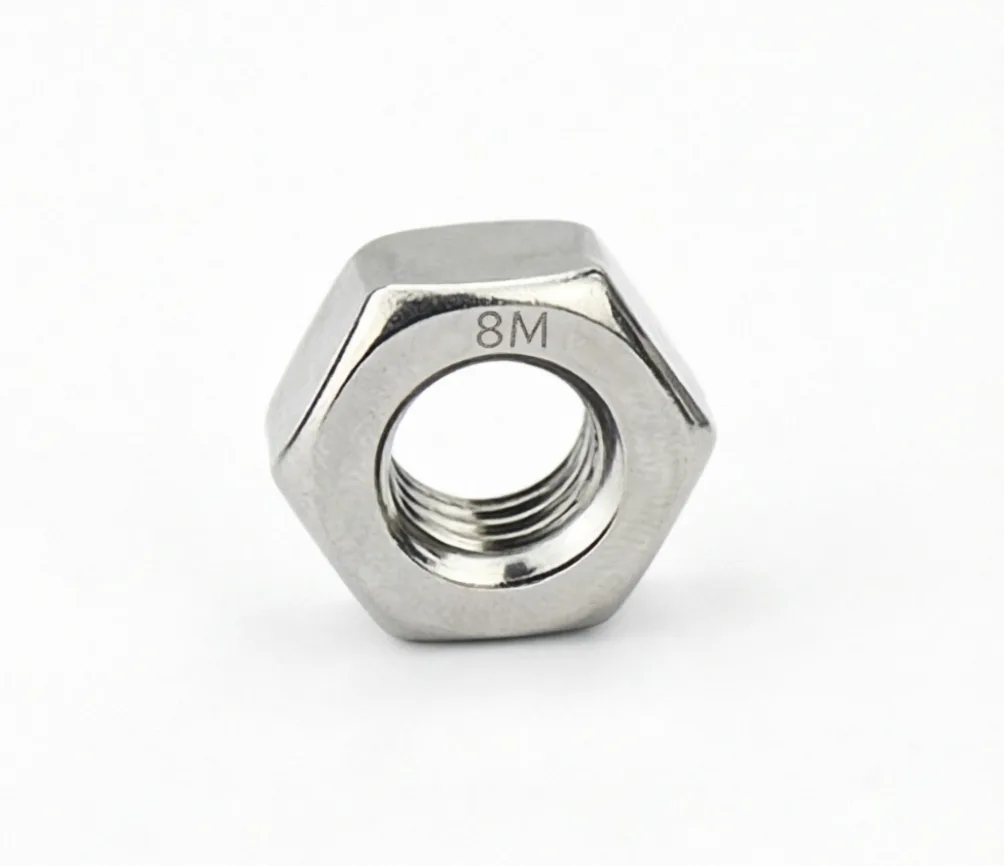
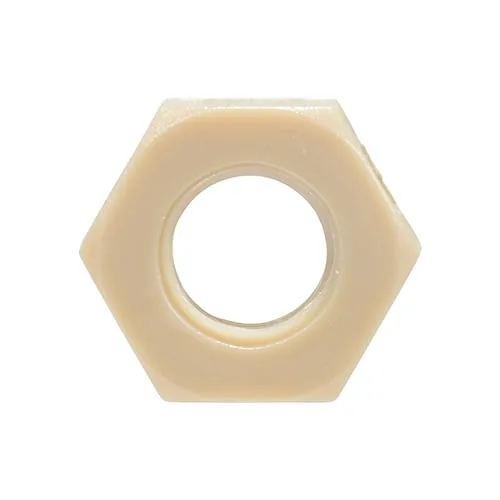
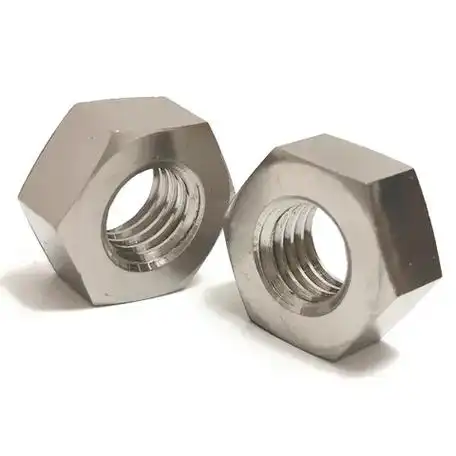
A Style 1 hex nut is the regular full-height metric nut used with a compatible bolt, screw or stud. It is taller than a thin nut and lower than a Style 2 nut or many heavy/high nut designs.
Related ISO families include:
| Product | Common ISO reference | Main distinction |
|---|---|---|
| Thin hexagon nut | ISO 4035 | Reduced height; lower thread engagement |
| Regular hexagon nut, Style 1 | ISO 4032 | General-purpose regular-height nut |
| High hexagon nut, Style 2 | ISO 4033 | Greater height and thread engagement |
| Fine-pitch Style 1 nut | ISO 8673 | Fine metric thread rather than coarse pitch |
The standard number mainly identifies geometry and thread series. A complete purchase specification must also define the material, property class, coating, thread tolerance and inspection requirements.
Return to the complete fastener standard cross-reference when comparing another nut, bolt, screw or washer family.
DIN 934 vs ISO 4032: what actually changed?
DIN 934 remains common on legacy European drawings and in commercial catalog language, even though new German specifications generally use DIN EN ISO 4032. The DIN and ISO products are close, but they are not dimensionally identical at every nominal diameter.
Two changes matter most:
- Width across flats, s: M10, M12, M14 and M22 use different common wrench sizes.
- Nut height, m: ISO 4032 is taller at many sizes, increasing thread engagement but also changing the joint stack and required bolt projection.
Selected DIN 934 and ISO 4032 reference dimensions
The values below are commonly published comparison values. They illustrate the substitution risk but do not replace the controlled standard editions or an approved supplier drawing.
| Thread | DIN 934 WAF s | ISO 4032 WAF s | DIN 934 height m | ISO 4032 height m |
|---|---|---|---|---|
| M6 | 10 mm | 10 mm | 5.0 mm | 5.2 mm |
| M8 | 13 mm | 13 mm | 6.5 mm | 6.8 mm |
| M10 | 17 mm | 16 mm | 8.0 mm | 8.4 mm |
| M12 | 19 mm | 18 mm | 10.0 mm | 10.8 mm |
| M14 | 22 mm | 21 mm | 11.0 mm | 12.8 mm |
| M16 | 24 mm | 24 mm | 13.0 mm | 14.8 mm |
| M22 | 32 mm | 34 mm | 18.0 mm | 20.0 mm |
Always confirm whether a published value is nominal, minimum or maximum and which edition it represents. Acceptance also requires the minimum width across corners e, bearing face, chamfers and thread tolerance—not only s and m.
How the dimensional differences affect the assembly
Tooling and access
A legacy DIN-oriented machine may have a captive wrench, narrow access window, cast pocket or welded anti-rotation feature. An M22 ISO 4032 nut is wider across flats than the common DIN 934 value and may physically interfere. At M10, M12 and M14, the ISO nut is narrower and may not match existing tooling or a form-fit restraint.
Bolt projection and thread engagement
A taller ISO 4032 nut can require more available threaded length. Check that the bolt or stud fully engages the nut and still satisfies the project's required thread projection. Conversely, replacing a specified ISO 4032 nut with a shorter legacy DIN geometry can reduce engaged thread length and should not be approved from the standard name alone.
Bearing area and connected parts
Different WAF values also change the nut bearing geometry. Confirm the washer outside diameter, slot width, counterbore, adjacent radius and connected-part surface before accepting a substitute.
Coarse and fine thread coverage
Legacy DIN 934 documentation may be encountered with coarse and fine metric pitches over a broad size range. ISO separates the common current families:
- ISO 4032: Style 1 regular hex nuts with coarse metric thread;
- ISO 8673: Style 1 regular hex nuts with fine metric pitch.
A callout of “M16 nut” is incomplete when fine pitch is possible. Record the full designation, such as M16 × 2 or M16 × 1.5, together with the internal-thread tolerance.
ISO 4032 and DIN EN ISO 4032
DIN EN ISO 4032 is the German/European publication of ISO 4032. When the cited editions match, they normally express the same ISO dimensional requirements for Style 1 hexagon nuts.
That does not make the designation a complete performance specification. Carbon- or alloy-steel nut mechanical properties are commonly specified through ISO 898-2, while corrosion-resistant stainless nuts are covered through the applicable part of ISO 3506. The correct standard, material group, property class, diameter range and temperature limitations must be confirmed.
For example, an ISO 4032 Class 8 carbon-steel nut and an A4 stainless nut can share geometry while having different proof-load, corrosion and assembly behavior.
Where GB/T 6170 fits
GB/T 6170 is the Chinese national reference for Style 1 metric hexagon nuts. The adoption relationship is edition-specific: GB/T 6170-2000 was aligned as an equivalent adoption of ISO 4032:1999, while GB/T 6170-2015 is commonly identified as a modified adoption of ISO 4032:2012.
Therefore, GB/T 6170 is a practical ISO-family sourcing standard, but it should not be advertised as unconditionally identical across every edition and technical clause. For contractual replacement, compare the cited editions, size range, dimensional table, thread tolerance, product grade and referenced mechanical requirements.
The professional conclusion is: generally dimensionally compatible after edition and specification review, not “100% identical under all conditions.”
Why ASME B18.2.2 is not a direct metric substitute
ASME B18.2.2 covers inch-series nuts for general applications. Typical thread designations include 1/4-20 UNC, 3/8-16 UNC, 1/2-13 UNC and corresponding UNF or other Unified series where specified. ISO 4032 uses ISO metric designations such as M6 × 1, M10 × 1.5 and M12 × 1.75.
Unified inch and ISO metric threads commonly use a 60-degree profile angle. The incompatibility does not come from a different angle; it comes from nominal diameter, pitch, thread-form details, tolerances and mating dimensions. A nut that begins to engage is not proof of compatibility, and forced assembly can damage the threads while producing no reliable preload.
Retain the ASME callout for inch equipment unless a responsible engineer approves a documented redesign of the complete mating thread. If a US project uses metric hardware, identify the applicable metric nut standard rather than choosing an approximate inch size.
JIS B 1181 requires an exact nut type
JIS B 1181 covers multiple hex-nut types and dimensional arrangements. Later JIS editions may align portions of the product family with ISO, but a bare “JIS B 1181” callout is not enough to declare an ISO 4032 replacement.
Confirm the type, nominal diameter, pitch, width across flats, height, thread tolerance, property class and edition. This is particularly important for Japanese automotive and industrial equipment with restricted socket access, captive nut features or controlled bolt projection.
Treat UNI 5587 cautiously
UNI 5587 appears in legacy Italian and supplier cross-reference catalogs, but cross-reference sources do not always agree on the height or thread family represented by the designation. It should not be described simultaneously as a direct Style 1 equivalent and a high/Style 2 nut without checking the original standard title and edition.
For an Italian drawing, retain the full UNI designation and request its dimensional table. If the customer wants to migrate to the current ISO family, compare the original width across flats, height, pitch and mechanical requirements, then document whether ISO 4032, ISO 4033, ISO 8673 or another standard is the correct destination.
Property class and proof load cannot be inferred from dimensions
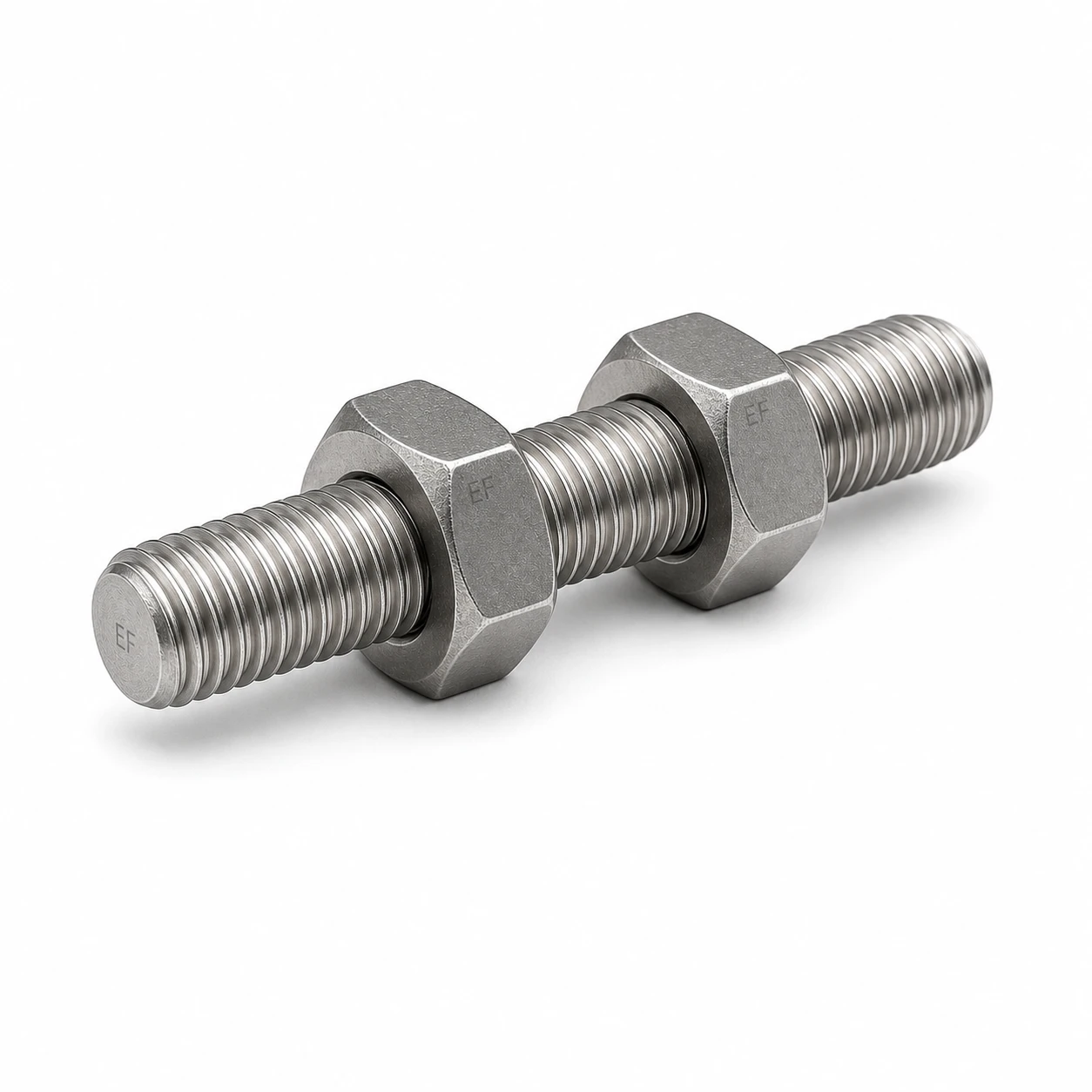
The nut must be compatible with the mating bolt or stud and the governing mechanical-property standard. Common steel property classes include Class 5, 6, 8, 10 and 12 where permitted by the applicable standard and size range. Stainless designations may include A2 or A4 material groups with the required property class.
Do not assume that a taller nut automatically has the required proof load, or that any Class 8 nut is suitable for every Class 8.8 bolt without checking the governing standard, diameter and coating condition. High-temperature pressure bolting, structural bolting and prevailing-torque applications use additional product and material requirements.
Related specialized products include ASTM A194 heavy hex nuts, ASTM A563 structural hex nuts and EN 14399 heavy hex nuts. These should not be replaced by a general ISO 4032 nut simply because the thread size matches.
Interchangeability decision matrix
| Proposed replacement | General assessment | Required action |
|---|---|---|
| ISO 4032 ↔ DIN EN ISO 4032 | Normally the same adopted ISO requirement | Confirm edition and complete performance specification |
| DIN 934 → ISO 4032 | Common legacy-to-current conversion | Check WAF, height, pitch, clearance and bolt projection |
| ISO 4032 ↔ GB/T 6170 | Corresponding ISO-aligned metric family | Compare cited editions and technical references |
| JIS B 1181 → ISO 4032 | Depends on exact JIS type | Compare controlled tables and obtain approval |
| UNI 5587 → ISO family | Relationship is edition/title dependent | Identify the actual UNI nut height and thread series first |
| ASME B18.2.2 → ISO 4032 | Different inch and metric thread systems | Formally redesign the complete mating thread; do not approximate |
Practical replacement workflow
- Read the complete callout. Record standard, edition, diameter, pitch and thread tolerance.
- Identify the product style. Confirm regular Style 1, thin, high/Style 2, heavy hex or another nut type.
- Compare dimensions. Check s, m, e, bearing face, chamfers and size range.
- Check the mating thread. Confirm bolt or stud diameter, pitch, tolerance and available thread length.
- Review the assembly envelope. Check socket access, captive features, counterbores, washers and required bolt projection.
- Specify performance. State material, property class, heat treatment, coating and mechanical standard.
- Evaluate service. Consider preload, vibration, temperature, corrosion, galling and inspection requirements.
- Document approval. Attach the comparison drawing or table for any regional or legacy conversion.
Common procurement failures
Ordering only “M12 hex nut”
The supplier may choose a local standard, coarse pitch, different WAF or unsuitable property class. State the complete standard, thread and performance designation.
Treating a cross-reference row as proof of identity
The row identifies a related product family. It does not prove that every edition, height, tolerance or mechanical clause matches.
Ignoring the taller ISO nut
The replacement may consume more threaded length and change bolt projection, washer stack or access to a locking feature.
Mixing metric and inch threads by approximate diameter
Both thread families may use a 60-degree profile, but their diameter and pitch do not match. Never force the assembly.
Replacing a structural or pressure nut with a general Style 1 nut
Matching geometry is not enough. Material specification, proof load, heat treatment, traceability and assembly rules may be fundamentally different.
What to include on the RFQ or purchase order
- Standard and edition;
- Complete thread designation and tolerance;
- Nut style and critical s, m or e dimensions when drawing-controlled;
- Material and property class;
- Surface treatment, lubricant and coating requirements;
- Mating bolt or stud specification;
- Required bolt projection and available tool clearance;
- Quantity, inspection report, certificate and traceability requirements.
Browse general hex nuts, stainless hex nuts and nickel-alloy hex nuts. For a legacy DIN, UNI, JIS or special-dimension nut, send the original drawing through the contact page for review.
Final recommendation
Use ISO 4032 or its current national adoption for new coarse-thread metric Style 1 nut specifications when appropriate. Treat DIN 934 as a closely corresponding legacy reference, but check wrench size and nut height before changing the drawing or supplier. Review the exact GB/T edition, preserve JIS and UNI details until their type is confirmed, and keep ASME B18.2.2 within its inch thread system. A safe replacement is defined by thread fit, dimensions, property class and joint performance—not by the cross-reference label alone.