What Is DIN 912?
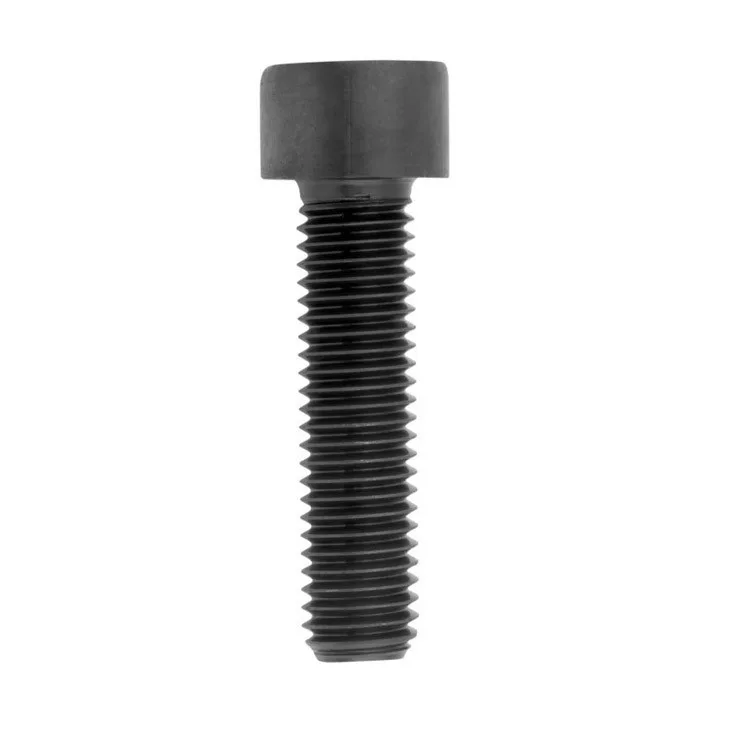
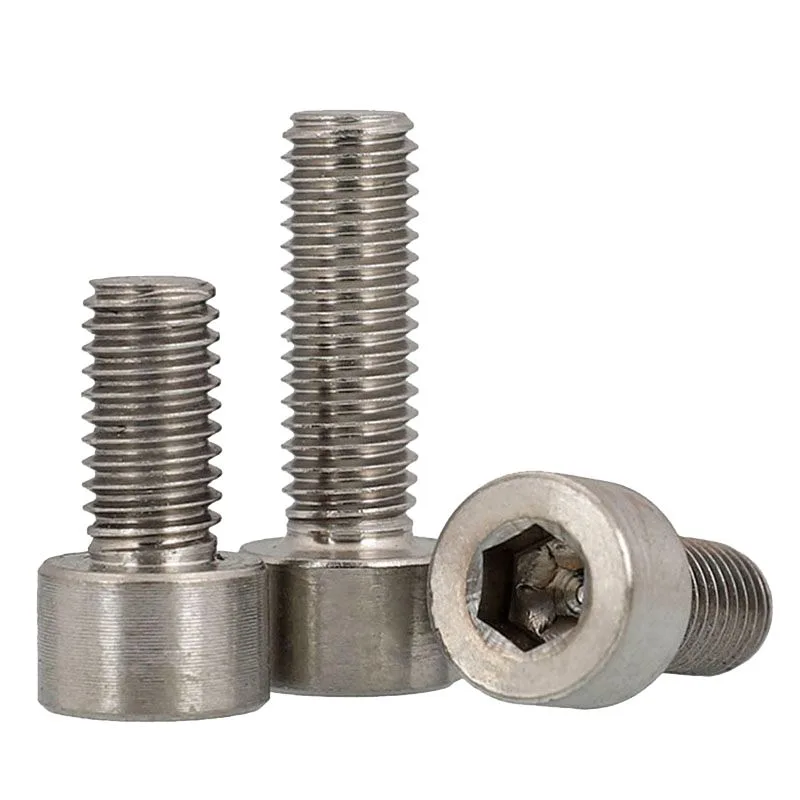
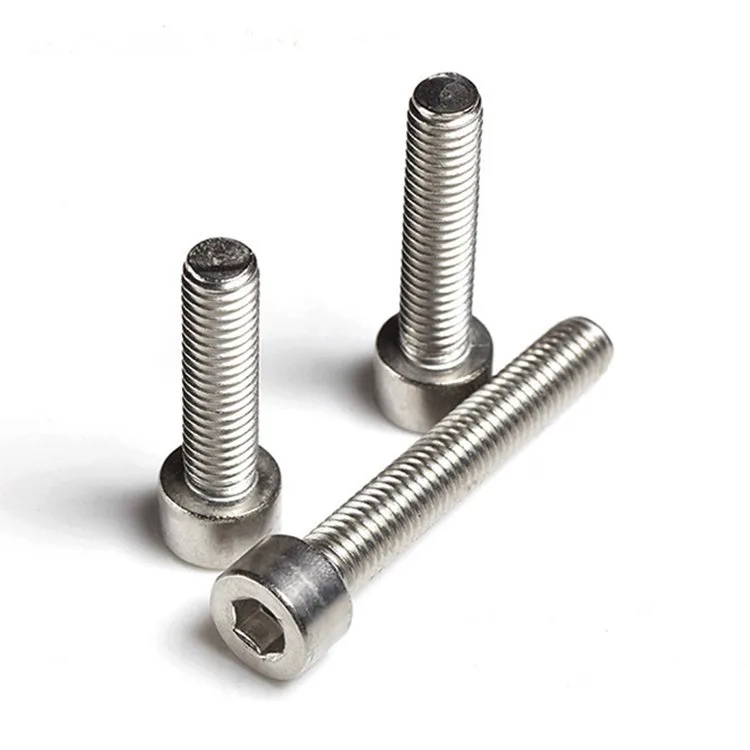
DIN 912 is the legacy German product standard for hexagon socket head cap screws: metric screws with a cylindrical head and an internal hexagon drive. The designation remains common on drawings, bills of materials and purchase orders for machinery, molds, automation equipment and precision assemblies.
The principal international successor is ISO 4762, and the German adoption is DIN EN ISO 4762. These references describe the same basic product configuration, but a replacement should still be approved against the cited editions and the complete purchase specification.
| Feature | DIN 912 / ISO 4762 configuration |
|---|---|
| Head form | Cylindrical socket head |
| Drive | Internal hexagon |
| Thread system | ISO metric coarse or specified fine pitch |
| Main international successor | ISO 4762 |
| German ISO adoption | DIN EN ISO 4762 |
| Typical use | Compact, high-strength machine joints |
Browse alloy-steel socket head cap screws, stainless socket head cap screws and titanium socket head cap screws for related supply options.
DIN 912 Equivalent Standards at a Glance
| Standards system | Reference | Relationship to DIN 912 | What to verify |
|---|---|---|---|
| ISO | ISO 4762 | Principal international successor | Edition, dimensions, tolerances and thread length |
| DIN EN ISO | DIN EN ISO 4762 | German adoption of ISO 4762 | Full drawing and property requirements |
| China | GB/T 70.1 | Closely corresponding Chinese standard based on ISO 4762 | Adoption status, edition and national provisions |
| United States | ASME B18.3.1M | Metric socket head cap screw standard; functionally interchangeable with ISO 4762 within its stated scope | Dimensional limits and tolerancing practice |
| Italy | UNI 5931 | Legacy Italian cross-reference for the same basic product family | Edition, size range and dimensional table |
| Japan | JIS B 1176 | Closely corresponding Japanese socket head cap screw standard based on ISO references | Exact type, edition and Japanese provisions |
The clearest migration path for modern documentation is:
DIN 912 → ISO 4762 → DIN EN ISO 4762
The other national references are useful for sourcing and drawing interpretation, but “equivalent” does not mean that every tolerance, material rule, marking provision or inspection requirement is automatically identical.
DIN 912 vs ISO 4762
ISO 4762 is the primary answer when a buyer asks for the ISO equivalent of DIN 912. Both standards identify the familiar cylindrical-head, internal-hex metric screw and share the same basic dimensional concept.
In ordinary commercial sourcing, suppliers often describe stock as DIN 912 / ISO 4762. That combined description is useful, but it does not replace a controlled comparison when the screw fits a tight counterbore, carries a fatigue-sensitive load or must comply with an approved drawing.
Before changing a DIN 912 callout to ISO 4762, confirm:
- The edition of each standard
- Nominal diameter, pitch and thread tolerance
- Head diameter and head height limits
- Socket width and minimum socket depth
- Thread length and unthreaded body length
- Product grade and dimensional tolerances
- Material, property class and finish
- Marking, testing and certificate requirements
For new international drawings, ISO 4762 is normally the clearer designation. For replacement parts, retain the legacy DIN 912 reference until the proposed ISO product has been checked against the original drawing.
Dimensions That Control Interchangeability
The critical dimensions are not limited to nominal diameter and length.
| Symbol | Dimension | Why it matters |
|---|---|---|
| d | Nominal thread diameter | Establishes mating thread size |
| P | Thread pitch | Controls thread compatibility |
| dₖ | Head diameter | Controls counterbore and side clearance |
| k | Head height | Controls axial clearance and seating depth |
| s | Hexagon socket width across flats | Controls key engagement |
| t | Minimum socket depth | Affects drive engagement and installation torque |
| dₛ | Body or shank diameter | Affects hole fit, alignment and shear transfer |
| b | Thread length | Controls grip and available thread engagement |
| l | Nominal screw length | Measured from the bearing face beneath the head |
As a common geometry example, an M10 coarse-thread socket head cap screw uses a 1.5 mm pitch, a nominal 16 mm head diameter, a nominal 10 mm head height and an 8 mm hexagon socket. These nominal values do not show the maximum and minimum limits; the applicable standard edition is still required for inspection.
DIN 912 vs GB/T 70.1
GB/T 70.1 is the corresponding Chinese product standard for hexagon socket head cap screws. GB/T 70.1-2008 identifies ISO 4762:2004, MOD, meaning it is a modified adoption rather than a statement that every technical provision is literally identical.
The principal product geometry is closely aligned, so the standard is a strong practical cross-reference for global purchasing. However, national provisions can affect material categories, marking, packaging or other requirements. A critical order should therefore retain the exact GB/T edition and compare it with the proposed DIN or ISO supply.
A useful technical path is:
DIN 912 → ISO 4762 → GB/T 70.1
Do not reduce the purchase description to the standard number alone. Include size, pitch, property class, material, coating and inspection documentation.
DIN 912 vs ASME B18.3.1M
ASME B18.3.1M is the metric-series American reference for socket head cap screws encountered on North American drawings. Its scope recognizes functional interchangeability with ISO 4762 screws, while differences may remain because the standards use different dimensional-limit and tolerancing practices.
This means the standards can describe a functionally compatible metric product without being textually or dimensionally identical in every requirement. For a proposed substitution, compare:
- Head diameter and height limits
- Body diameter and underhead geometry
- Socket size and engagement depth
- Thread length
- Dimensional tolerances
- Standard edition and project approval status
Do not confuse ASME B18.3.1M with inch-series socket screws. A metric internal-hex drive does not make an inch thread compatible with an ISO metric thread.
DIN 912 vs UNI 5931
UNI 5931 is a legacy Italian reference commonly listed with DIN 912 and ISO 4762. Older English catalog translations may call the product a “hexagon socket cheese head screw,” but the commercial product family is the standard cylindrical socket head cap screw.
UNI 5931 is useful when interpreting Italian drawings and older European stock descriptions. Before substituting it, confirm the original UNI edition, diameter and pitch series, head dimensions, thread length and applicable mechanical requirements. For new multinational documentation, ISO 4762 is usually less ambiguous.
DIN 912 vs JIS B 1176
JIS B 1176 covers hexagon socket head cap screws in Japan. JIS B 1176:2014 was developed with reference to ISO 4762:2004 and ISO 12474:2010 and incorporates corresponding international provisions together with Japanese-specific content.
It is therefore a strong family-level cross-reference, but it should not be shortened to “JIS B 1176 = DIN 912” for a controlled assembly. Confirm the JIS edition, coarse or fine thread series, dimensional table, material category, marking and inspection requirements.
Material and Strength Are Separate from the Head Standard
DIN 912 and ISO 4762 primarily identify product geometry. They do not, by themselves, provide a complete material and performance specification.
Common supply combinations include:
Carbon and alloy steel
- Property classes 8.8, 10.9 and 12.9, subject to the applicable mechanical-property standard
- Black oxide, zinc plated, zinc flake or project-specific finishes
- Machinery, tooling, automation and high-clamp-load assemblies
Stainless steel
- A2-70, A4-70 and A4-80 where the selected size and governing standard permit
- Plain, cleaned, pickled or passivated surfaces
- Outdoor, marine, food-processing and chemical-service equipment
Special alloys
- Titanium or nickel-alloy versions for weight, corrosion or temperature requirements
- Drawing-controlled material, heat treatment, inspection and traceability
A complete order should look more like:
ISO 4762 socket head cap screw, M10 × 40, property class 12.9, black oxide, thread tolerance 6g, inspection certificate required.
For stainless steel:
DIN 912 / ISO 4762 socket head cap screw, M8 × 30, A4-80, passivated, lot traceability required.
Do Not Confuse DIN 912 with Low-Head or Countersunk Screws
| Standard | Product form | Key difference from DIN 912 |
|---|---|---|
| DIN 7984 | Low-head socket head cap screw | Lower head and reduced loadability |
| DIN 6912 | Low-head socket screw | Different low-head geometry and drive arrangement |
| DIN 7991 | Hexagon socket countersunk head screw | Conical countersunk head rather than cylindrical head |
These products may use the same internal-hex tool concept but are not direct replacements. A lower or countersunk head changes the seating geometry, counterbore, drive engagement and load capacity.
Practical Substitution Guide
For general machinery, substitution between corresponding DIN 912 and ISO 4762 stock is often practical after the complete callout is matched. Approval needs more attention when the application contains:
- A close-tolerance counterbore
- Limited clearance above or around the head
- Automated tightening or a controlled drive-engagement depth
- A defined unthreaded grip or shear plane
- Fatigue, vibration or high preload
- Aerospace, rail, pressure equipment or customer-qualified parts
- Mandatory marking, testing or material certificates
The decision should be based on the drawing and joint requirements, not an unsupported percentage of applications.
DIN 912 / ISO 4762 RFQ Checklist
Before sending an inquiry or approving an alternative, state:
- Required standard and edition
- Diameter, pitch and nominal length
- Full or partial thread requirement
- Material and property class
- Surface treatment and coating thickness limits
- Thread tolerance and any gauge requirement
- Critical head, socket or counterbore dimensions
- Quantity and packaging
- Inspection report, MTC or EN 10204 certificate
- Drawing revision and substitution approval requirement
Related Resources
- DIN / ISO / ASME / JIS cross-reference chart
- DIN 7984 low-head socket screw reference
- DIN 7991 countersunk socket screw reference
- Alloy-steel socket head cap screws
- Stainless socket head cap screws
- Industrial equipment fasteners
Use the cross-reference as a sourcing guide. For a drawing-controlled or safety-critical joint, the governing standard edition, drawing and engineering approval remain decisive.