What Is a DIN 931 Bolt?
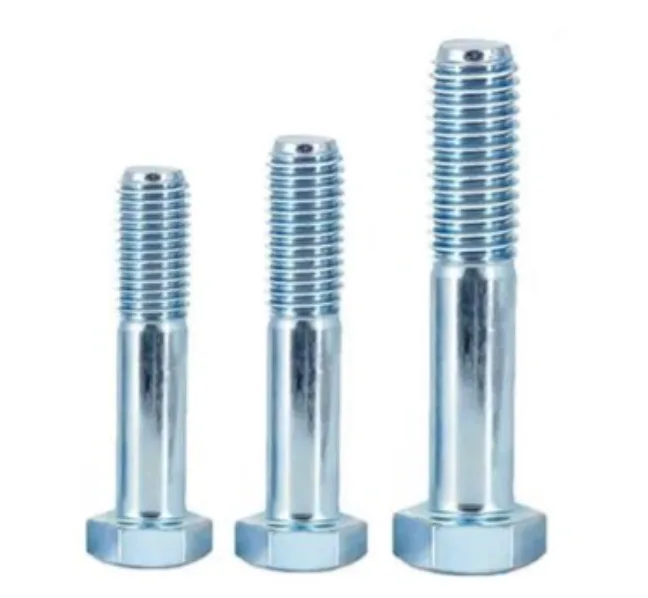
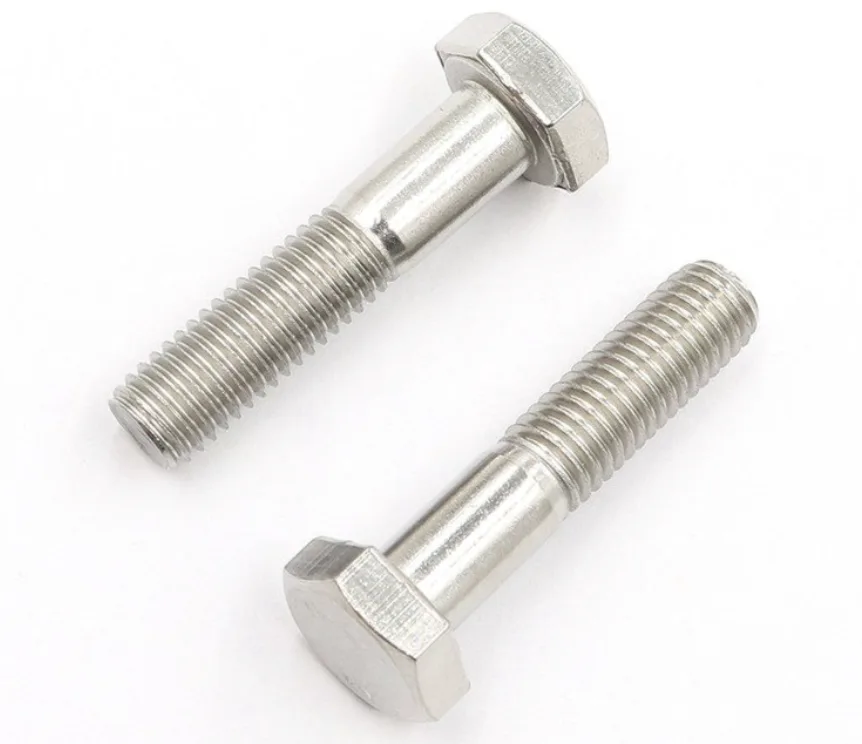
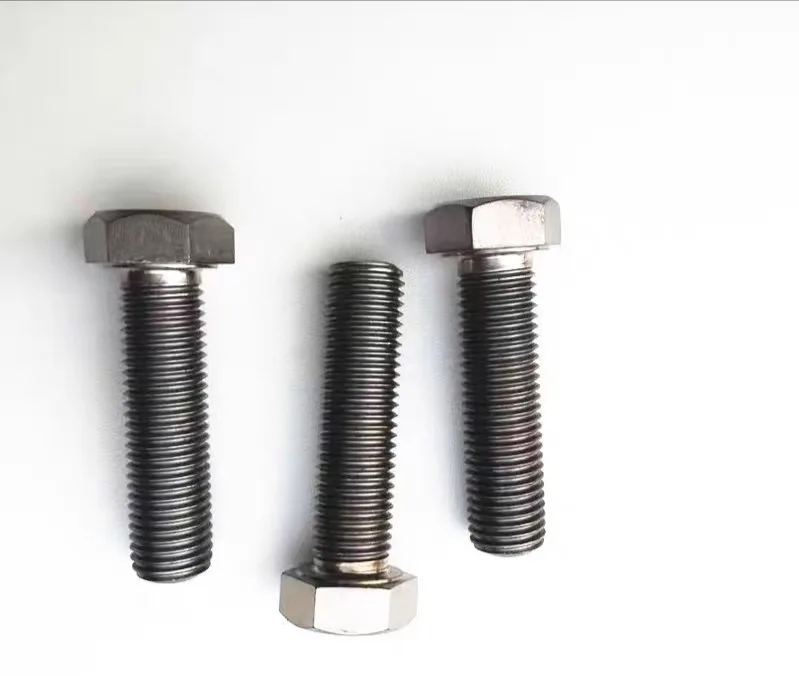
DIN 931 is the legacy German standard for metric hexagon head bolts with a partially threaded shank. The unthreaded body distinguishes it from DIN 933, the corresponding legacy DIN standard for fully threaded hexagon head screws.
DIN 931 remains common on older drawings, bills of materials and purchasing records even though new German and international documentation generally uses ISO 4014 or DIN EN ISO 4014. The modern designation should not be substituted blindly: selected head dimensions changed during the transition from the legacy DIN series to the ISO series.
| Feature | DIN 931 bolt |
|---|---|
| Product form | Hexagon head bolt with shank |
| Thread coverage | Partial thread |
| Thread system | ISO metric thread |
| Main international successor | ISO 4014 |
| German ISO adoption | DIN EN ISO 4014 |
| Common Chinese reference | GB/T 5782 |
Browse partial-thread hex head bolts and stainless partial-thread hex bolts for related product configurations.
DIN 931 Equivalent Standards at a Glance
| Standards system | Reference | Relationship to DIN 931 | Substitution guidance |
|---|---|---|---|
| DIN / ISO | DIN EN ISO 4014 / ISO 4014 | Principal modern successor for partial-thread metric hex bolts | Strong cross-reference, but check changed wrench sizes |
| China | GB/T 5782 | Corresponding Chinese partial-thread hex-bolt family, aligned with the ISO configuration in modern editions | Verify cited edition and project requirements |
| Italy | UNI 5737 | Legacy Italian reference for hexagon bolts with shank | Strong family-level cross-reference; verify dimensions and edition |
| Japan | JIS B 1180 | Broad Japanese standard containing more than one hex-bolt configuration | Identify the exact type and dimensional table |
| United States | ASME B18.2.3.1M | Metric hex cap screw reference found on North American and legacy drawings | Related product, not an automatic one-to-one replacement |
The clearest migration path is:
DIN 931 → ISO 4014 → DIN EN ISO 4014
“Equivalent” here means the standards cover the same general product configuration. It does not guarantee that every diameter has the same head, thread length, tolerance, material or mechanical-property requirement.
DIN 931 vs ISO 4014: The Critical Wrench-Size Differences
DIN 931 and ISO 4014 are closely corresponding standards, but they are not dimensionally identical at every diameter. The most important purchasing check is the width across flats, also called WAF, wrench size or dimension s.
| Nominal size | Legacy DIN 931 WAF | ISO 4014 WAF | Practical effect |
|---|---|---|---|
| M10 | 17 mm | 16 mm | ISO head uses a 1 mm smaller wrench size |
| M12 | 19 mm | 18 mm | ISO head uses a 1 mm smaller wrench size |
| M14 | 22 mm | 21 mm | ISO head uses a 1 mm smaller wrench size |
| M22 | 32 mm | 34 mm | ISO head uses a 2 mm larger wrench size |
These differences can affect:
- Existing sockets and automated tightening tools
- Counterbores, recessed pockets and surrounding clearance
- Maintenance replacement on legacy machinery
- Mixed DIN and ISO stock in the same assembly
- Head bearing area and drawing-controlled geometry
For many other common sizes, the nominal WAF is aligned, but that does not remove the need to confirm the standard edition and tolerance limits.
Dimensions to Check Before Replacing DIN 931
Do not approve a substitute from diameter and overall length alone. Compare the following characteristics against the drawing:
| Dimension or requirement | Symbol | Why it matters |
|---|---|---|
| Nominal diameter | d | Establishes the basic bolt size |
| Thread pitch and tolerance | P / tolerance class | Controls mating-thread compatibility |
| Width across flats | s | Controls wrench fit and head clearance |
| Width across corners | e | Controls rotation and pocket clearance |
| Head height | k | Controls axial clearance and bearing geometry |
| Thread length | b | Determines usable grip and engagement |
| Unthreaded shank diameter | dₛ | Important for hole fit, alignment and shear transfer |
| Nominal length | l | Controls grip stack and thread position |
| Product grade / dimensional tolerance | — | Controls permissible manufacturing variation |
Material, property class and coating are normally specified through related mechanical and finish standards rather than by the dimensional designation alone.
Thread Length: Why the Same M × L Callout May Still Differ
The partial thread is a functional part of a DIN 931 / ISO 4014 bolt. For ISO 4014 coarse-thread bolts, the standard thread-length pattern is commonly expressed as:
| Nominal bolt length l | Reference thread length b |
|---|---|
| l ≤ 125 mm | 2d + 6 mm |
| 125 mm < l ≤ 200 mm | 2d + 12 mm |
| l > 200 mm | 2d + 25 mm |
For example, this produces the following ISO 4014 reference values where the relevant length range is available:
| Size | Shorter-length b | Medium-length b | Longer-length b |
|---|---|---|---|
| M10 | 26 mm | 32 mm | 45 mm |
| M12 | 30 mm | 36 mm | 49 mm |
| M16 | 38 mm | 44 mm | 57 mm |
| M20 | 46 mm | 52 mm | 65 mm |
| M24 | 54 mm | 60 mm | 73 mm |
Do not use this table to overwrite an old controlled drawing automatically. A legacy DIN 931 edition, special length, fine thread or drawing-defined grip may require a different check. Confirm that the unthreaded shank lies in the intended shear plane and does not prevent the nut from reaching the required clamp stack.
DIN 931 vs GB/T 5782
GB/T 5782 is the corresponding Chinese standard family for metric hexagon head bolts with a partially threaded shank. Modern GB/T editions use the ISO-oriented principal dimensional series, which means the critical WAF values should be compared with ISO 4014, not assumed to retain every legacy DIN 931 value.
For ordinary international sourcing, GB/T 5782 can be a strong practical cross-reference when all of the following match:
- Standard edition
- Diameter, pitch and thread tolerance
- Width across flats and head height
- Thread length and nominal length range
- Product grade and dimensional tolerance
- Material, property class and coating
- Inspection and certificate requirements
Do not write “DIN 931 = GB/T 5782” on a critical purchase order without retaining the actual size, grade, finish and inspection specification.
DIN 931 vs UNI 5737
UNI 5737 is commonly cross-referenced with the legacy partial-thread hex-bolt family. It is a useful reference for Italian drawings and older European stock, but a cross-reference row alone does not prove that every edition shares every DIN or ISO dimension.
For replacement work, verify the original UNI title and edition, then compare WAF, head height, thread length, product grade and tolerance. For new international documentation, ISO 4014 or the applicable national adoption is generally clearer than migrating one legacy national number to another.
DIN 931 vs JIS B 1180
JIS B 1180 must be handled more carefully because it covers multiple hexagon bolt and screw configurations. Some tables/configurations follow the ISO 4014 dimensional concept, while other JIS configurations can use different head proportions or product requirements.
Therefore, do not make either of these blanket assumptions:
- Every JIS B 1180 bolt is a direct DIN 931 equivalent
- Every JIS B 1180 bolt uses a smaller Japanese-style head
Identify the exact JIS designation, type, thread series, product grade and table before approving a DIN 931 or ISO 4014 replacement.
DIN 931 vs ASME B18.2.3.1M
ASME B18.2.3.1M covers metric hex cap screws and is encountered on North American and legacy metric documentation. It belongs to a related product family, but it should not be written as a strict one-to-one DIN 931 equivalent.
The nominal metric diameter and several head dimensions may overlap, while head-height limits, special size options, tolerances, thread length conventions and document status/edition can differ. Confirm that the cited ASME edition is accepted by the project and compare the complete dimensional table.
Also distinguish it from inch-series ASME hex bolts and cap screws. A similar 60-degree thread-profile angle does not make Unified inch and ISO metric threads interchangeable; diameter, pitch, profile details and tolerances differ.
DIN 931 vs DIN 933
| Feature | DIN 931 | DIN 933 |
|---|---|---|
| Thread coverage | Partial thread | Full thread |
| Unthreaded shank | Yes | No |
| Typical international reference | ISO 4014 | ISO 4017 |
| Main design consideration | Grip length, shank fit and shear-plane position | Full thread engagement through the clamp range |
A fully threaded DIN 933 / ISO 4017 screw is not an automatic replacement for DIN 931. Moving threads into a shear plane can change bearing, fit and fatigue behavior, while the absence of a plain shank may affect alignment. Use the DIN 933 vs ISO 4017 comparison when the drawing permits a full-thread alternative.
Example: Checking an M20 × 100 DIN 931 Replacement
If a drawing calls for M20 × 100 DIN 931, check at least:
- Coarse thread callout: M20 × 2.5, unless another pitch is specified
- Legacy DIN WAF versus the proposed standard’s WAF
- Head height and clearance
- Applicable thread length b and resulting plain-shank grip
- Property class, such as 8.8 or 10.9
- Material and heat-treatment requirement
- Finish, including coating thickness and thread fit
- Inspection documents and traceability
A complete RFQ could read:
Hexagon head bolt with partial thread, DIN 931 legacy drawing / ISO 4014 proposed supply, M20 × 100, property class 10.9, zinc flake coated, EN 10204 3.1 certificate required. Supplier to confirm WAF, head height and thread length before production.
Materials, Strength Classes and Coatings
Common supply routes include:
Carbon and alloy steel
- Property classes 8.8, 10.9 and selected 12.9 requirements
- Zinc plated, zinc flake, black, phosphate or hot-dip galvanized finishes
- Machinery, equipment, construction and heavy industrial assemblies
Stainless steel
- A2 and A4 material families, including common A2-70 and A4-80 requirements where applicable
- Plain, cleaned, pickled or passivated surfaces according to the order
- Outdoor, food-processing, marine and chemical-service assemblies
The dimensional standard does not by itself establish the correct material for the application. Corrosion, temperature, preload, hydrogen-embrittlement risk, galling and certification requirements must be specified separately.
DIN 931 Replacement Checklist
Before approving ISO 4014, GB/T 5782, UNI 5737, JIS B 1180 or ASME stock, confirm:
- Exact standard and edition
- Partial-thread configuration
- Diameter, pitch and thread tolerance
- Overall length and thread length
- WAF, head height and clearance envelope
- Plain-shank diameter and required grip
- Material and property class
- Coating, lubrication and thread-fit allowance
- Product grade and dimensional inspection
- MTC, EN 10204 3.1 or project-specific documentation