What Is a DIN 933 Hexagon Head Bolt?
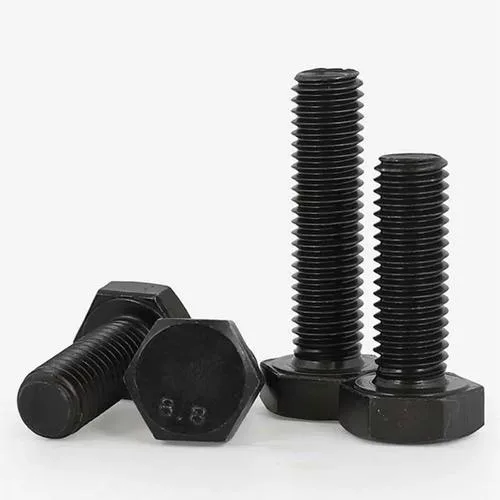
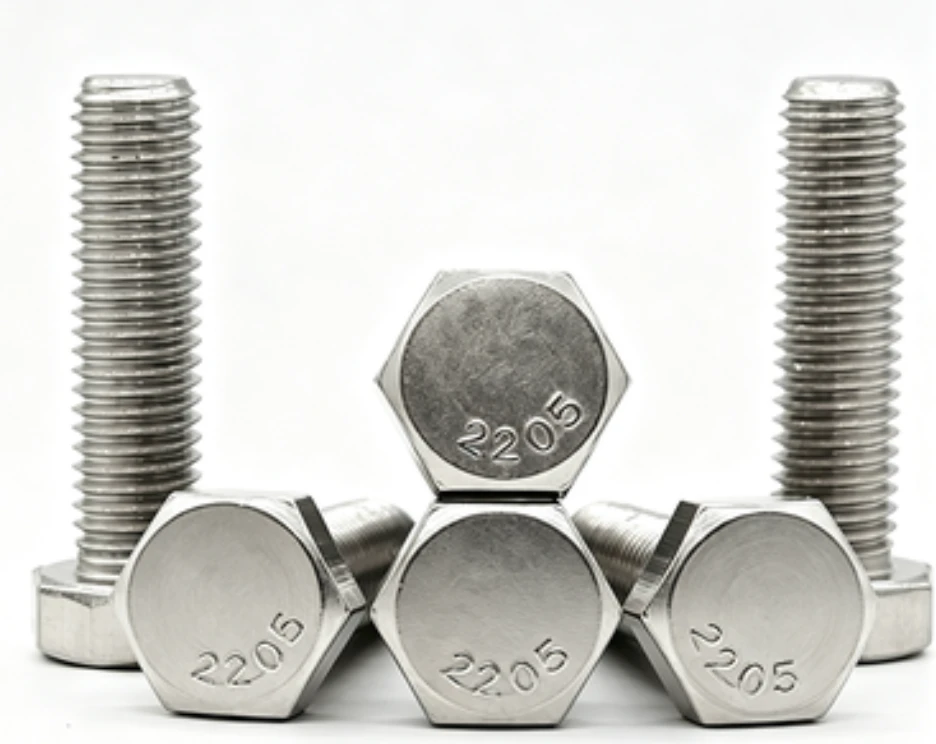
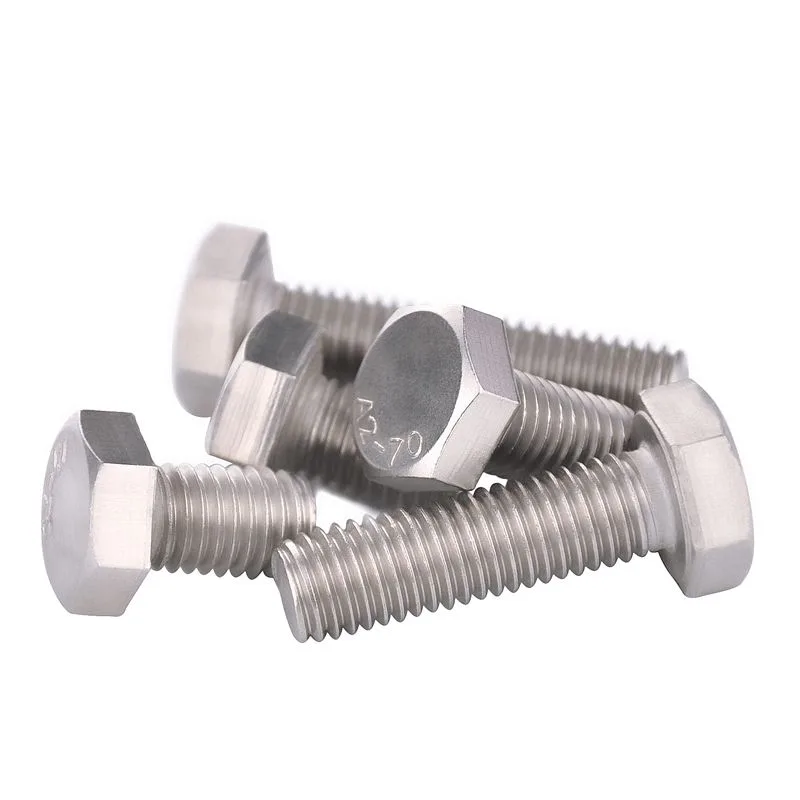
DIN 933 defines metric hexagon head bolts with full thread — the shank is threaded from under the head to the tip. That distinguishes it from DIN 931, which specifies a partially threaded bolt with an unthreaded shank section.
These bolts are widely used in machinery assembly, equipment manufacturing, electrical enclosures, and general industrial fastening — which is why multiple national and international bodies publish closely related standards for the same product type.
Key features
| Feature | Description |
|---|---|
| Product type | Hexagon head bolt |
| Thread type | Full thread |
| Original standard | DIN 933 |
| Primary international equivalent | ISO 4017 |
| Thread system | Metric |
| Head type | Hexagonal |
Is DIN 933 Equivalent to ISO 4017?
Yes — ISO 4017 is the internationally recognized successor/equivalent for fully threaded metric hexagon head bolts that were historically specified as DIN 933. The relationship is typically:
DIN 933 → ISO 4017 → DIN EN ISO 4017
- DIN 933 — Legacy German standard, still heavily searched and listed by buyers and traders
- ISO 4017 — Current international reference for global sourcing
- DIN EN ISO 4017 — German/European adoption of the ISO standard; the modern replacement designation for DIN 933 in many European specifications
For many international projects, ISO 4017 or DIN EN ISO 4017 is preferred in new documentation, while DIN 933 remains common on older drawings and in day-to-day trade language.
The equivalents table above lists the public regional codes used with this product family. For regulated or high-criticality work (pressure equipment, structural certification, aerospace, marine class rules), confirm dimensional tolerances, property class, and certification requirements against the exact standard named on the drawing.
DIN 933 vs ISO 4017: What Actually Differs?
For common sizes and commercial use, DIN 933 and ISO 4017 are often interchangeable. They are not always identical in head geometry.
When Germany moved from DIN to the ISO-aligned system, the width across flats (WAF / wrench size) changed for certain diameters. If you are replacing bolts on older DIN-oriented equipment — or matching existing wrench/socket sets — check these sizes carefully:
| Size | DIN 933 WAF | ISO 4017 WAF |
|---|---|---|
| M10 | 17 mm | 16 mm |
| M12 | 19 mm | 18 mm |
| M14 | 22 mm | 21 mm |
| M22 | 32 mm | 34 mm |
For other common sizes, WAF values are typically aligned. Still verify diameter, pitch, length, property class, and finish before treating any lot as a drop-in replacement.
Also confirm before substituting:
- Material and property class (e.g. 8.8 / 10.9 / 12.9, or A2-70 / A4-80)
- Surface treatment (zinc plated, hot-dip galvanized, passivated, Geomet/Dacromet, etc.)
- Required certificates (EN 10204 3.1, material certs, project-specific approvals)
Other Regional Equivalents
ANSI/ASME B18.2.3.1M — US metric series
Used when North American projects specify metric hex bolts through the ASME framework. Dimensional intent is closely aligned with the ISO metric family, but confirm the exact callout on the drawing (metric series vs inch series under ASME B18.2.1).
UNI 5739 — Italy
Common in Italian and Southern European supply chains. Typically mirrors the DIN/ISO full-thread hex bolt family when the contract requires Italian national standard compliance.
JIS B1180 — Japan
Japanese hexagon bolts can differ in head dimensions from the European/ISO family. Do not assume ISO/DIN stock will fit Japanese equipment wrench interfaces or replacement requirements — request JIS-compliant parts when the market or machine origin requires it.
DIN 933 vs DIN 931: Full Thread vs Partial Thread
One of the most common buyer questions:
| Feature | DIN 933 | DIN 931 |
|---|---|---|
| Thread type | Full thread | Partial thread |
| Unthreaded shank | No | Yes |
| Main advantage | Flexible clamping / full engagement | Higher shear capacity in the shank |
| Typical use | General assembly, shorter lengths | Structural / shear-critical joints |
Choose DIN 933 when you need full thread engagement or flexible clamping length. Choose DIN 931 when the joint design relies on an unthreaded shank for shear strength or alignment.
When to Specify Which Standard
- New European / global industrial specs → ISO 4017 or DIN EN ISO 4017
- Legacy European drawings still listing DIN 933 → DIN 933 (and verify WAF on M10 / M12 / M14 / M22 if mixing with ISO stock)
- US projects using metric fasteners → ANSI/ASME B18.2.3.1M
- Italian national compliance required → UNI 5739
- Japanese market or Japanese OEM equipment → JIS B1180 (verify head dimensions)
When in doubt, cross-check nominal diameter, thread pitch, length, and WAF against the named standard — do not assume “hex bolt” means fully interchangeable across every regional code.
Materials and Strength Classes
DIN 933 / ISO 4017 bolts are commonly supplied in:
Carbon / alloy steel
- Property classes: 8.8, 10.9, 12.9
- Typical use: machinery, equipment frames, general industrial assemblies
Stainless steel
- Materials: A2 (304), A4 (316)
- Common classes: A2-70, A4-80
- Typical use: outdoor equipment, food processing, marine, chemical exposure
Material grade and finish often matter as much as the dimensional standard — especially for corrosion, temperature, and audit requirements.
How to RFQ a DIN 933 Equivalent Bolt
To avoid mismatches, include:
- Standard — DIN 933 / ISO 4017 / DIN EN ISO 4017 / other
- Size — e.g. M8 × 30, M12 × 50
- Material — carbon steel, SS304, SS316, etc.
- Strength class — 8.8 / 10.9 / 12.9 / A2-70 / A4-80
- Surface treatment — zinc plated, HDG, passivated, Geomet, etc.
- Quantity and any certificate needs
Frequently Asked Questions
What is the DIN 933 equivalent standard?
The most common international equivalent is ISO 4017 (also referenced as DIN EN ISO 4017).
Is DIN 933 full thread?
Yes. DIN 933 specifies fully threaded hexagon head bolts.
Can ISO 4017 replace DIN 933?
Usually yes for commercial applications, provided diameter, pitch, length, property class, finish — and WAF on critical sizes (especially M10, M12, M14, M22) — are confirmed.
What is the difference between DIN 933 and DIN 931?
DIN 933 is full thread; DIN 931 is partial thread with an unthreaded shank.
Are UNI 5739 and JIS B1180 the same as DIN 933?
They describe the same general product family (full-thread hex bolts), but regional dimensional details can differ — verify before substituting, especially for JIS.