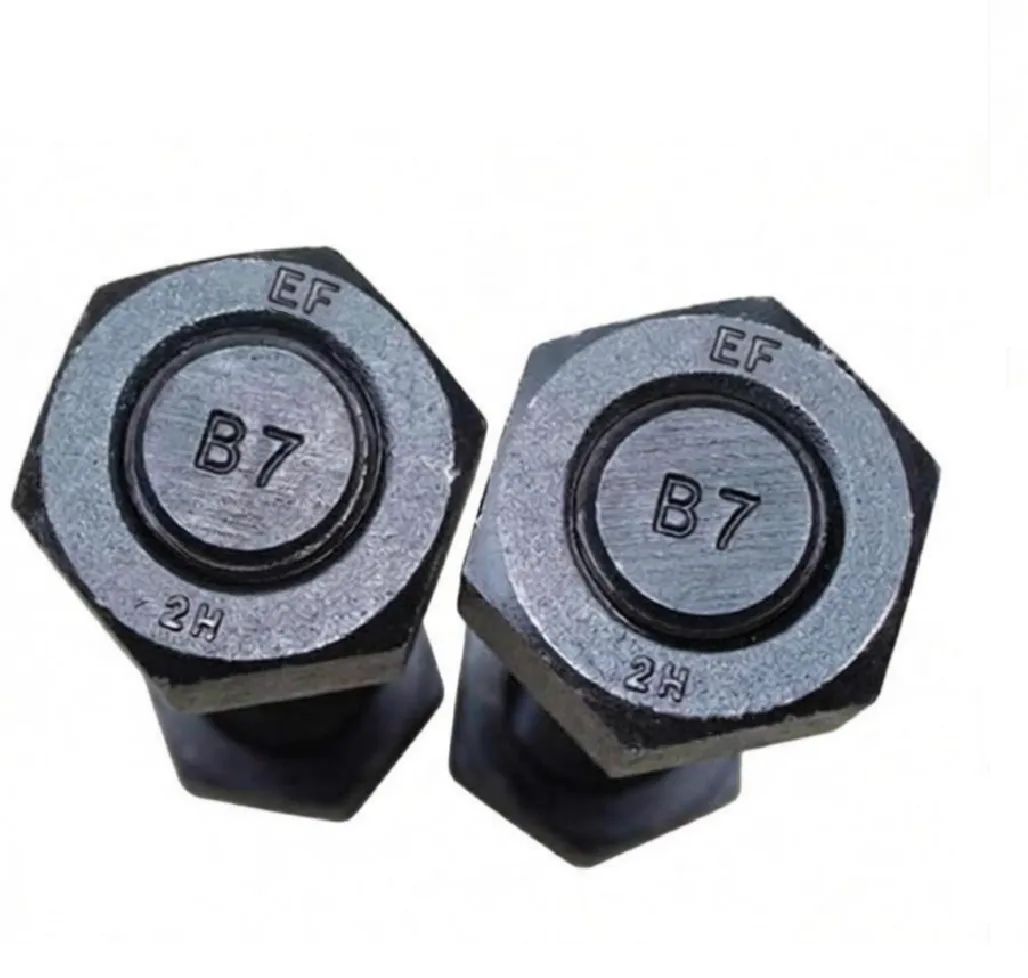
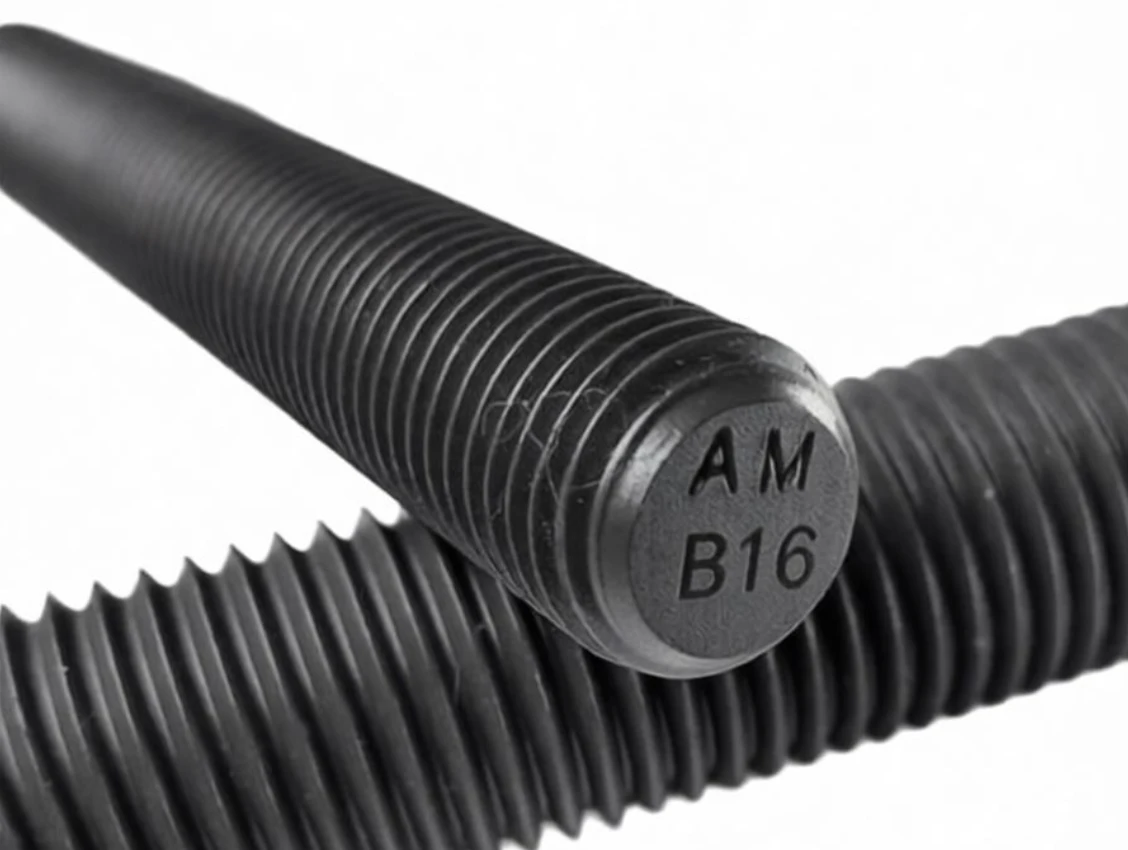
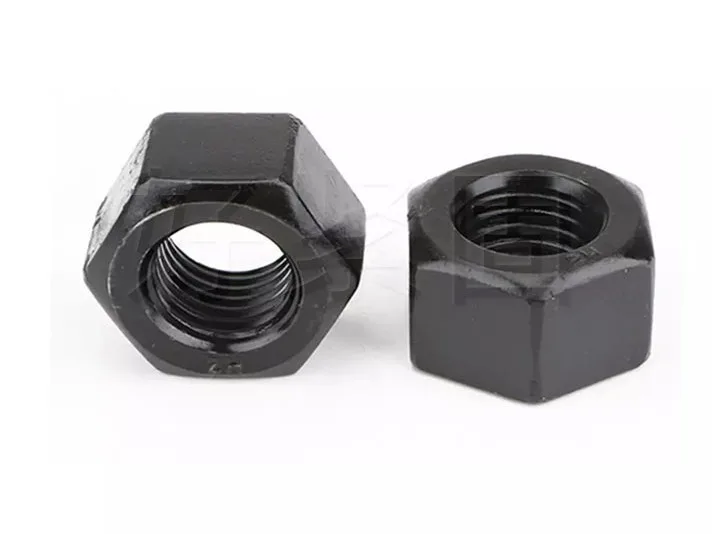
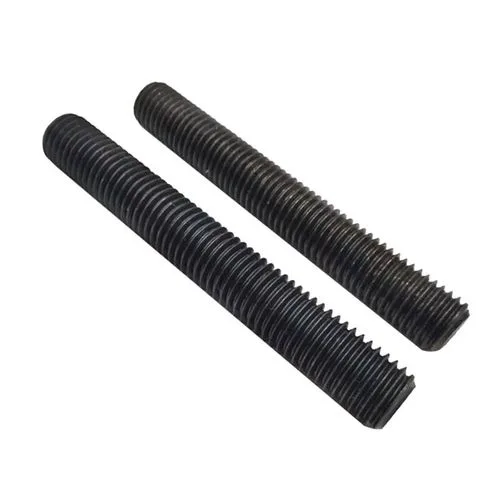
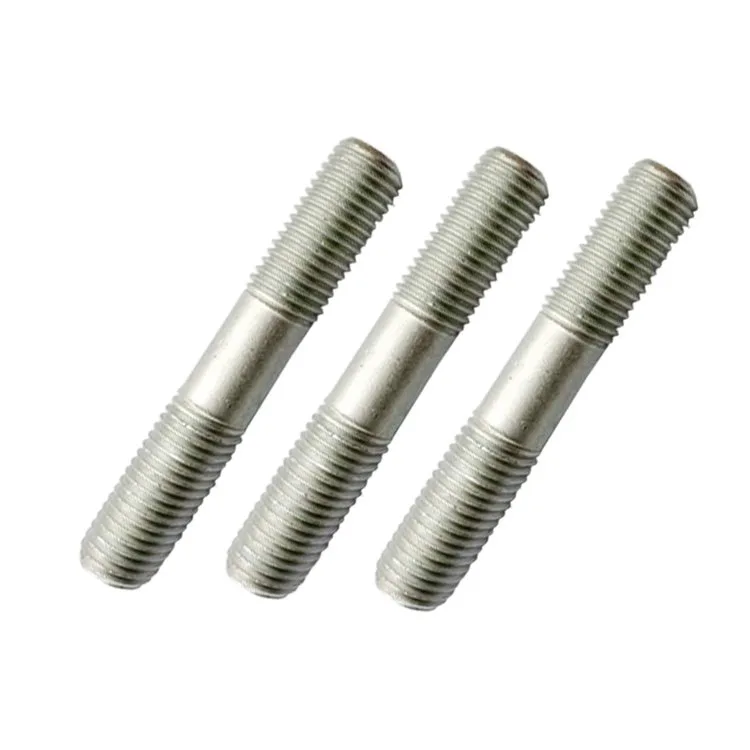
ASTM A193 Grade B7 and B7M stud bolts are chromium-molybdenum alloy steel pressure bolting components used for flanges, valves, pressure vessels, heat exchangers, refinery piping and power generation equipment. B7 is the general pressure-service grade and is commonly paired with ASTM A194 Grade 2H heavy hex nuts. B7M is a lower-strength, controlled-hardness grade and is commonly paired with ASTM A194 Grade 2HM nuts.
B7 and B7M are not interchangeable grade labels. B7 provides higher minimum mechanical strength, while B7M limits hardness and requires the B7M-specific mechanical and hardness controls in ASTM A193. A B7M marking alone does not prove compliance with a sour-service project: the purchase order must separately invoke NACE MR0175 / ISO 15156 for applicable upstream production environments or NACE MR0103 / ISO 17945 for applicable refinery environments, together with the required edition, hardness testing, traceability and inspection scope.
Plain and black oxide finishes are frequently used for controlled industrial assemblies, PTFE coated studs are selected where corrosion protection and lower installation friction are required, and zinc plated or HDG finishes may be requested for outdoor or project-specific service. Coating choice should be confirmed against operating temperature, nut fit, lubrication method and project specification before production.
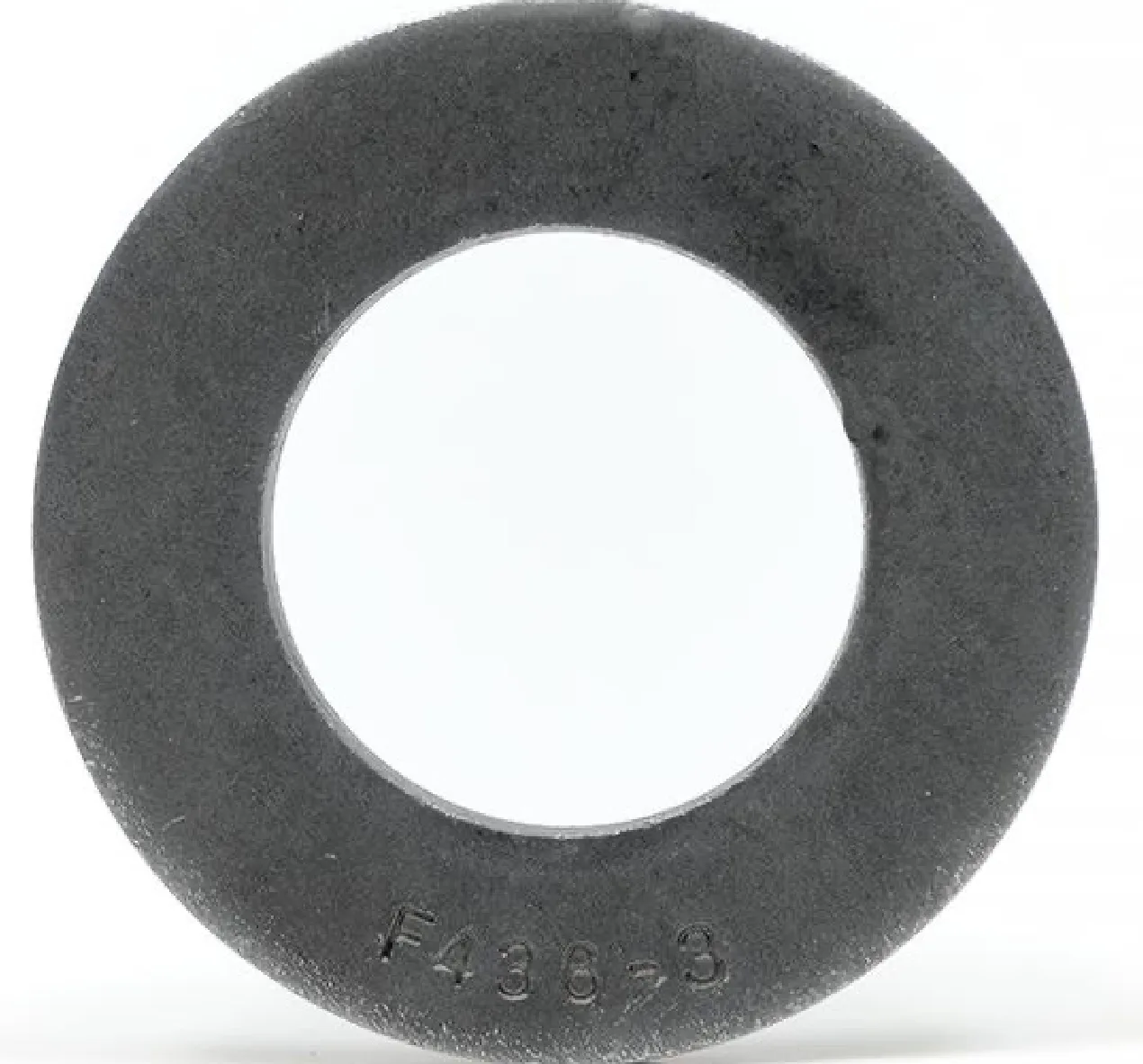
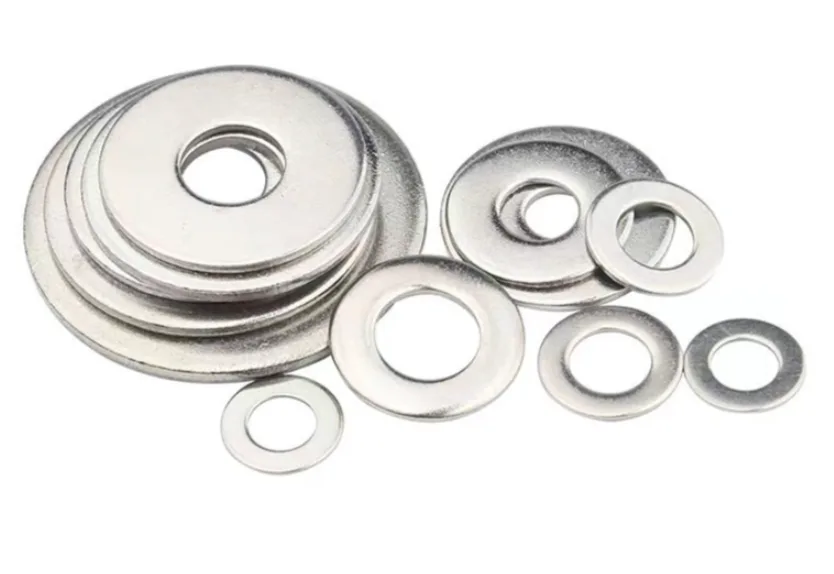
B7 with ASTM A194 Grade 2H; B7M with ASTM A194 Grade 2HM; hardened washers where specified
Documentation
MTC, heat number traceability, hardness and dimensional report on request
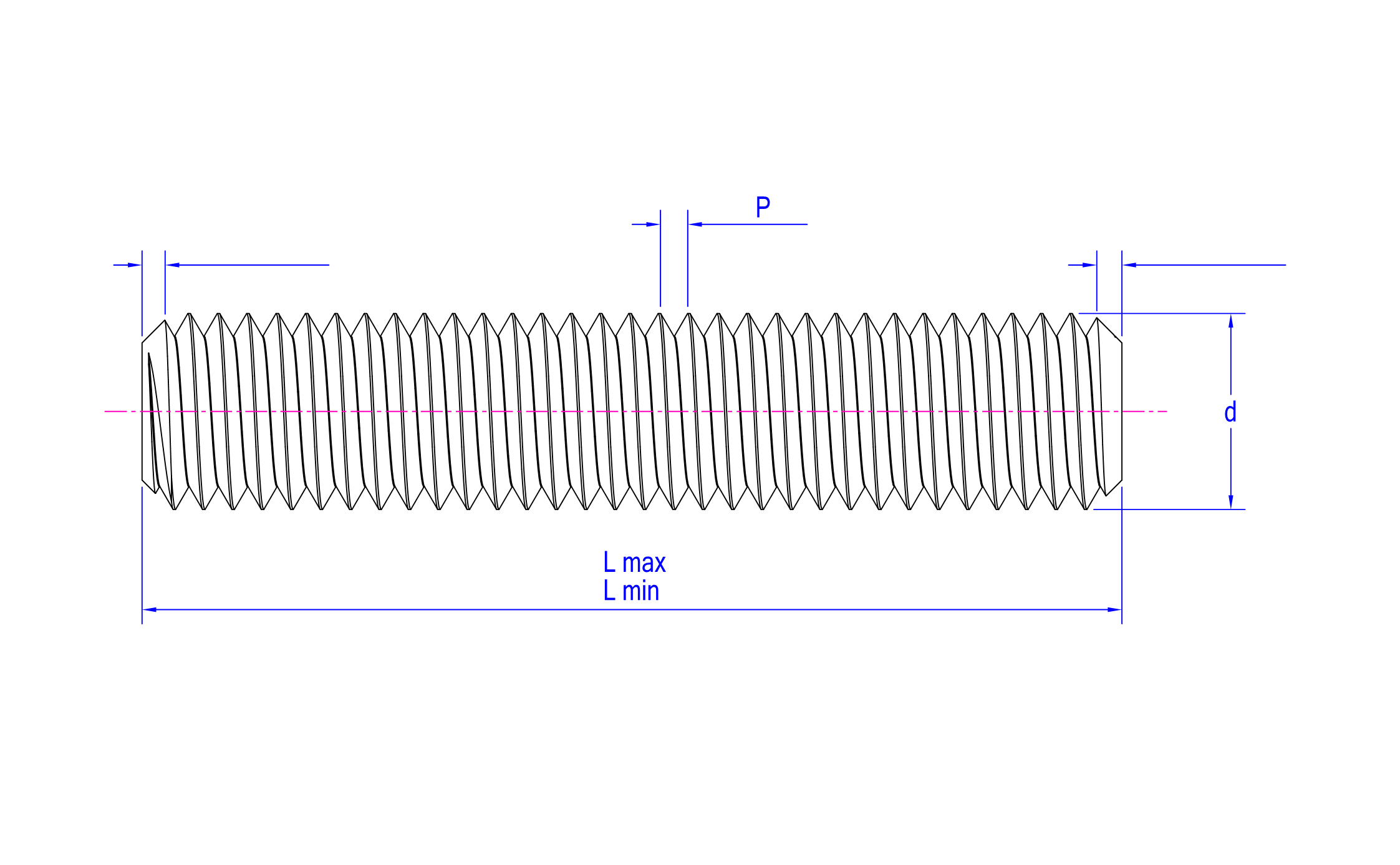
Dimensions & SpecificationsASME B18.31.2
Technical Drawing
Dimensional Table
Parameter
1
1/4
1/2
1-1/8
1-1/4
1-3/8
1-1/2
1-3/4
2
2-1/4
2-1/2
2-3/4
3
3/8
3/4
3-1/4
3-1/2
3-3/4
4
5/16
5/8
7/16
7/8
9/16
P
8
20
13
7
7
6
6
5
4.5
4.5
4
4
4
16
10
4
4
4
4
18
11
14
9
12
c/max
0.25
0.1
0.154
0.286
0.286
0.333
0.333
0.4
0.444
0.444
0.5
0.5
0.5
0.125
0.2
0.5
0.5
0.5
0.5
0.111
0.182
0.143
0.222
0.167
02
Selection
Selection Advantages by Application
Oil, Gas & Petrochemical Flanges
B7 with A194 2H is widely used for ASME flange bolting, refinery piping and valve connections. When controlled hardness is required, buyers may specify B7M with A194 2HM plus the applicable project corrosion standard, hardness testing and full heat traceability.
Power generation projects use ASTM A193 Grade B7 studs for valves, pumps, pressure piping and heat exchanger connections. Confirm operating temperature, coating and certificate scope before selecting finish.
OEM orders commonly require diameter x length models, chamfered ends, consistent thread fit, black oxide or PTFE finish, and kitted supply with ASTM A194 nuts for assembly lines or maintenance packages.
Alloy steel bar preparation, heat treatment and thread rolling or cuttingMaterial grade, heat number and mechanical property verification
ASME B18.31.2 stud dimensions and chamfered ends by orderGo/no-go thread gauge, overall length and end finish inspection
Plain, black oxide, PTFE, zinc plated or HDG finishingCoating thickness, visual inspection and nut fit check after coating
Studs supplied loose or assembled as B7/2H or B7M/2HM grade-matched setsGrade-specific mechanical testing, B7M hardness control, lot traceability and dimensional reports
Export packing for flange bolting and shutdown maintenance projectsMTC, CoC and traceability documents matched to package labels
05
FAQ
Common Questions Before RFQ
What are ASTM A193 B7 stud bolts used for?
They are used for high-temperature or pressure service bolting in flanges, valves, pressure vessels, heat exchangers and petrochemical or power plant piping systems.
What temperature can ASTM A193 B7 stud bolts withstand?
ASTM A193 Grade B7 is widely used for elevated-temperature pressure bolting, but ASTM A193 does not provide one universal maximum service temperature for every joint. Many engineering applications use B7 through approximately 400–450°C, while applicable ASME allowable-stress tables may extend to higher temperatures with reduced allowable stress. The final limit must be checked against the governing design code, nut grade, coating, lubricant, service medium and required design life; ASTM A193 B16 is commonly evaluated for higher-temperature service.
Which nuts should be used with B7 and B7M stud bolts?
ASTM A194 Grade 2H heavy hex nuts are commonly paired with ASTM A193 B7 studs, while Grade 2HM nuts are commonly paired with B7M studs. Nut coating and tapping allowance must match the stud finish.
What is the difference between ASTM A193 B7 and B7M?
B7 is the higher-strength general pressure-bolting grade. B7M is a lower-strength grade with controlled maximum hardness and grade-specific testing. B7M may be selected for projects concerned with sulfide stress cracking, but the grade name by itself does not establish NACE MR0175 / ISO 15156 or NACE MR0103 / ISO 17945 compliance.
Can B7 stud bolts be PTFE coated?
Yes. PTFE coating is common for corrosion protection and lower installation friction, but operating temperature, coating thickness and nut fit must be confirmed.
How should I specify the stud bolt size?
Specify diameter, overall length, thread standard, quantity, finish and whether nuts or washers are required. Flange class and gasket thickness often determine final length.
Can certificates be supplied?
Yes. Material test certificates, heat number traceability, hardness reports and dimensional inspection reports can be supplied when requested with the RFQ.
Need ASTM A193 B7 or B7M stud bolt assemblies?
Send the grade, diameter, overall length, flange standard, coating, quantity, matching nut requirement and certificate scope. Specify B7 with 2H or B7M with 2HM, and identify any invoked NACE / ISO sour-service standard and inspection requirements.
Request a Quote
Get engineering support and pricing for this product — our team responds within 24 hours.