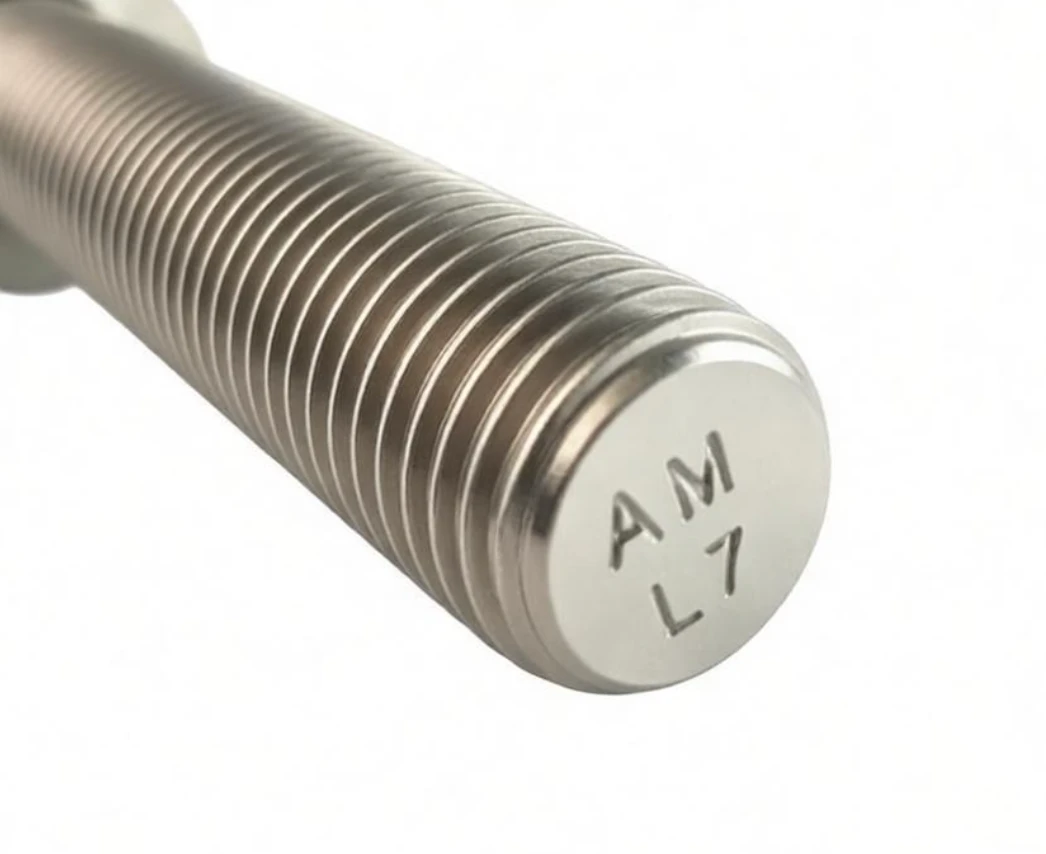
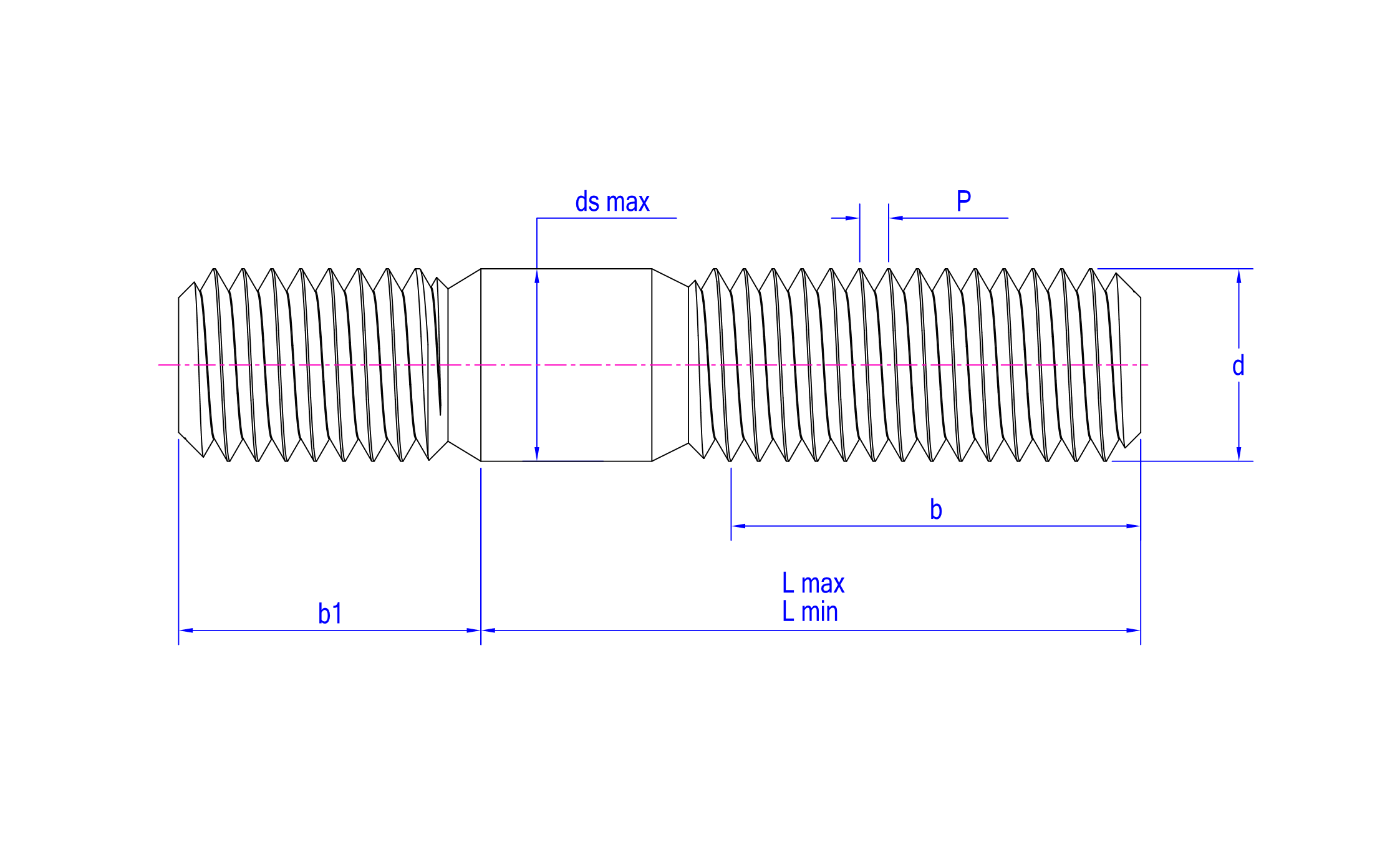
ASTM A320/A320M Grade L7 and L7M stud bolts are quenched-and-tempered chromium-molybdenum alloy steel fasteners for low-temperature pressure service. They are used in flanges, valves, pressure vessels, process piping and LNG-related equipment when the governing specification requires impact toughness at a defined test temperature.
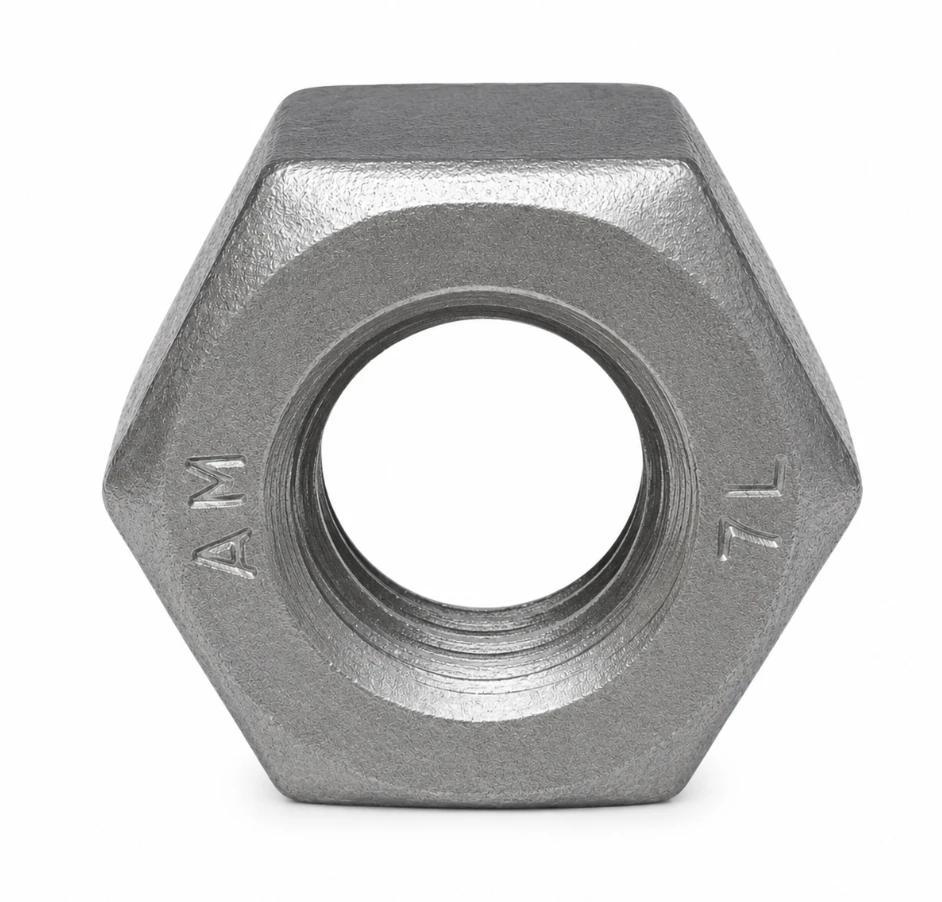
L7 is the higher-strength general low-temperature grade and is paired with impact-tested ASTM A194 Grade 7L heavy hex nuts when the low-temperature qualification must extend to the nut. L7M is a lower-strength, controlled-maximum-hardness grade paired with ASTM A194 Grade 7M nuts. The M grade does not by itself prove sour-service compliance; any NACE MR0175 / ISO 15156 or NACE MR0103 / ISO 17945 requirement must be invoked separately.
ASTM A320 L7 should not be treated as identical to ASTM A193 B7. The alloy family may be similar, but A320 carries the low-temperature service and impact-testing route. The RFQ should state minimum design temperature, required Charpy test temperature and acceptance values, diameter, length, thread, coating, nut grade and documentation.
Product type
ASTM A320 L7 and L7M low-temperature stud bolts
Standard
ASTM A320/A320M Grade L7 / Grade L7M
Material
Quenched and tempered chromium-molybdenum alloy steel
L7 selection
Higher-strength general low-temperature bolting; paired with impact-tested ASTM A194 Grade 7L nuts
L7 and L7M studs are used in cold process lines, valves and flange packages when project impact requirements are defined. Confirm minimum design temperature, Charpy test temperature, nut grade, coating and lubricant before production.
Alloy steel bar preparation and grade-specific quench-and-temper heat treatmentMaterial, heat-treatment and mechanical-property verification
Thread rolling or cutting with overall length by flange schedule or drawingThread gauge, overall length, chamfer and marking inspection
L7/Grade 7L or L7M/Grade 7M matched set kittingImpact, hardness, MTC and heat-number traceability documents matched to each lot
Plain, black oxide, phosphate, PTFE or zinc finish by approved specificationCoating thickness, low-temperature suitability, friction condition and nut-fit checks
05
FAQ
Common Questions Before RFQ
What is the difference between ASTM A320 L7 and L7M?
L7 is the higher-strength general low-temperature alloy-steel bolting grade. L7M has lower mechanical strength, controlled maximum hardness and grade-specific testing. Both remain subject to the impact requirements of the applicable ASTM A320 edition and purchase order.
Which nuts are used with L7 and L7M stud bolts?
ASTM A320 L7 studs pair with impact-tested ASTM A194 Grade 7L heavy hex nuts when low-temperature nut qualification is required. L7M studs pair with controlled-hardness ASTM A194 Grade 7M nuts.
Are ASTM A320 L7 and ASTM A193 B7 interchangeable?
They should not be treated as identical. Although both are chromium-molybdenum alloy-steel grades, ASTM A320 L7 follows a low-temperature service and impact-testing route. Substitution requires engineering review of temperature, impact, marking and documentation requirements.
Does L7M automatically comply with NACE?
No. L7M provides grade-specific hardness control, but the applicable NACE or ISO standard, edition, environmental limits and inspection scope must be stated and verified separately.
What information is needed for an L7 or L7M quote?
Send grade, diameter, overall length, thread, minimum design temperature, required Charpy test temperature and acceptance values, coating, nut grade, certificate scope and quantity.
Need ASTM A320 L7 or L7M stud bolt assemblies?
Send the design temperature, grade, diameter, length, thread, coating, nut pairing, impact-test requirement, quantity and certificate scope. We can quote L7 with Grade 7L or L7M with Grade 7M matched sets.
Request a Quote
Get engineering support and pricing for this product — our team responds within 24 hours.