
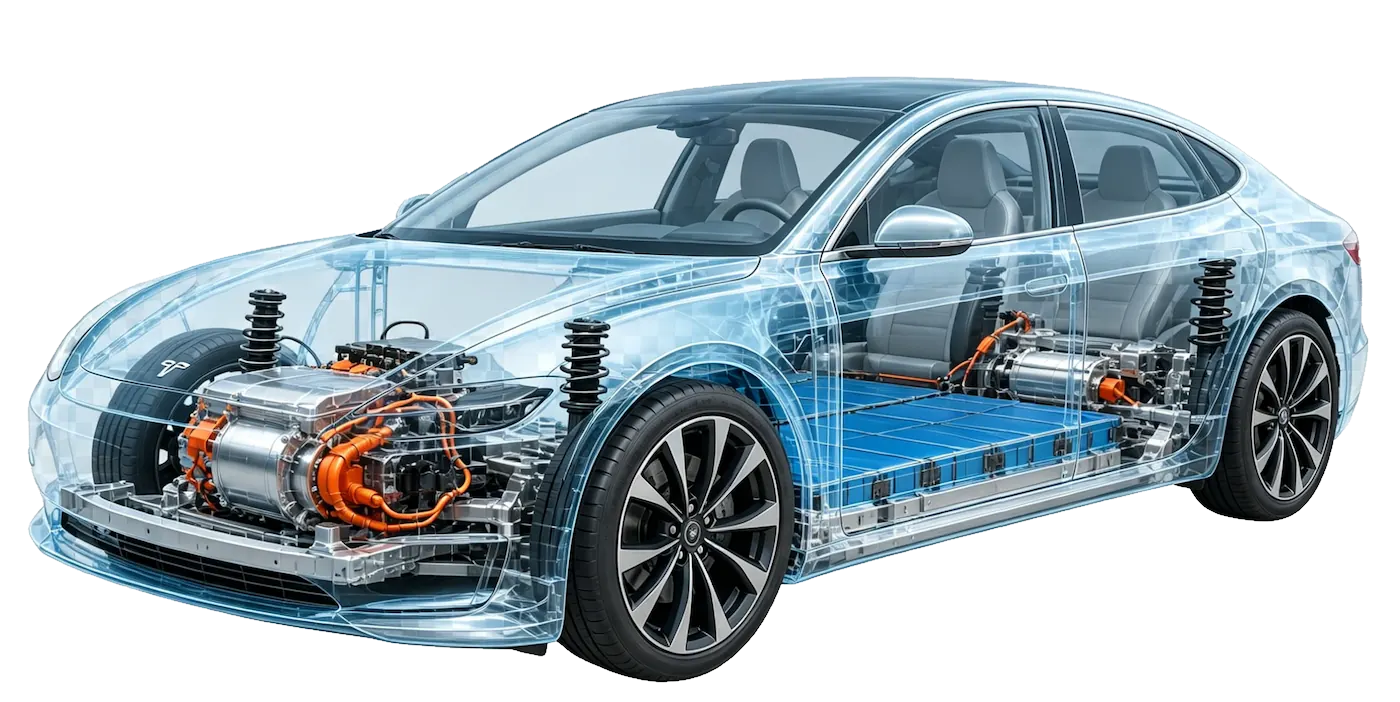
Automotive fastening systems
Automotive Fastening Systems Introduction
A vehicle fastening point is not just a bolt or a screw. It is a joint system made of the fastener, mating structure, thread engagement, surface treatment, friction condition, tightening method and validation evidence. This guide explains that system module by module, with product recommendations only where they fit the engineering logic.
System view
In automotive engineering, the fastening system is the joint.
A product name alone is rarely enough. The same hex flange bolt can behave differently in a suspension bracket, an aluminum battery tray or a powertrain housing because the mating material, joint stiffness, coating friction, bearing surface and tightening method are different.
A professional recommendation therefore starts with the function of the joint: does it maintain clamp load, compress a seal, resist fatigue, create an internal thread, prevent loosening, carry electrical current or allow repeated service? Once the function is clear, material grade, surface treatment, companion parts and inspection documents can be selected with much less guesswork.
What the system includes
A good automotive fastening recommendation connects six technical layers.
Fastener geometry
Head style, thread length, bearing face, shank design, thread engagement and drive type determine how load enters the joint.
Mating structure
Steel, aluminum, castings, plastics, gaskets and coatings all change joint stiffness, embedment, relaxation and corrosion behavior.
Clamp load target
The real engineering target is preload retention, not only nominal tensile strength or the bolt grade marking.
Friction system
Surface treatment, lubricant, washer face and nut coating control the torque-tension relationship during assembly.
Locking strategy
Flange faces, prevailing torque nuts, thread lockers, spring elements and joint stiffness are selected according to loosening risk.
Validation evidence
Critical joints require traceability, dimensional checks, hardness or tensile records, coating tests, friction data and PPAP where specified.
Five engineering rules before choosing a fastener family
- Define the joint function first: clamp, seal, locate, conduct, isolate or enable service removal.
- Treat bolt, nut, washer, coating, lubricant and tightening method as one fastening system.
- Use strength grade only after checking joint stiffness, fatigue load, ductility and coating process risk.
- For mixed materials, check galvanic corrosion, bearing pressure, embedment and relaxation.
- For automotive supply, specify verification documents before production, not after shipment.
Module-by-module fastening recommendations
The same fastener category can mean different system requirements in different vehicle modules.
Powertrain fastening systems are designed around target preload, fatigue strength, thermal relaxation and repeatable torque-angle or torque-tension behavior.
Engine, Transmission and Powertrain Joints
The powertrain contains gasketed joints, rotating assemblies, housings and high-cycle fatigue locations. A bolt that looks ordinary from the outside may need controlled steel chemistry, rolled threads after heat treatment, stable surface friction and strict dimensional control so the assembled joint keeps preload through heat, vibration and service cycles.
Common fasteners in this module
- Cylinder Head Bolts for gasket compression, torque-angle tightening and controlled clamp load.
- Connecting Rod Bolts for compact high-strength joints exposed to high-cycle fatigue.
- Flywheel Bolts for torque transmission, seating accuracy and vibration-loaded rotating assemblies.
- Hex Flange Bolts and Double End Studs for housings, covers, brackets and powertrain mounts.
Selection notes
- SCM435, 42CrMo and similar alloy steels are common when controlled grade 10.9 or 12.9 performance is required.
- Phosphate, black oxide, controlled oiling or zinc flake should be selected by friction target, corrosion exposure and hydrogen embrittlement risk.
- For safety or fatigue-critical parts, OEM drawing requirements are more important than only quoting a generic DIN or ISO standard.
Related product families
Typical product families for this module include cylinder head bolts, connecting rod bolts, flywheel bolts, hex flange bolts, wheel bolts and matched locking components.
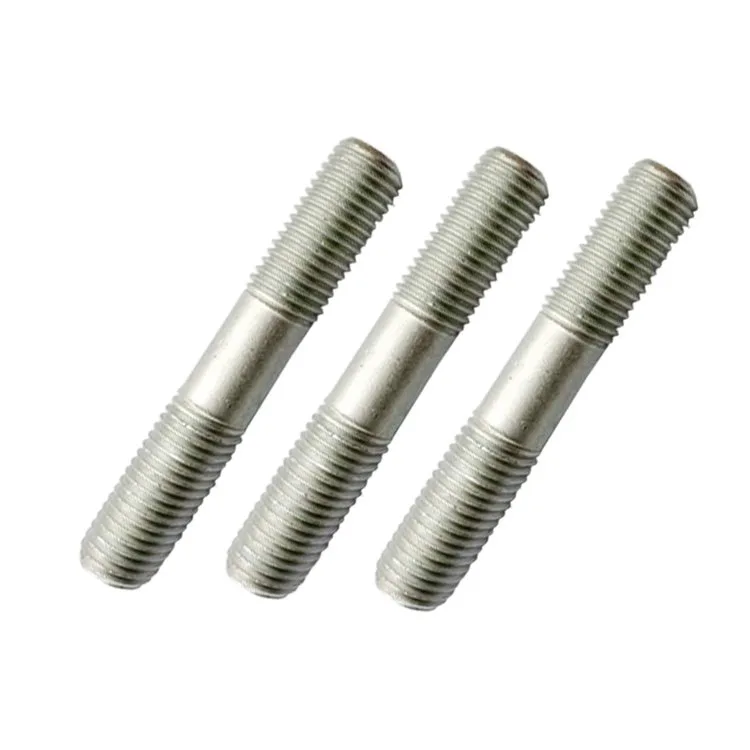
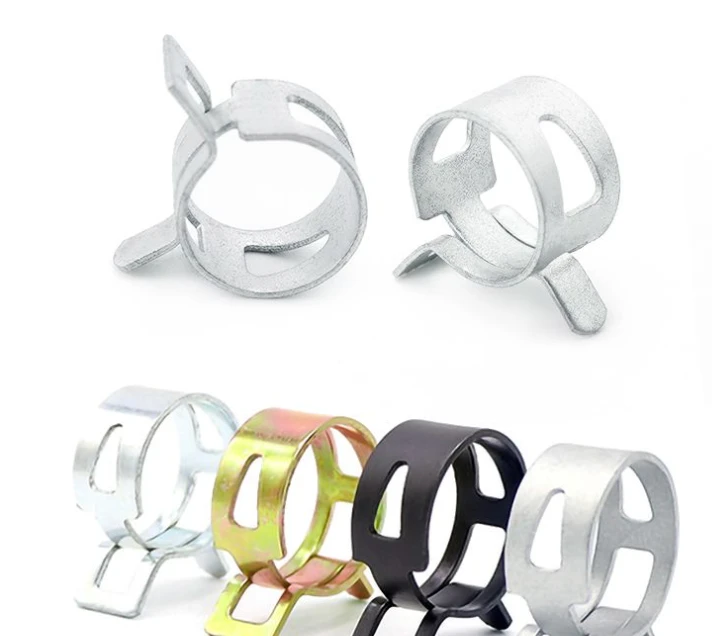
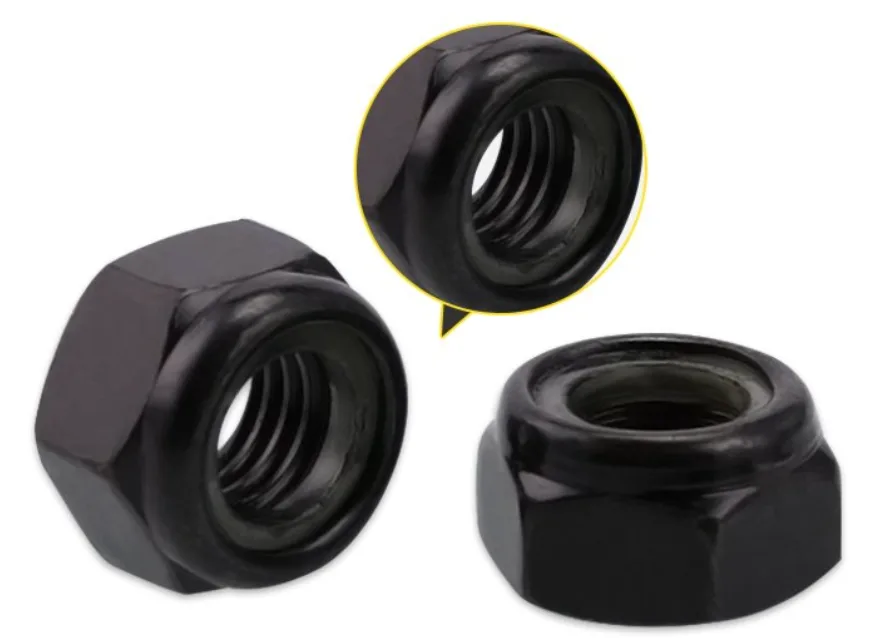
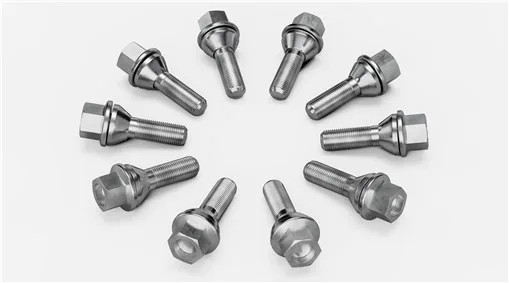
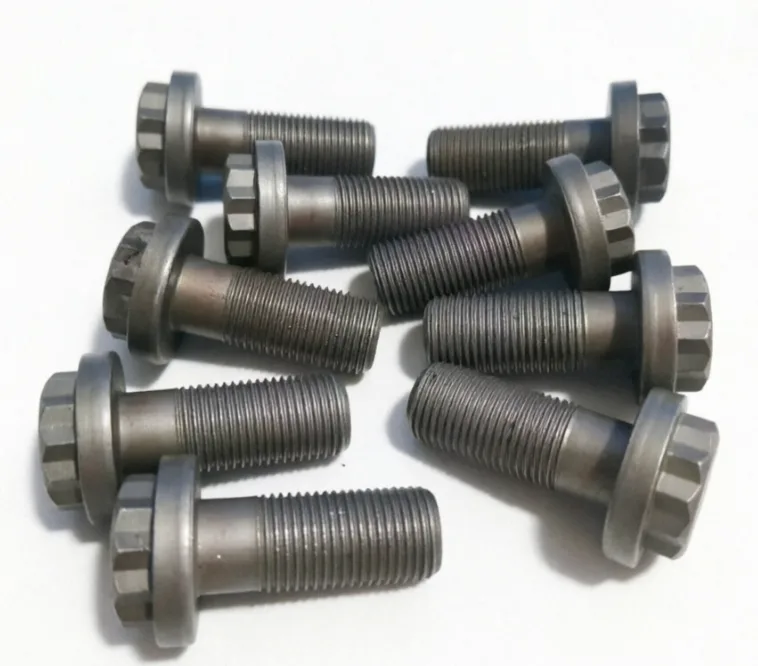
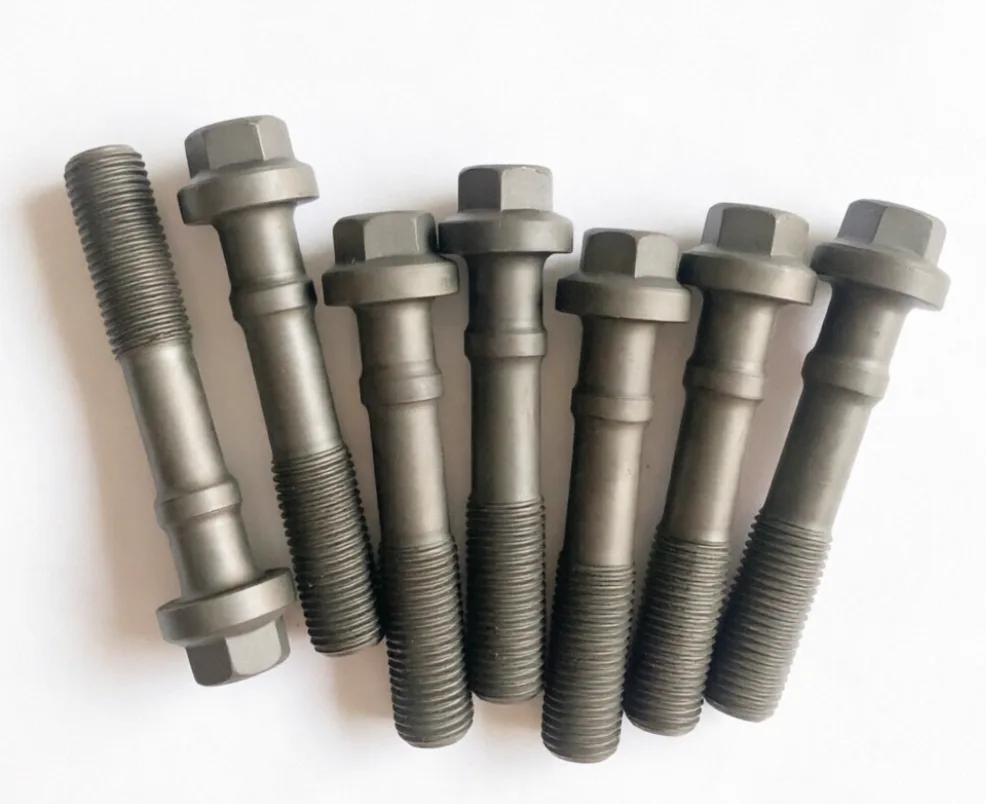
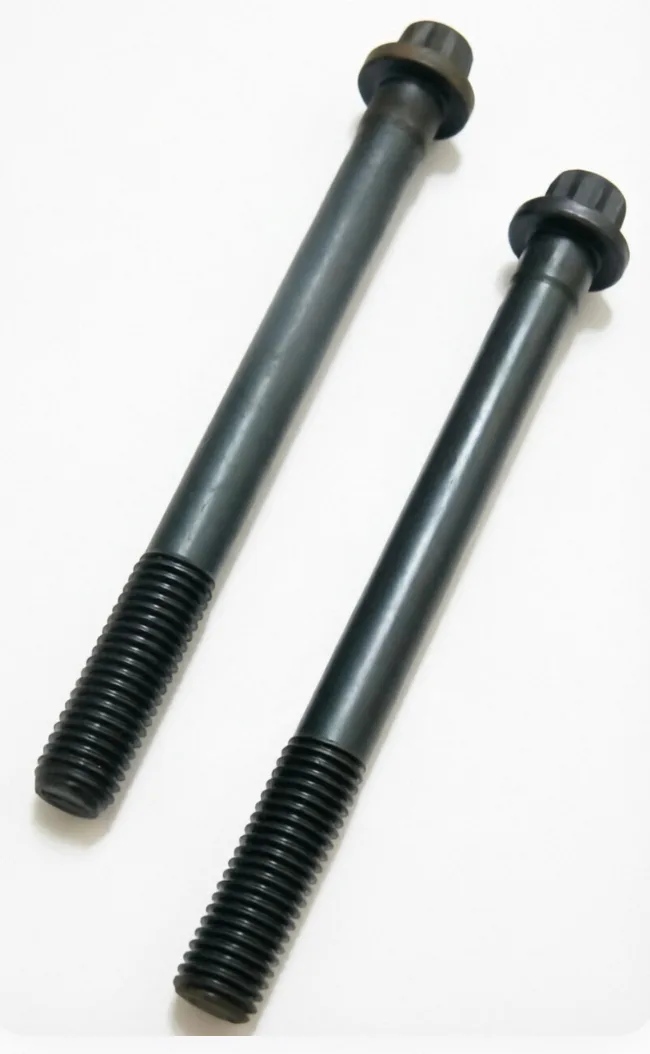
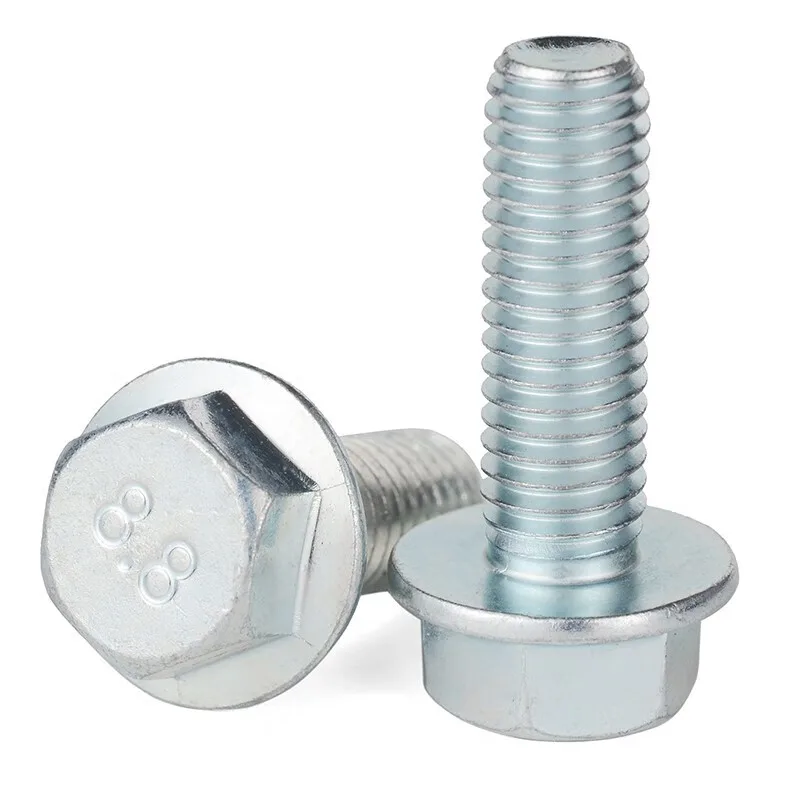
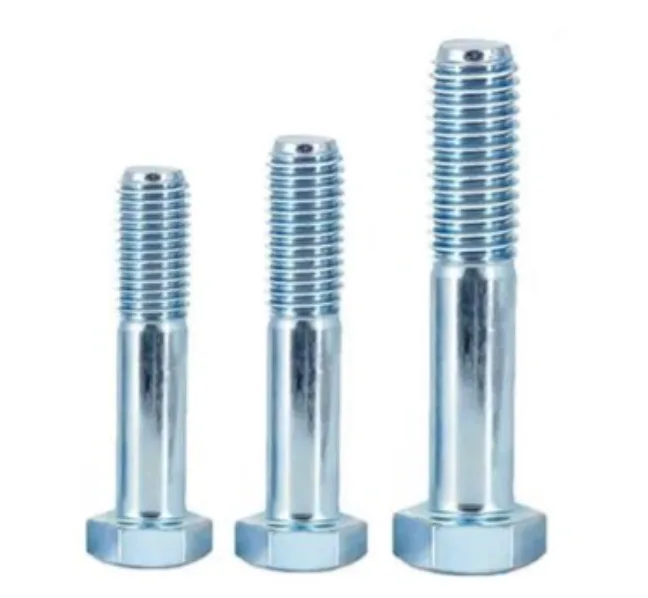
Chassis fastening systems combine structural preload, road-corrosion resistance, bearing control and anti-loosening performance.
Chassis, Suspension and Wheel-End Fastening
Suspension arms, subframes, brackets and wheel-end assemblies are exposed to road shock, salt spray, mud, water and continuous vibration. The system has to maintain clamp load, protect the bearing surface, prevent rotation loss and keep coating performance after installation damage and road exposure.
Common fasteners in this module
- Hex Flange Bolts for suspension brackets, subframes and high-bearing-area joints.
- Wheel Bolts for wheel hubs where seating geometry and thread quality are critical.
- Nylon Insert Lock Nuts or all-metal locking nuts where loosening resistance is required.
- Disc Spring Washers where the joint benefits from elastic compensation.
Selection notes
- Grade 10.9 is common for many chassis joints; grade 12.9 should be used only when the joint design, ductility requirement and coating process support it.
- Zinc flake and zinc nickel are often preferred over simple zinc plating when corrosion performance and hydrogen embrittlement risk matter.
- The nut, washer and coating must be considered as one assembly, not as separate catalog items.
Related product families
Recommended families are high-strength flange bolts, wheel bolts, lock nuts and disc spring washers selected as an assembly.
EV battery fastening systems are selected around sealing compression, mixed-material corrosion, serviceability and electrical safety.
EV Battery Packs and Underbody Enclosures
Battery trays and underbody enclosures combine aluminum castings or extrusions, coated steel, stainless brackets, gaskets, busbar areas and thermal-management parts. The fastener may have to compress a seal, avoid galvanic corrosion, support service removal and stay clear of electrical or insulation requirements.
Common fasteners in this module
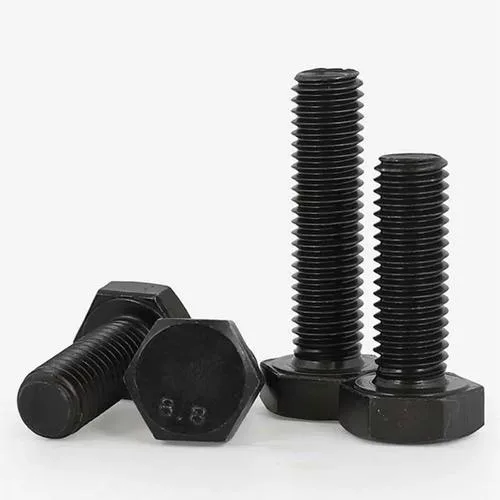
- Full Thread Hex Head Bolts and Hex Flange Bolts for tray, cover and structural enclosure joints.
- Stainless Flat Washers and Stainless Lock Washers for corrosion-resistant bearing surfaces.
- Stainless nuts or lock nuts for exposed or corrosion-sensitive fastening points.
- Titanium Bolts only for weight-sensitive or galvanic-compatible special joints where cost is justified.
Selection notes
- Battery pack fasteners are not automatically stainless; coated alloy steel is often a better balance of strength, cost, friction control and assembly behavior.
- Zinc nickel, zinc flake, passivation and insulating or sealing details should be selected against the whole pack environment.
- If the joint is serviceable, thread damage and repeat assembly torque are just as important as the first installation.
Related product families
Useful product families include coated full-thread bolts, hex flange bolts, stainless washers, lock washers and selected titanium fasteners.
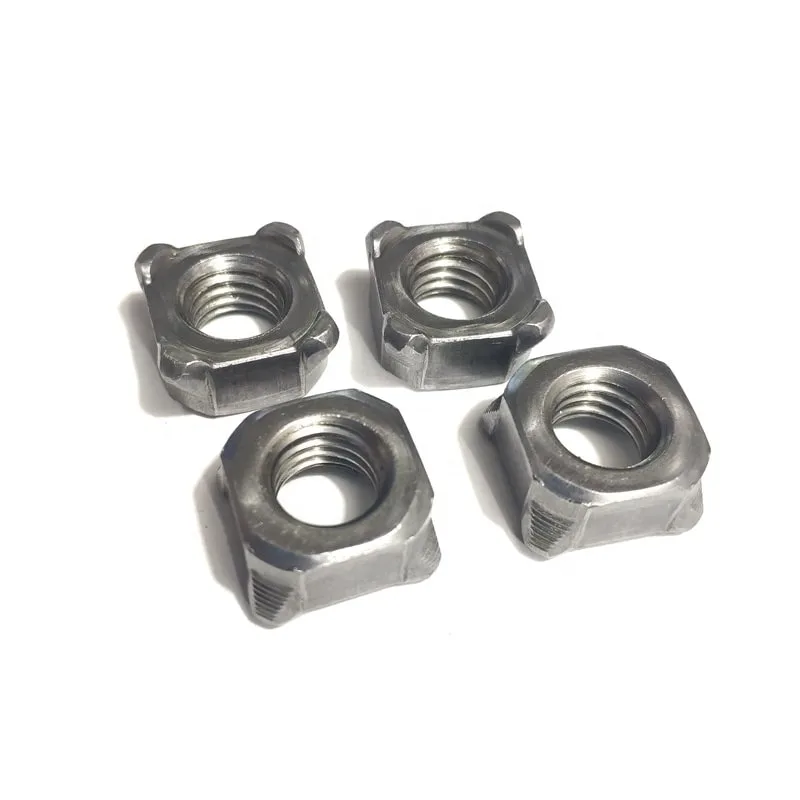
BIW fastening systems are built around thin sheet, projection welding, robotic feeding, e-coat compatibility and repeatable internal threads.
Body-in-White, Brackets and Sheet-Metal Structures
Body-in-white and bracket joints often start from thin sheet metal. The fastener has to work with stamping tolerances, projection welding, robotic feeding, paint or e-coat processes and limited access after assembly. A reliable thread in thin sheet is often more important than simply using a stronger bolt.
Common fasteners in this module
- Square Weld Nuts and Hex Weld Nuts for permanent threaded points in sheet metal.
- Hex Flange Nuts for wider bearing area and faster assembly.
- Self Drilling Screws for brackets and sheet-metal attachments where drilling and fastening are combined.
- Pan Head Self Tapping Screws for light-gauge sheet and non-critical bracket fastening.
Selection notes
- Weld nuts should be checked for projection geometry, weld quality, push-out strength, torque resistance and thread cleanliness after coating.
- Self drilling and self tapping screws must match sheet thickness, pilot condition and installation speed.
- For automated assembly, feeding reliability and mixed-part prevention can matter as much as mechanical strength.
Related product families
Common recommendations include weld nuts, flange nuts, self drilling screws and pan head self tapping screws matched to sheet thickness and assembly method.
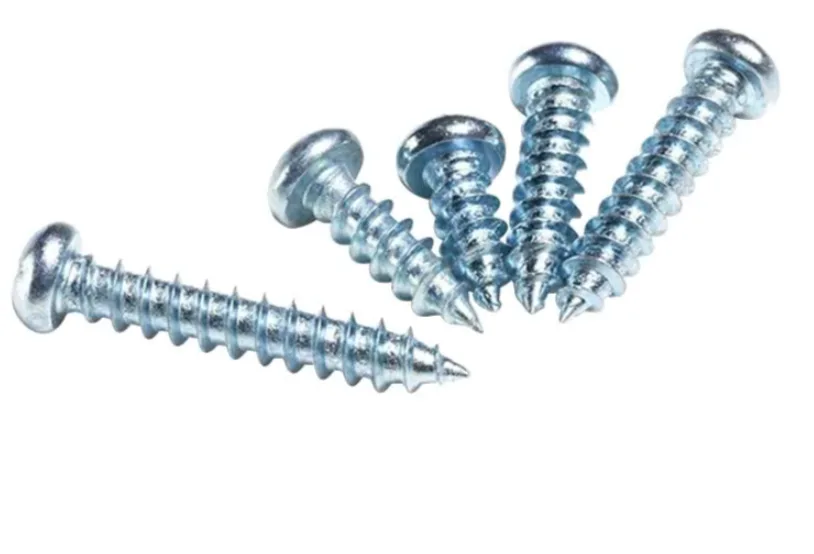
Interior fastening systems focus on plastic thread formation, boss integrity, low assembly torque, serviceability and noise prevention.
Interior Trim, Plastic Bosses and Serviceable Modules
Interior modules look less severe than engine or chassis joints, but they have their own failure modes: stripped plastic bosses, squeak and rattle, over-driving, poor serviceability and visible cosmetic damage. The best fastener is usually the one that creates a stable plastic thread with a wide assembly window.
Common fasteners in this module
- Plastic Thread Forming Screws for plastic bosses and polymer housings.
- Pan Head Screws for trim brackets, covers and serviceable light-duty assemblies.
- Captive or special screws where repeated service access is required.
- Small washers or locking features where vibration or plastic creep affects the joint.
Selection notes
- Plastic thread forming screws should be chosen by plastic material, boss diameter, engagement length and drive torque window.
- Pan head screws are often practical because they provide bearing area without needing a countersunk seat.
- The drive torque to strip torque ratio is a key check for interior plastic assemblies.
Related product families
Recommended product families include plastic thread forming screws and pan head screws selected by boss design and torque window.
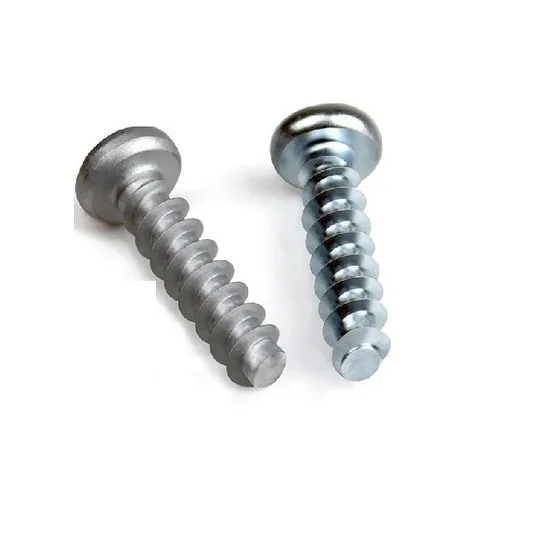
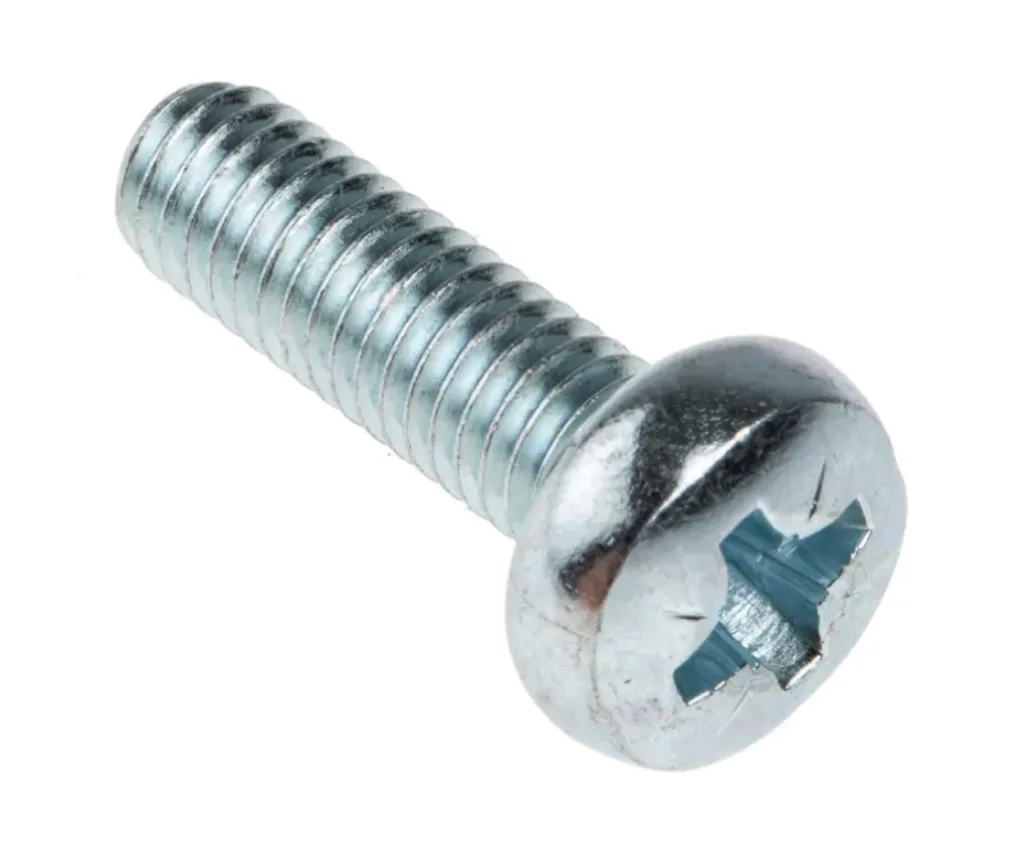
Electrical and thermal-management fastening systems prioritize consistency, cleanliness, corrosion control, contact behavior and installation access.
Electrical, Thermal-Management and Small Equipment Assemblies
Sensors, thermal plates, covers, busbar supports and electronic housings often use smaller screws and washers. These are not always high-load joints, but inconsistent dimensions, burrs, wrong coating, poor cleanliness or loose hardware can still cause noise, corrosion, contact-resistance problems or electrical risk.
Common fasteners in this module
- Socket Head Cap Screws for compact equipment, covers and brackets.
- Stainless Socket Screws where corrosion resistance or cleanliness is more important.
- Flat Washers and Lock Washers for bearing control and loosening resistance.
- Small self tapping or thread forming screws for housings and covers.
Selection notes
- Confirm head clearance, tool access and whether the joint will be removed during service.
- Use stainless or passivated fasteners where condensation, coolant or cleaning exposure is expected.
- For conductive areas, coating, washer choice and contact resistance should be reviewed with the electrical design.
Related product families
Useful product families include socket screws, stainless screws, flat washers and lock washers selected by access, corrosion and cleanliness needs.
Traction-motor and drive-unit fasteners must preserve clamp load, housing alignment, sealing and serviceability through vibration and thermal cycling.
EV Traction Motors and Drive Units
Motor housings, end shields, bearing supports, cooling interfaces and sensor-adjacent joints do not share one universal fastener specification. Stationary housing joints can often use controlled-friction alloy-steel flange bolts, while any rotor-side fastener requires part-specific mass, retention and balance controls. Magnetic permeability, electrical conductivity and grounding behavior must be defined by the motor design and OEM drawing rather than inferred from a generic material name.
Common fasteners in this module
- Controlled-friction Hex Flange Bolts for stationary motor housings, end shields and drive-unit covers.
- Socket Head Cap Screws or precision small screws where tool access, alignment and packaging space are constrained.
- Coated alloy-steel fasteners for cooling-jacket joints when the coating, sealant and thermal-cycle requirements are compatible.
- Captive or positively retained fasteners for service covers where loose-part control is required.
Selection notes
- Separate stationary structural joints from rotor-side rotating joints; rotor hardware must follow the OEM drawing and assembly-level balance validation.
- Specify an allowed magnetic-permeability range near Hall-effect or resolver sensors when the electromagnetic design requires it. Stainless steel is not automatically non-magnetic, and titanium is not a default substitute.
- Define whether the joint must provide electrical bonding or electrical isolation before selecting material, coating and washers.
- For cooling housings, validate clamp load, sealing, coating compatibility and thermal relaxation as one joint system.
Related product families
Start with the existing hex flange bolt, socket screw and precision-screw families, then finalize geometry, material, coating and retention from the motor or drive-unit drawing.
Standards, drawings and documents
After the module is clear, lock down the evidence.
Common geometry standards
ISO 4014, ISO 4017, ISO 4762, DIN 6921, DIN 928, DIN 929, DIN 7981 and ISO 7049 are useful references when the part is a standard catalog geometry.
OEM-specific fasteners
Cylinder head bolts, connecting rod bolts, flywheel bolts, wheel bolts, special studs and plastic thread forming screws are often controlled by OEM drawings rather than only by a public standard.
Documents to request
Material certificate, heat number traceability, dimensional report, hardness or tensile test, coating thickness, friction coefficient, salt spray result, optical sorting record and PPAP documents where required.
Short answers
Automotive fastener questions buyers often ask
Are automotive fasteners just standard DIN or ISO bolts?
Some are standard geometry fasteners, but many important automotive parts are controlled by OEM drawings because head shape, thread length, washer face, coating friction and fatigue performance are part of the joint design.
Why are hex flange bolts common in automotive assemblies?
A flange head gives a larger bearing surface, faster assembly and better load distribution than a small bearing face. This is useful for brackets, housings, chassis joints and many automated assembly points.
Are stainless fasteners always better for EV battery packs?
No. Stainless steel improves corrosion resistance in many environments, but coated alloy steel, aluminum or titanium may be better depending on strength, galvanic compatibility, sealing, cost and assembly torque behavior.
Why do plastic parts need special thread forming screws?
Plastic bosses need a screw profile that forms material instead of aggressively cutting it. The right thread form improves pull-out strength, reduces boss cracking and gives a safer torque window.
From article to product selection
Use the module and joint function first, then map the exact bolt, screw, nut and washer.
For a real project, the next step is to match drawings, material, grade, coating, mating parts, tightening method and inspection documents to the joint function. The product recommendations above are starting points, not substitutes for the full joint specification.