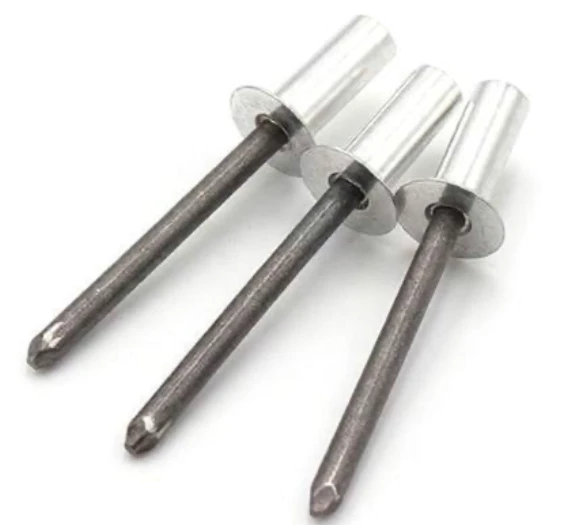
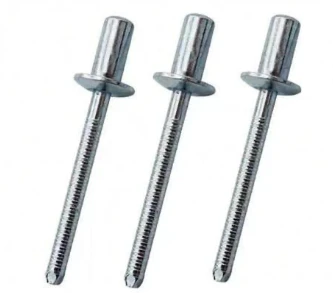
Structural Blind Rivets
| Standard | Supplier Standard / Customer Drawing |
|---|---|
| Material | Carbon Steel Body / Carbon Steel Mandrel |
| Strength Grade | St/St Structural Duty |
| Size Range | 4.8-6.4 mm |
| Surface Treatment | Zinc Plated / Zinc Nickel |
| Standard | Supplier Standard / Customer Drawing |
|---|---|
| Material | Carbon Steel Body / Carbon Steel Mandrel |
| Strength Grade | St/St Structural Duty |
| Size Range | 4.8-6.4 mm |
| Surface Treatment | Zinc Plated / Zinc Nickel |
Product Description
Structural blind rivets provide greater joint capacity than general-purpose blind rivets through a steel body and a mandrel designed to contribute to the installed joint. Blind-side formation, mandrel break position and mandrel retention are controlled by the rivet system.
Selection must consider shear and tensile load, grip range, hole diameter, panel material, vibration and installation-tool capability. Locking designs differ by supplier, so the drawing and test data should be approved before production.
| Product type | High-load structural blind rivets |
|---|---|
| Reference | Supplier standard / customer drawing |
| Material | Carbon steel body / carbon steel mandrel (St/St) |
| Diameter range | 4.8-6.4 mm |
| Surface finish | Zinc plated / zinc nickel |
| Performance | Higher shear, tensile and mandrel-retention performance by design |
| Installation | Structural rivet tool with suitable pull force, stroke and nosepiece |
Selection
Used in secondary frames, panels, floors and brackets where loads and vibration exceed light-fabrication conditions.
Automotive and EV fastenersFatigue, pull-out, mandrel retention and project approval should be confirmed before use.
Railway fastenersAssembly
Manufacturing
FAQ
It is designed for higher joint loads and better control of mandrel retention and installed joint formation.
Usually yes. Pull force, stroke and nosepiece must match the selected structural rivet system.
Send diameter, grip range, hole size, panel materials, shear and tensile loads, vibration requirement, finish and quantity.
Send drawing, grip range, hole size, design loads, coating and installation tool details so we can evaluate a suitable St/St rivet.
Get engineering support and pricing for this product — our team responds within 24 hours.